…as Nigeria–Central Europe chamber deepens bilateral trade
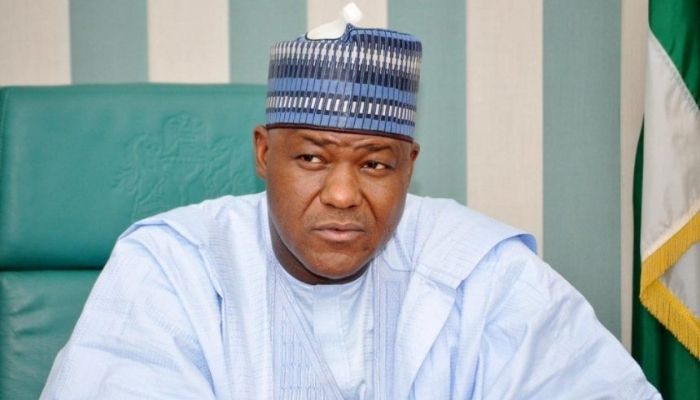
Yakubu Dogara, former Speaker of the House of Representatives and Chairman of the Board of the National Credit Guarantee Company Limited (NCGC), has urged the federal government to address insecurity and investment risks to attract investors from Central Europe and other advanced economies.
Dogara made the call in Abuja recently at a dinner to unveil the Nigeria–Central Europe Chamber of Commerce (NCECC).
The event was organised by the Chamber in partnership with the Regional Trade Institute (RTI) and the Embassy of the Czech Republic in Nigeria. Dogara was inducted, alongside others, as an Honorary Council Member of the Chamber.

He commended the organisers for establishing a platform for economic partnership, noting that the gathering reflected a commitment to cooperation between Nigeria and Central Europe.
“This is a major opportunity for us,” Dogara said. “We are not just here as representatives of countries, but as cultural, academic, and economic partners seeking shared progress.”
Read also: NCSP hosts Chinese Consortium, strengthens strategic Nigeria–China investment cooperation
He described Nigeria’s growing youth population as both a challenge and an opportunity, noting that many graduates enter the labour market each year without sufficient job opportunities.
“We need to find ways to channel this youth energy,” he said, adding that cooperation between Nigeria and Central Europe could create employment, enable skills transfer, and support innovation.

Dogara said partnerships in agriculture, enterprise development, technology, manufacturing, and energy could help absorb the workforce and improve productivity. He noted that Central Europe, including Germany, has strong industrial and technological capacity that Nigeria can leverage in renewable energy, manufacturing, and climate-related projects.
“When these opportunities align with Nigeria’s economic vision and its position as Africa’s largest economy and a gateway to the continental market, the impact can be significant,” he said.
On foreign direct investment, Dogara said insecurity remains a concern for investors and questioned why Nigerians invest abroad while foreign investors hesitate to invest locally.
“If Nigeria is not an attractive investment destination, why do we invest abroad and then expect others to invest here?” he asked. “Investors seek returns and avoid unmanaged risks.”
While acknowledging that risk is inherent in business, he stressed the need to address insecurity, policy inconsistency, and weak institutions.
“Progress does not happen by chance. It requires deliberate action and partnerships,” he said.
Dogara added that Nigeria’s engagement with Central Europe should go beyond commodity exports to innovation and value creation.
“We must move from exporting raw materials to co-creating and innovating,” he said, noting that technology transfer and skills development are essential to sustainable partnerships.
He urged Nigerians not to be discouraged by past failures. Quoting Nelson Mandela, Dogara said, “It always seems impossible until it is done.”
“With collective effort,” he added, “Nigeria can address its risks and position itself as a credible destination for Central European investment.”
In his remarks, Tomáš Výprachtický, Czech Republic Ambassador to Nigeria, said his country remains committed to strengthening cooperation with Nigeria across key sectors.
“Our companies and institutions have engaged with Nigeria for years. We have a long-standing political and economic relationship,” he said, citing cultural exchanges between both countries.
He described Nigeria as a country with strong human and natural resources and engineering capacity, adding that cooperation efforts have made progress.
The Nigeria–Central Europe Chamber of Commerce connects Nigeria with Central European countries including Czechia, Germany, Austria, Slovakia, and Poland.
The Chamber supports trade, investment, and policy engagement across the region.
Also speaking, Dere Awosika, former Chairman of Access Bank Plc and former Permanent Secretary in the Federal Ministries of Power, Interior, and Science and Technology, said Central European countries are interested in expanding investment in Nigeria’s technology, energy, agriculture, and education sectors.
Describing the Chamber as strategic, the CEO of JustRain Consulting said the platform brings together five European countries to engage Nigeria.
Awosika said European countries are offering scholarships and academic support to Nigerians, noting Nigeria’s youthful population and growth potential.
She urged Nigerians to use the Chamber to increase exports and strengthen trade ties, adding that Nigeria has products and services in energy, technology, agriculture, and education.
Peter Markvart, a lawyer and head of the Czech side of the Chamber, said Nigeria is a natural partner for Europe due to its population and resources.
“Central Europe has mature industries and technology for joint projects,” he said. “We encourage Nigerian businesses to engage, and we will help identify suitable partners.”
On security, Markvart said the challenges must be addressed internally, with external support where necessary.
The unveiling of the NCECC marks another step toward strengthening Nigeria–Central Europe economic relations, with stakeholders expressing hope that discussions will lead to investment and long-term partnerships.