Amid the enactment of the Electricity Act 2023, a legal amendment granting Nigerian states the autonomy to regulate their local power sectors, a noticeable lack of momentum has been observed, with most states choosing a cautious approach.
Experts suggest this hesitation stems from the non-mandatory nature of the law, coupled with significant financial, human resource, and infrastructure planning challenges.
The Electricity Act (EA) 2023 empowers state governments and individuals to actively participate in electricity generation, transmission and distribution. The EA also mandates any state that intends to establish and regulate intra-state electricity markets to deliver a formal notification of its processes and requests NERC to transfer regulatory authority over electricity operations in the state to the State Regulator.
However, BusinessDay findings show that since the enactment of the law in 2023, only 15 states have so far got their transfer order.

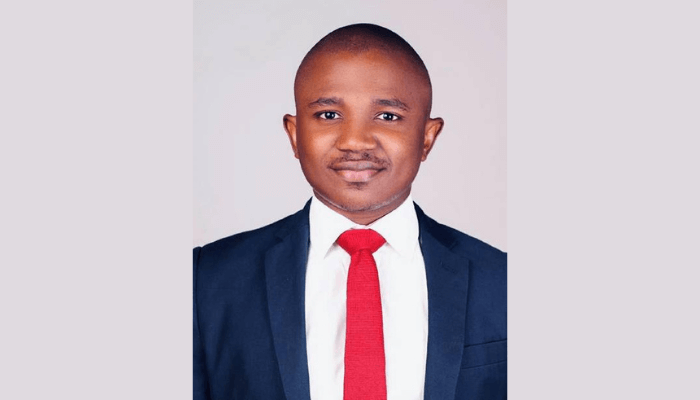
Musiliu Oseni, vice chairman of Nigerian Electricity Regulatory Commission (NERC), in a recent engagement, said that of the 15 States, 11 States have crossed the six-month transitional period, but only eight out of the 11 are currently operational.
Speaking to BusinessDay on the slow adoption by the State Governments, Ayodele Oni, partner at Bloomfield Law, said that not all States have the capacity to take up the regulatory oversight of the electricity market.
According to Oni, some States require more planning than others. He added that the electricity supply industry, being a critical factor for national development, requires careful and effective planning. “The states will need to think about the regulator, think about human resources, think about infrastructure, think about the rules, regulations, they will need to think about a lot, right?
“They will need to carry out a power audit to be able to come up with their policy? I think policy should come before the law. So if you have not done all of that, it’s difficult for you to just jump on it. You need to understand your state.”
Furthermore, he explained that attracting private sector investment is highly contingent on the perceived ability of the State’s populace to pay appropriate tariffs, making states with low-income populations less appealing targets for immediate action.

Oni also emphasised that the new legislation is permissive, not mandatory, offering states a choice rather than an obligation. He added that some states may not be interested. “The law does not mandate you to do it. It only gives you a choice. A choice means you may or may not, right? So I think that the state, and if you even choose to do it, it requires a lot of planning.
“If you assume some states and you don’t think that people can even afford to pay for power, or you’re likely to get serious investors, then you won’t want to do it but if a state like Lagos, maybe Rivers, some states that believe that they can get investors, because the governors, the government cannot do it alone.
“State Governments cannot do it alone or else they will not do anything else with money, right? And even if they build those plants and build distribution networks and whatever, would the people be able to pay? How would they recover the money back unless they want to do it as a social, social item, which doesn’t make sense because power comes at a cost. So I think not all states should do it. I don’t think all states will do it.”
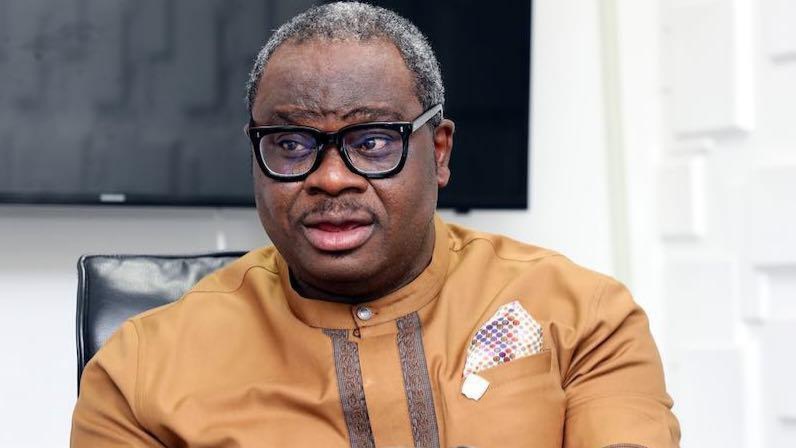
Also speaking on the issue, Israel Ijie, a power sector analyst said that while most state governments are being careful about taking the move, not so much progress has been made by those already granted the autonomy.
He noted the huge financial requirements for the state government stating that should the Federal Government cease paying subsidies, state regulators would be compelled to either enforce higher cost-reflective tariffs or begin paying subsidies themselves—a commitment he said many states are currently unprepared to make.
For him, many States simply lack the financial capacity to fund these preparatory steps and to establish and maintain a functional regulatory commission, including paying salaries and training personnel.
“Overall, it is about the states that have been granted autonomy and we haven’t seen much traction from them. It is quite understandable that everybody is trying to be as careful as possible because with the regulatory autonomy comes a degree of responsibility that most are not prepared for.
“So looking at the example from Enugu state, I think other states are being careful as to what to do especially when it comes to tariff determination. So i think that informs why so many states are feeling a bit careful because with the autonomy and if the federal government stops paying subsidy today, that means most states will be forced to begin to start paying subsidies and I’m not sure they are ready for that for now so that is part of the reason we have not seen much traction from them.
“Apart from Enugu and Lagos state, I haven’t seen any other state, so it’s just about readiness. You see, a state like Ondo state, has been granted regulatory autonomy for a while but I think in terms of capacity, you can just say that capacity is lacking.
“By the time you have the regulatory autonomy they will have to set up the regulatory commission and those guys have to be paid, so you have to train the regulators and it takes time,” he said.
Kola Adesina, Group Managing Director of Sahara Power Group, had recently decried the ongoing transfer of regulatory autonomy to state governments, stating that most states lack the resources to build electricity infrastructure.
According to him, there is a need to remedy some sections of the 2023 Electricity Act to ensure a resilient power sector that can attract needed investment.
“today, the Electricity Act has elements in it that need to be remedied very quickly. And why? The states don’t possess the wherewithal to build electricity infrastructure. Let’s call a spade a spade. They don’t have the resources. Now, when you are breaking down inefficiency into another level of inefficiency, you are only spreading the virus.
“So the best way is for us to really look at this issue and ask ourselves, how did we get here? Why are we here? If there is alignment across the board, I can assure you money will flow in easily,” he said.
Adesina said that 12 years post-privatisation, the Nigerian electricity supply industry is still struggling, adding that despite an increase in population, electricity supply and infrastructure have remained below expectations.
He emphasised, however, that to achieve the highly needed influx of investment in the sector, it has become imperative for the government to ensure policy consistency and stability.