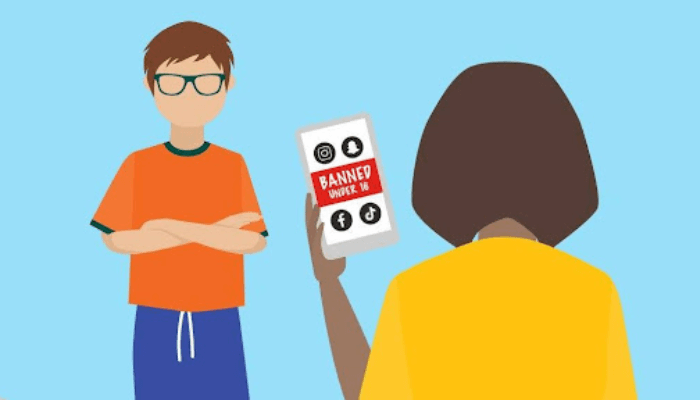
One of the major tech news across the world last week was Australia’s social media ban for children 16 years and below. As expected, opinions were divided as to the legality and usefulness of the ban.
Australia, as with many other parts of the world, had over the past years witnessed an alarming rate of youth mental health problems and a spike in suicide rates among teenagers and young adults. Numerous studies have shown a direct correlation between social media and other online activities and the mental issues/suicide attempts/rate. The Australian government then took action to stop the mental rot of its future leaders. It must be stated clearly that social media platforms are not necessarily bad, but the way people use them to manipulate others, especially undiscerning children, is where the problem lies.
In November 2024, the government passed the Online Safety Amendment (Social Media Minimum Age) Bill 2024 into law, to take effect on 10 December 2025. Last Wednesday, the law came into effect, blocking teens from X, TikTok, Instagram, YouTube, Facebook, Snapchat, and other major social media platforms, and the whole world went belly up over the action. The implications of this new law are multifaceted as it would affect the whole social media ecosystem and the key stakeholder groups first in Australia and then across the world.
How Australia plans to enforce the law
Before we consider the implications, however, how does Australia plan to enforce this law. Australia is adopting a multilayered approach to ensure the ban is effective. First is age verification, which is expected to include government-issued identification, photographs or selfies, and deployment of AI to scan faces and determine a user’s age. The government also hopes to work with parents, schools, and the children themselves through enlightenment campaigns to further reinforce the need for the ban. Then there would be regular audits of the platforms and it is expected that the government will demand regular compliance reports from the platforms.

While the enforcement strategy may seem robust, it may not be as straightforward as it appears. It is clear that in the coming weeks and months, the Australian government, particularly the agency charged with monitoring and enforcement, will have its hands full.
Gaming the ban
The online world is so vast and there are thousands of accessible tools that any individual with an average digital skill can deploy to navigate online obstacles, including a ban. Today’s children are digitally savvy and smart and with artificial intelligence available to them, online and social media navigation is like chicken feed. I remember a few years back when the Nigerian government shut down X (Twitter). Young Nigerians probably laughed their heads off because the Twitter ban had little to no effect on them as they switched to Virtual Private Networks (VPN) and continued their tweets.
A VPN has several uses, but the most relevant to an individual facing online restrictions is the tool’s ability to bypass geographic restrictions or region-specific access issues. This functionality is possible because VPN hides a user’s IP address, making it almost impossible to know a user’s location. So, it helps somebody online to avoid being tracked.
It is expected that there would be a spike in the use of VPN tools by young Australians following the ban. The government must have a strategy to checkmate this. Teens may also piggyback on slack or permissive parents and complicit adults to sign up to the banned platforms. Such accounts on the banned platforms will carry the details and identities of adults while it is the children that are running the accounts. There will also be a spike in fake birthdates as teens attempt to bypass restrictions. Use of artificial intelligence deepfake will equally experience a surge with teens trying to manipulate their faces to look older and trick the system.
Implications of the ban
The ban has far-reaching implications for the affected teens, Australians, the country’s socio-economic landscape, the social media platforms, and other countries, including Nigeria.

Australian teens
Starting Wednesday, 10 December 2025, millions of Australian children aged 16 years and below ceased to have access to Threads, YouTube, Snapchat, Instagram, X, TikTok, Facebook, Twitch, and others. Their accounts were deactivated on these major platforms. What that means is that teenagers and younger Australian children will no longer be on mainstream social media platforms. It is conceivable that these children may move to lesser-known, unrestricted platforms and apps and simply initiate their harmful behaviour on those platforms.
Major social media platforms
These platforms are now mandated to implement age‑verification systems to ensure 16-year-olds and under don’t have access as failure to do these could be very costly for them in terms of fines and total shut downs. This will no doubt lead to a drop in user count and engagements leading to adjustments in their algorithms to factor in the new reality.
Influencers, brands, and content creators
Influencers and content creators will feel this ban most because millions of followers have been deactivated. This will lead to declining engagements and eventually income. For brands, there is an expected drop in prospects and conversation rate, which will also impact revenue. Already, some content creators have reported a drop in their engagement rate.
Government
As expected, the Australian government is already studying the effects of the ban on the youth population in terms of social interaction, mental health, and digital attitude. There is no doubt that the ban will also impact the government’s revenue negatively in terms of a drop in taxes collected from businesses which are reliant on online and social media for their revenue generation. But weighed alongside the larger good of mental wellbeing for its citizenry, the Australian government will gladly take the tax losses.
Research institutions
The ban represents a great opportunity for research institutions which on their own or in collaboration with others can study its effects on the country’s mental wellbeing, particularly among the affected demography. Such studies should show if social media ban improves mental wellbeing. Governments and policymakers across the world would be interested in such studies as it could influence future laws on social media vis-à-vis safety of minors. For instance, there are reports that Stanford University has commenced a study on the ban.
Legal fireworks
For such an enlightened society, it is expected that the ban would be challenged in court. And indeed, reports suggest that several entities have approached the courts to determine the legality of the ban. Many have argued that it encroaches on the freedom of communication rights and must be rescinded. Observers across the globe are anxiously waiting for the legal outcomes to guide their online and social media policies.
The key roles parents must play
The ban is just a first step in the broader approach to curtailing youthful excesses on social media platforms. Beyond the ban, experts argued, the government must seek the full cooperation of the parents to ensure the ban is effective.
Parental guidance and subtle control will play a critical role in the children accepting the new reality rather than seeking to circumvent the ban. Parents must be able to communicate the dangers of social media, such as addiction, cyberbullying, identity theft, mental abuse, and so on, through open and honest conversations with their wards. Once the children understand these risks it becomes easier for them to accept restrictions, controls, and bans.
Parents themselves must show leadership in online and social media usage. A parent that is online on social media almost all day long will have a tough time convincing a child that it is unhealthy. Similarly, a parent who exhibits deviant behaviour online can’t teach the child moderation on social media.
Parents must be knowledgeable about the online lingo and activities of their children to be able to seize opportunities to educate them on the dangers online. There are many regular terms that youths use online to mean something totally different from the original meanings of those words or terms. A term like ‘Thirst Trap’ may look innocuous but it’s a nude photo; ‘Body Count’ means number of sexual partners an individual may have had; ‘Cart’ or ‘Plug’ is a reference to hard drugs; 9/99 is a code that a parent is around; ‘POS’ stands for parent over shoulder, a warning to the other party to act normal until the coast is clear.
The spike in suicidal thoughts and practice by children hooked on social media is because many can’t easily identify fake, scams, and inappropriate content. They tend to believe the perfectness often projected online by people they love and follow, celebrities, and others. Parents need to educate their children on the make-believe, filtered world of online personalities. They need to help the children build critical thinking capacities so they can readily identify fakes and scams online.
Importantly, parents should encourage more outdoor activities among their children. Rather than spend hours on end staring at screens and cavorting in the online world, suggest outdoor sporting or socialisation activities.
Why the Australian ban matters to the world and Nigerians
The success or failure of the ban will define how societies and people interact with social media in the coming years. It will define social media legislation across the world. It will determine social media influence; it will define how brands interact with the platforms in terms of advertisement and activations. It will determine the nature of the content the platforms will feature. In fact, it is expected to rearrange the socio-economic outlook of many individuals, brands, and governments across the world, including here in Nigeria.