|
Getting your Trinity Audio player ready...
|
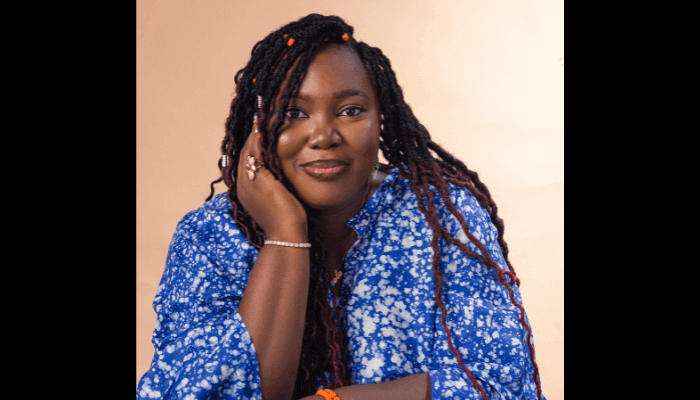
Tomi Falade is a Nigerian journalist and author of Olobun: Matriarch of Ondo, Mother of Legacy. The drama (Olobun) was featured for the 2025 Best of Nollywood (BON) awards book reading, held recently at Ikeja High School, Lagos. In this interview, Falade shared insight into her writing as an entertainment journalist and some of her literary works. Excerpts by JOHN SALAU
There is a popular saying that ‘reading culture is dying’ in Nigeria. As a writer, how do you describe the culture of stage play in Nigeria?
Let me talk about reading culture first. The reading culture is, yes, dwindling. I agree absolutely. But that’s not because people are not looking for information. That’s because there’s a lot of things now vying for people’s attention. Back in the day, we didn’t have Netflix or drama or Nollywood, as it was, or even so many stage plays. Back in the day, books were the only way to entertain yourself or lose yourself in a world that is beyond your reality. That’s the truth. Now, there’s so much content out there that is vying for attention. The fact that people are still reading and still enjoying books shows that, yes, the reading culture is not dwindling in the way we think it is. It just means that there’s a lot more information out there. For example, I like books. Infact, I love books so much, but the generation that has come behind us lives on their phones and they have eBooks. A lot of people have asked me that they want Olobun as an eBook so that they can enjoy it on their phones, tablets, and their laptops. So it doesn’t necessarily mean that the reading culture is dying. Yes, it’s dwindling because of the number of things I have mentioned. There are movies on YouTube that you can entertain yourself easily. When we read Olobun at the Ikeja State High School, you could see the excitement and enthusiasm from the students. The students genuinely enjoyed the book, the actors genuinely enjoyed the book and read it, and the wife of Lagos State Deputy Governor enjoyed it. That means that the reading culture is not dying as we think it is. I don’t agree that it is dying. People are experiencing entertainment in different ways, I put it to you that 50 years ago if we had this much film content, or Netflix, or YouTube content, they wouldn’t have read as much as they did.
For theater, yes I think we are losing the culture of theater for a number of reasons. The reasons are quite understandable anyway. Theatre is not easy to put up. You have special effects, CGI, and so many things to make your work as a filmmaker easy but it’s not that easy with stage play. Also, it is capital-intensive and a bit more difficult. If you’re going to put up a good stage work, you need money. That’s why I think its suffering or lagging but there are people that are still doing quality theater, making some profit and keeping the culture alive. So, I don’t think that it will die out totally. I just think that we need to find a way to balance it as an industry. For example, Muyideen Oladapo (Lala) recently produced a stage opera and he did it so well with good actors like Omowunmi Dada, Lateef Adedimeji, Lizzy Jay, and a lot more.

It was just two days. If it was a film, once you shoot the actors, you can do it all at once, get it on tape, and continue distribution. But for the stage, you have to gather everyone every time you want to present it. From costume to every little detail. Everything has to be assembled back again. So that makes it difficult but not impossible. It just means that people who truly enjoy the arts must learn to invest in the art so that it doesn’t die. They must learn to invest in theater so that it doesn’t die out totally. I wrote Olobun for the stage, and I’m hoping that it eventually comes to the stage. But I also have to be realistic in knowing that for it to come to the stage, there has to be a lot of capital involved.
We saw the wife of the Lagos State deputy governor, Oluremi Hazmat read your book to students of Ikeja High School; what is your take on that?
When I first wrote Olobun, I didn’t know it would come this far. I wrote as someone who was trying my hands at something that I thought I could do. So when I saw the wife of the deputy governor, Mrs. Oluremi Hamzat read my book along with actors like Keppy Ekpeyong and Omowunmi Dada, people that I have watched on the screen for a long time, I was so proud of myself. I was proud that I created something worthy of their voice. The truth is you would feel the pulse of the play from their voices and ad-libs; they brought so much life to the characters. At some point, it was no longer like we were reading it. It felt like we were acting in a script. It felt so beautiful to see Keppy Ekpeyong, Omowunmi Dada and more importantly, the wife of the deputy governor reading the book and enjoying it. For any creator, that’s one of the most important things that can happen with your creative work – that people truly experience it and enjoy it.
Read also: 2025 Phonics reports show dramatic early reading gains in Nigeria
Olobun was selected for this year’s Best of Nollywood (BON) awards book reading. Kindly give us insight into the story behind this drama piece ‘Olobun’?

First, I’m so excited that this year’s BON awards are happening in Lagos to start with. There’s no state like Lagos, if we are being honest. The normal tradition for the Best of Nollywood Awards every year is that besides all the nominees unveiling, there’s always a book reading where they bring actors and a few government officials, top people in government of the host State of that year’s award. Last year, they read to students from different primary schools across Kwara states. But this year, for Lagos, it just had to be special. So, instead of bringing students and pupils together, we took it to a school. It was so beautiful to see. The students we read to at Ikeja High School love the book so much. It shows that reading is still a big deal in Nigerian schools contrary to what anybody thinks. So yes, it’s a beautiful thing that Best of Nollywood is coming to recognise stories that matter and bring it to the face of the young people that are going to be the leaders of tomorrow.
How important do you think this book is for the people of Ondo on the back of its historical value?
One, it is the preservation of our stories; the preservation of our history and culture. There were a lot of things that I needed to do deep research about Olobun. I had to go online, visit Ondo State Cultural Center itself, and a lot more to get my facts straight. Of course, I took a bit of creative liberties with the story but the core of the story is the reality of what happened as passed on from generation to generation.
Secondly, it is to ensure that our stories are correct. There is one thing that I used to say, ‘If we don’t start telling our own stories, other people will come and tell our stories to us in the way they think it should be.’ They will tell these stories without an understanding that we are not the same kind of people. For example, you can’t expect a man or woman from another culture, faraway from a people,to come into your culture and tell a story right. It’ll be difficult for such a person to understand the relevance of some issues. They will tell the story from their cultural perspective and not a reality of actual possibilities that could have happened. But we who are currently living in the culture might have more information as to what the possibilities can be. This is the importance of us telling our own stories so we can retain the originality. For example, when you go online and search who abolished the killing of twins in Nigeria, all you would find is Mary Slessor, but the killings of twins had stopped in some parts of the country long before Mary Slessor came to Nigeria but no one talks about it because we are not telling our stories. It would be a shame to us because we are not telling our stories. As generations pass on, this history will die quietly and unfortunately. There are so many issues like this that we are not raising. So this is the reason why a story like Olobun is very relevant. It’s a preservation of our stories and our history and our culture and our people. And it’s also a way to tell the correct version of our story, and learn from our history. It is a very important one for the culture at the end of the day.
When should we expect a stage adaptation of Olobun?
I was going to look at 2025 but with the look of things it’s not looking like it’ll happen this year.
Hopefully next year depending on if we get investors or sponsors for the production, we’re in talks with a few directors to see if it’s something that can be done. Even if it’s on the smallest scale. We can start with a university, a theatre department of a university. Those are the avenues we’re exploring and we’re hoping that soon we’ll get to see it.
Away from the literary work to the personae – how would you describe Tomi Falade?
So, I’m not sure if saying that my work has been read around the world would be correct because the book is barely two years old and it’s only available in Nigeria, of course, on Amazon too. But, so far, it’s been well accepted and it’s been surprising. The brand Tomi Falade is good, and without a doubt, it has grown beyond the things that I had imagined. I like to describe my work as reality literature. People who know my work know that my writing is inspired by real life events. My two books reflect that and my other works that are coming up also reflect that. So yeah, my brand is reality literature. I’m inspired by things that have happened in real life and I find the story in them and tell it. That’s basically the brand.
Dates from Hell, Olobun – should we expect more books from you?
Yes, you should expect a lot more. I finished a play earlier in the year, for an anthology. I can’t say much about it yet. The play is done and hopefully we get to see it in 2026. I wrote it in 2024, and I am truly hopeful that it comes to publication next year. It’s a drama too and it has a bit of reference to Olobun. It is like a continuation of the story in a way. But it is also a stand-alone story. But beyond that there is a lot more coming. I love writing and I don’t intend to stop writing. As much as my work as a journalist allows me, I will keep writing and keep putting out more content – that’s my goal and that’s my vision.
Finally, are you looking at a book tour of local communities in Ondo?
I thought about that, but we don’t have plans in that direction yet. Of course, it is a good one but truthfully, we haven’t planned in that direction yet. We’ll definitely consider it, of course, because the story comes from that community and we have to take it back to the community to present to them that, yes, this is what we have done. So, it would be good, it’s a very good idea to do it, but we’re not planning anything in that direction yet. But of course, we’ll look into it.