…Outlaws cash collection, multiple taxation, touting
…Places responsibility on states, LGs to adopt better collection measures
…Reform will not reduce states, LGs IGR – Experts
On a busy Tuesday afternoon in Agbara Market, Ogun State, business was just picking up when a group of men stormed the rows of shops and stalls. They were not customers. They were tax collectors, the type market women dread.

“We’ve not even made N5,000 profit this week,” many traders pleaded as the men demanded N10,200 annual tax per shop or immediate closure. After tense back-and-forth, the officials, adamant and unmoved, forced each shop owner to part with N7,200, issuing handwritten receipts on the spot.
“This is how we pay every year. They come to the market without notice and force us to pay the tax,” one woman, a small business owner who had only recently opened his shop, said in frustration.
Agbara is not an outlier; it is a snapshot of a nationwide problem. From Idumota Market in Lagos to Onitsha Main Market, from motor parks to mechanic villages, the story is the same. States and local governments rely on touts, middlemen, and hired task forces to extract revenue from citizens, often in cash, often by force, and often without accountability.
For years, this chaotic, cash-based, and sometimes violent approach has defined tax and revenue collection across Nigeria. But the architects of Nigeria’s new tax reform say this era is about to end.
Read also: Individuals earning up to N100,000 monthly won’t pay personal income tax from 2026 – Oyedele

A new era begins: January 1, 2026
Nigeria is preparing to roll out one of its most ambitious tax reforms in decades, a regime that introduces 50 targeted exemptions and reliefs, bans cash collection, ends multiple taxation, and outlaws touting and roadblocks used in the name of revenue generation.
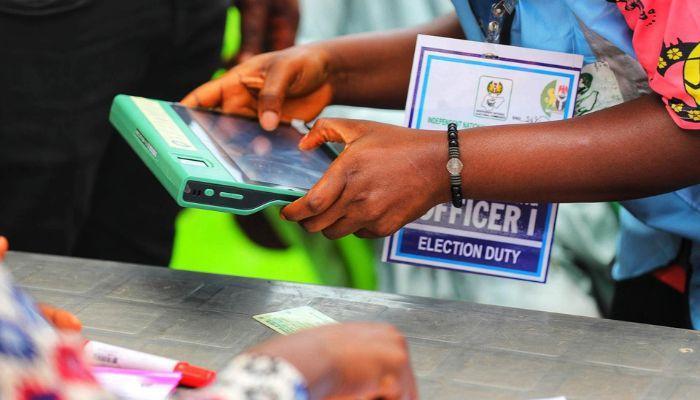
The 2025 Nigeria Tax Act (NTA) is at the heart of this shift. It establishes a unified, digital-first framework for tax collection. Under the law: All tax payments must be electronic, using PoS, mobile wallets or internet banking, banks must report individuals with monthly transactions of N25 million and companies with N100 million to tax authorities and large cash payments are restricted, mirroring global best practices.
Also, the federal government has banned the collection of cash in its MDAs effective from January 1, 2026.
The goal is simple: transparency, efficiency, and accountability.
But as the deadline approaches, there is growing concern that states and local governments, who have long benefitted from informal, opaque tax collection, may be resisting the change.
The old order: Spikes on the road, fear in the markets
Anyone who has driven across Nigeria knows the sight: men with wooden barricades and metal spikes blocking roads to demand “local government tax,” “union dues,” “ticket money,” and other dubious levies. For commercial drivers, dispatch riders, and traders, revenue collection has become synonymous with harassment.
The new tax regime is explicit in its rejection of this method.
The new laws seek to end the era of arbitrarily increasing taxes and rolling out all manner of levies in the name of increasing IGR. It is against the crude and chaotic method of tax collection where government officials block roads with spikes to threaten innocent citizens.
But will states and LGAs comply?
Read also: FG mandates TIN for all taxable bank account holders from January 2026
Phasing out cash collection is long overdue – Samson
Speaking on the development, Simon Samson, chief economist at ARKK Economics and Data Limited, said the decision to outlaw physical cash collection is long overdue. He described the shift to digital payments as “a step in the right direction” that will strengthen public finances and curb corruption.
“Phasing out collection of fiscal cash is a good thing… it will ensure transparency,” he said. “You have a digital footprint that you can trace, so it’s good for the economy. It will deliver more dividends for the Nigerian people because there will be more revenue, since everything can be traced.”
But Samson fears the implementation is repeating a familiar Nigerian mistake: announcing a massive policy shift before building the infrastructure that will make it work.
The Economics lecturer drew parallels with the troubled 2023-naira redesign, recalling how failed transactions left people stranded.
“What went wrong about the naira redesign was that the entire system got overwhelmed,” he noted.
He shared personal experiences where banks debited customers without crediting merchants, sometimes for months. This, he said, shows why digital infrastructure must be upgraded before cash is phased out.
While PoS machines and mobile payments are now commonplace, Samson stressed that the capacity of existing systems must be expanded so they are not “overwhelmed by so many people.”
‘States, LGs not ready’
Despite federal efforts, Samson believes subnational governments are far behind the FG.
“I don’t think they are ready…even for the federal government, I don’t think they have done anything new to show that they are really prepared for this.”
He also lamented the government’s failure to deploy simple technologies like QR codes that could make tax payments easy in rural communities.
“If you can make that available, that will help, particularly people in rural communities… It’s not a big deal, but it’s not available even in Abuja, even in Lagos, let alone rural places.”
Some fear the reforms could reduce the Internally Generated Revenue (IGR) of states and LGs. Samson disagrees.
“I don’t think it will reduce the IGR per se. It will be a bit challenging… Maybe, initially they might have to do hybrids, both electronic transactions and cash transactions, before ultimately everything will be done electronically,” the chief Economist said.
Read also: Here’s why Nigeria’s new tax regime should interest investors, households
States likely to adapt quickly, LGs at risk of falling behind – Adedeji
Abdulfatai Adedeji, a research fellow at the Centre for the Study of Economies of Africa (CSEA), says states may find it easier to align with the federal government’s reforms, but warns that local governments remain largely unprepared.
Adedeji said engagements between the Presidential Tax Reform Committee and state authorities, including consultations with the Nigeria Governors’ Forum, have created a pathway for smoother adoption at the state level.
According to him, “It may be easy for them to migrate since they have the Presidential Tax Reform Committee… I’m thinking it will be easy for them at the state level to quickly align with what the federal government is doing.”
However, he stressed that Nigeria’s local government system presents an entirely different challenge.
‘Local governments not prepared, lack transparency’
The research fellow said there was insufficient clarity on the financial structure and readiness of local governments, raising doubts about their ability to abandon long-standing informal practices such as road-side cash collection by touts.
“That’s a different ballgame,” he said. “We don’t know the position of local government finances. We don’t have that… You don’t even know the kind of structure they have, if it is easy or whether they were carried along during this process.”
He added that there was no indication that states are working with their LGs to harmonise tax administration under the new digital system.
“We don’t know the kind of arrangement that the state government is having with the local government… all those levies collected at the local government level, I don’t think they will adopt this new approach of collecting tax.”
‘Nigeria has the digital infrastructure to support reform’
Despite concerns over governance and coordination, Adedeji expressed confidence in Nigeria’s technological capacity to implement a cashless tax collection system. He said the country has made “significant” progress in digital infrastructure, especially in the banking sector, financial inclusion, and internet access.
“Digitally, we have really improved significantly. I don’t think there should be a problem with that… It is possible with the available infrastructure in terms of technology and access to the internet,” he stated.
The economist also pointed out that new levies introduced through electronic channels, such as bank transfer charges and VAT collections, have proven effective, showing that digital systems can be scaled nationwide.
“The situation we are in now is not the same as we were in the last decade. I’m not saying it’s going to be perfect, but with what we have, it is doable,” he said.
‘Impact on states’ and LGs’ IGR depends on income profiles’
Speaking on concerns that the new tax regime could reduce IGR for states and local governments, Adedeji said the impact will vary based on the income composition of their taxpayers.
He explained that while some tax components fall under the federal pool, others, such as personal income tax, remain a state responsibility.
“For the tax… the personal income tax is collected by the state. So, each of them has their own area of collecting tax,” he said.
Under the new law, workers earning between zero naira to N800,000 annually will pay no personal income tax. The expert said, adding that this could influence how much states generate, depending on their wage structure.
“If you have a lot of people on your PAYE earning less than N800,000 in a year, that will significantly affect it. But if the percentage of high-income earners constitutes the largest percentage, then they may be benefiting from that,” he explained.
A future without touts? Nigerians can only hope
If implemented properly, the new tax regime could transform Nigeria’s revenue system:
no more harassment, no more spikes on the roads, no more arbitrary levies, no more cash disappearing into private pockets.
But until states and LGAs dismantle their old structures and embrace digital, transparent collection, markets like Agbara will continue to feel the weight of outdated methods.
For now, traders, drivers, and small business owners cling to hope that the next time men storm the market, it won’t be with threats and cash receipts, but with digital systems that respect their dignity and protect their livelihoods.