Recently, I found myself typing a disturbing question into a search bar: “Do girls have agency?” The answer came back quickly and simply: “Yes. Girls are born with agency…” Agency, by the way, is the ability (of a person) to make choices, act on those choices, believe your decisions matter, and influence the world around you. I stay committed to demystifying concepts like this because so many of the conversations we have about women and girls depend on definitions people often aren’t fully familiar with.
For example, inalienable human rights is another phrase I constantly find myself explaining, even to well-intentioned people who simply do not know. Inalienable human rights are the basic rights and freedoms every human being is born with and cannot lose. No government, no institution, and no individual can take them away, transfer them, or demand that you surrender them. These rights exist inherently simply because you are human. Here’s the connection I want to establish: If every human being is born with inalienable rights, then agency is the means through which they exercise those rights.
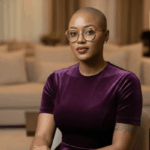
Recently, I launched an empowerment campaign for vulnerable girls called Letters to My Younger Self. A crucial part of this sustainability roadmap for helping girls graduate out of poverty is developing their agency. That is why I surrounded them with women leaders who were once girls themselves and whose stories mirror the realities these girls now face. Through those stories, the girls could see the undeniable thread of agency: how empowered decisions can shape your life forever, no matter your starting point.
As these leaders read letters to their younger selves, they channelled something deeply powerful—a sense of identity, worth, and possibility. Because at its core, agency begins with knowing who you are and believing you matter. Across every story, a familiar pattern emerged: each woman first discovered her inherent value, and that discovery unlocked the potential and courage to make empowered decisions.

From Adenike Oyetunde-Lawal, who lives life wholly and accomplished, determined after losing a limb to cancer; to Dr. Tàlé Alimi, who showed how an empowered self-image shapes self-perception and ultimately life outcomes; to Rhoda Robinson, navigating life with little restraint as a last child; and Ibukun Owolabi, whose boundless childhood as an only girl taught her that “impossible” was nothing. Each story mattered and made perfect sense in hindsight. Together, they revealed a shared truth: every story matters, and when a girl knows her worth, her agency wakes up. And when she exercises that agency, her life expands.
What does it look like to not have Agency?
In 2022, I created this ‘art for SDG 5’ as part of my assignment for the UPG Sustainability Leadership Fellowship.
When girls are socialised from their earliest years to view life through a narrow, gendered script, they are being conditioned—slowly but powerfully—to surrender their agency. By simply aligning with a deeply entrenched construct of “how girls should behave,” they absorb a worldview that becomes deeply consequential over time.
Instead of being encouraged to explore their interests, talents, or natural curiosity, girls are subtly guided toward what is considered “appropriate for girls.” I grew up with someone whose gifts were rooted in sports, dance, and physical expression. She enjoyed being active. But her interests were dismissed, and she was warned about “growing muscles.” Worse, she was shamed for it. That is what the erosion of agency looks like—choosing against oneself just to fit a narrative.

This conditioning continues as they grow older. Girls internalize the idea of marriage in a way that distorts their identity. Long-term decisions—what to study, where to work, what dreams to pursue—are filtered through what is “acceptable” for a future husband. Her agency slowly becomes diminished for an imagined partner. Then, the “biological clock” becomes a psychological prison that dictates the rhythm of her choices rather than her calling.
Layered on top of this is the early assignment of gender roles. Girls become the default caregivers and emotional managers of the household. They carry the domestic and emotional load in a way that unhealthily leads to self-sacrifice and eventually self-neglect.
And each time a girl’s sense of self or identity is dismissed, her voice is dismissed. Confidence doesn’t disappear overnight; it erodes quietly. She begins to think: “What I think is less important,” or “My desires are secondary.” A girl who never gets to practice making real choices grows into a young woman who doubts her own judgment.
This is how self-doubt takes root. Overdependence on approval. Fear of risks. Avoiding leadership because she has internalized, directly or indirectly, that leading and decision-making is not for girls. A girl who has never been trusted with decisions becomes a woman who doesn’t trust herself.
And so, their life outcomes become shaped by limitations, not potential. Not because they lacked talent or desire, but because they were never given the space to build the building blocks of agency: confidence, self-trust, autonomy, and the belief that their choices matter. They grow into women navigating a world with muted versions of themselves, not because they chose to be small, but because they were never allowed to be anything else.
How the Erosion of Agency Shrinks Women’s Opportunities in Life
And if you know me, or if you read my work often, then you already understand where my deepest concern lies: in how these subtle (and sometimes not-so-subtle) constraints placed on girls slowly shape their life outcomes and quietly shrink their potential. These limitations don’t simply affect personality; they shape possibility. They distort destinies that might have unfolded differently, and beautifully, if only girls had been allowed to honor who they are.
A lack of agency closes doors long before a girl ever walks toward them. It narrows her imagination before she even discovers what she is capable of. Here’s what that erosion of agency looks like in real life:
1. Gender Segregation Becomes “Normal”
Girls who are raised to see the world through a gendered script often enter adulthood believing certain career and business paths are simply “not for them.” Not because they lack the talent or interest, but because exploration was never encouraged. Their dreams become pre-edited; their potential becomes prematurely negotiated.
2. Financial Dependence
Early conditioning around “what girls should do” often evolves into financial vulnerability later in life. This shows up as reliance on partners for stability, hesitation around money management or investing, and difficulty leaving unhealthy relationships due to financial dependence. When girls are not taught to trust their own agency, they grow into women who outsource their economic power.
3. Shrinking Leadership Potential
Leadership requires voice, initiative, and the courage to decide; all traits weakened when girls are raised only to obey rather than question. As adults, many women shy away from promotions, avoid visible roles, or convince themselves they are “not ready” for leadership. Without early practice in making choices, decision-making becomes intimidating instead of empowering.
4. A Diminished Ability to Champion Change
A girl who is taught to stay small rarely becomes a woman who fights big battles. When curiosity is punished, and questioning is labeled “disrespect,” girls internalize the belief that challenging norms isn’t their place. The result? The world loses pioneers, disruptors, and innovators, not because they lacked brilliance, but because the courage to imagine change was never nurtured.
Final Thoughts
At the heart of all these lost opportunities is one powerful truth: When girls are denied the practice of agency, they grow into women unprepared to own their lives.
And the cost is enormous, not only for them individually, but for all of us. Society loses out on the brilliance, talent, leadership, and power they were born with. Every time a girl’s agency is stifled, the world becomes smaller than it could have been.