|
Getting your Trinity Audio player ready...
|
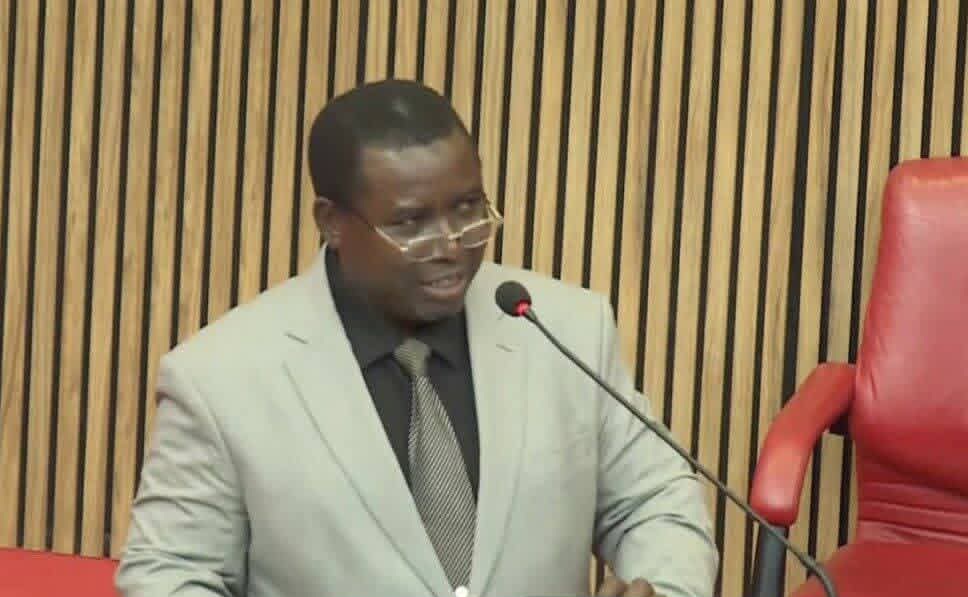
Joash Amupitan, chairman of the Independent National Electoral Commission (INEC), has called on civil society organisations (CSOs), community leaders, the media and voters to mobilise nationwide ahead of the Claims and Objections window, which opens on December 15, saying Nigeria’s democracy cannot be credible if the voters’ register remains “unclean” and populated with names of the dead, relocated citizens or other ineligible persons.
Speaking in Abuja at the Nigeria Civil Society Situation Room stakeholders’ forum on Thursday, the INEC chair said public scrutiny of the provisional register is weak, allowing errors and duplications to persist.
He cited a recent discovery during the Anambra State governorship election preparations where a well-known community leader who died in 2020 still appeared on the register.
Read also: Technology has ended era of voter impersonation – INEC

Amupitan said the first phase of the Continuous Voter Registration, which ran from August 18 to December 10, recorded 2,685,725 registrations, with 1,576,137 completed online and 1,109,588 done through physical capture. States including Osun, Kano, Sokoto, Imo, Borno, and Lagos led in turnout. Phase two will open on January 5, 2026, with registration centres moved closer to communities after field reviews showed distance barriers.
On the February 21, 2026 Federal Capital Territory (FCT) Area Council election, he described the assignment as highly sensitive, noting that INEC manages the entire process at the local government level in the Capital Territory.
He said insecurity remains a concern but warned against panic reactions, stressing coordinated responses among security agencies, CSOs, political actors and the media. He challenged the notion that Nigeria’s democracy is “nascent,” arguing that after more than two decades of civilian rule, the country must begin to demonstrate maturity in electoral conduct.
Amupitan reaffirmed that technologies such as BVAS and the IReV portal have transformed transparency, effectively blocking over-voting and exposing collation to real-time public scrutiny.
But he cautioned that poor network coverage across over 176,000 polling units and inconsistent field operations still affect real-time uploads, prompting ongoing engagements with telecom operators and the Nigerian Communications Commission (NCC).

On voter apathy, he said low turnout is a direct threat to legitimacy, pointing to a successful intervention in Anambra where a five-day PVC collection extension increased collection to 98.8 percent and doubled voter turnout.
He also condemned vote buying as one of the biggest threats to democracy, noting that INEC has asked law enforcement agencies for updates on arrests and investigations.
He said credible elections depend on cooperation, not suspicion, across institutions and stakeholders, and reminded the forum that democracy is a long-term cultural practice that must be built through civic responsibility and trust.
Returning to his central message, the INEC chair said the Claims and Objections exercise is a decisive moment.
“If we cannot clean our register, we cannot claim credibility,” he said. “INEC is doing its part, but democracy cannot thrive if the people themselves do not protect and purify the process.”