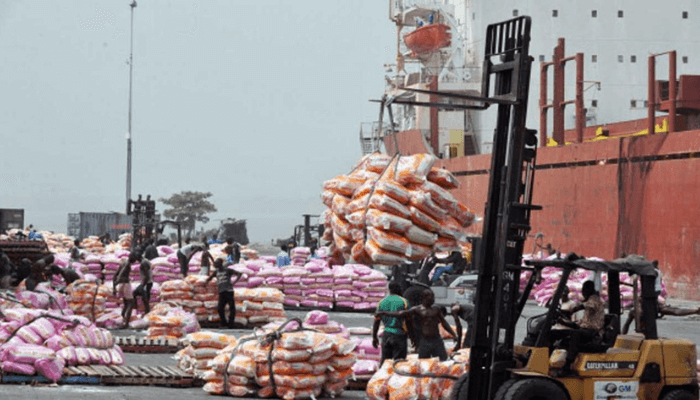
Nigeria’s new food planning framework is exposing deep structural pressures in the food economy, with official data showing that combined food imports and exports moved close to N5 trillion in value while many farmers recorded losses on key staples.
Data presented at the National Agribusiness Policy Mechanism (NAPM) workshop in Abuja, held on Tuesday, showed that about N4.5 trillion worth of food commodities were imported during the last major crisis period.
Food and agro commodity exports in the same period were valued at between N4.8 trillion and N5 trillion, according to figures from the Nigeria Customs Service.
The workshop was convened by the Presidential Food Systems Coordinating Unit (PFSCU) under the Office of the Vice President.

The workshop reviewed the 2025 major wet season across 13 pilot states and assessed prospects for the 2025 to 2026 dry season using production, trade and farmer survey data.
Read also: FG targets large-scale youth agribusiness expansion through LIFE-ND programme
In her remarks, Marion Moon, technical assistant, agriculture, Office of the Vice President and secretary of PFSCU, said the NAPM was designed to shift agricultural policy away from fragmented decisions toward coordinated and data driven planning across federal, state and local governments.
PFSCU data showed that Nigeria’s food import bill in 2024 was close to N6 trillion. Stakeholders said this exposed the economy to global price volatility and supply disruptions. At the same time, farmers struggled to break even as production costs surged following naira depreciation and higher fuel prices.
Impact assessments presented at the workshop showed that maize and rice farmers in the pilot states recorded negative margins during the 2025 major wet season.

Average maize production cost was estimated at about N726,000 per hectare, while revenue averaged about N685,440, resulting in a loss of roughly N40,560 per hectare.
Rice farmers faced average costs of about N750,200 per hectare against revenue of around N729,980, translating into losses of about N20,220 per hectare.
Maize production across the pilot states fell by about 2.8 percent due to reduced acreage and lower yields. Rice output declined by nearly 8 percent following a drop in cultivated area and weaker profitability.
Other crops performed better. Soybean production rose by about 38 percent, driven by higher yields and expanded land use, with average profits estimated at more than N400,000 per hectare. Sorghum output fell by about 1 percent but remained marginally profitable due to lower input costs and higher tolerance to climate stress.
Food balance simulations under the NAPM framework showed supply deficits in maize, soybean and sorghum. Maize availability was estimated at about 11.43 million tonnes against domestic demand of roughly 12.2 million tonnes.
Soybean availability stood at about 0.69 million tonnes compared with demand of about 1.1 million tonnes, while sorghum also recorded a shortfall. Rice was the only major staple with a simulated surplus, supported by imports estimated at 3.2 million tonnes and reserves of about 1.88 million tonnes.
Also speaking, Dera Nnadi, deputy comptroller general, Nigeria Customs Service (NCS), in charge of strategic research and policy, said government approved imports of unprocessed commodities such as paddy rice and wheat during the 2024 food crisis triggered by global supply disruptions.
He said the intervention was aimed at stabilising domestic prices through local processing.
Nnadi said Nigeria imported about N4.5 trillion worth of unprocessed food commodities during the period and exported almost N5 trillion worth of agricultural products.
He said this pointed to strong domestic output but highlighted weaknesses in post harvest management, storage and processing that continue to weigh on farmer incomes.
He said farmers often lose value by selling produce in raw form and called on state and local governments to complement federal efforts by investing in silos and food processing facilities.
Nnadi said the NCS shares food trade data with the PFSCU and the NAPM. He added that customs monitors global food price movements, enforces food import policies and works with quarantine agencies to prevent harmful agricultural imports.
He noted that official figures do not fully capture informal cross border trade and stressed that customs acts strictly as an implementing agency, not a policy making body.
PFSCU data also showed structural input gaps, stating that Average fertiliser application stood at about 30 kilograms per hectare, far below the Abuja declaration target of 50 kilograms. Only about 45 percent of farmers used improved seed varieties during the wet season.
Looking ahead to the 2025 to 2026 dry season, states plan to support about 214,000 farmers through input subsidies, extension services and limited irrigation support.
However, fewer than 30 percent of farmers currently have access to motorised irrigation, raising concerns about dry season output sustainability.
Officials said the NAPM pilot, launched in May 2025 for four production seasons, will be used to assess whether the mechanism improves coordination across production, trade and reserves before nationwide expansion.