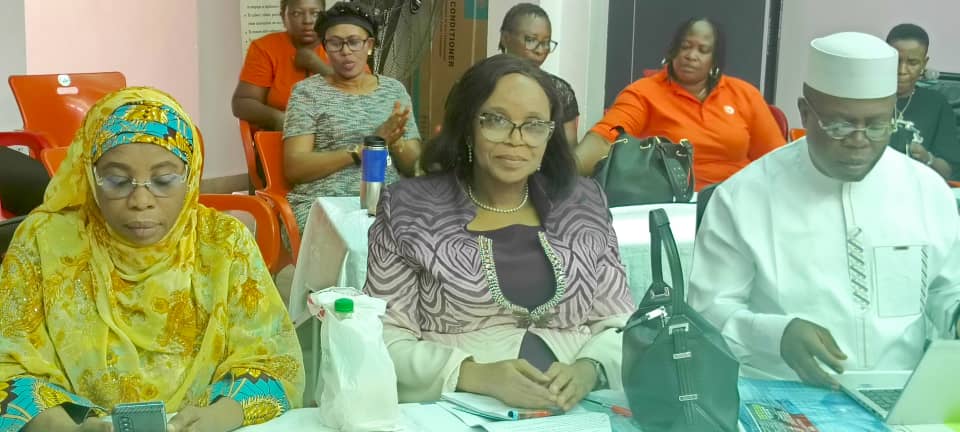
Female journalists in the Federal Capital Territory (FCT) on Tuesday renewed calls for inclusive newsroom policies, equitable leadership opportunities, and sustained capacity building as the Nigerian Association of Women Journalists (NAWOJ), FCT Chapter, held a one-day training for 100 women journalists in Abuja.
The programme, which was held at the Nigeria Union of Journalists (NUJ) Secretariat in Abuja, focused on workplace diversification and strategies to strengthen women’s influence in editorial decision-making, leadership, and digital journalism.
Aisha Ibrahim, National Chairperson of NAWOJ, said workplace diversification had become a necessity rather than a choice in modern newsrooms.
Read also: Police, journalists partner in Cross River to curb crime ahead Christmas

She said diversity strengthened perspectives, drove innovation, and ensured that media coverage truly reflected the realities of society.
Ibrahim said female journalists continued to face underrepresentation in leadership and subtle newsroom biases that limited their influence.
She said NAWOJ was committed to breaking barriers, advocating equitable opportunities and promoting environments where women journalists could thrive.
Ibrahim said the capacity building programme was designed to equip participants with skills, confidence and leverage to demand their rightful place at editorial tables.
She urged participants to embrace new skills, challenge the status quo and build strong professional networks.

Bassey Ita Ikpang, chairperson NAWOJ FCT, said the training reflected a deliberate effort to build a stronger, more visible and better equipped community of women journalists.
She said many female journalists still battled newsroom pressure, limited visibility and leadership barriers alongside demanding personal responsibilities.
Ita Ikpang said the carefully designed sessions addressed digital transformation, leadership development and personal growth.
She commended the Office of the Head of the Civil Service of the Federation for supporting the initiative, describing it as a clear demonstration of commitment to workplace diversity and female capacity development.
In her keynote address, Didi Esther Walson Jack, Head of the Civil Service of the Federation, said workplace diversification in the media was a strategic requirement for national development and democratic growth.
She said inclusive institutions made better decisions and produced richer and more balanced national narratives.
Walson Jack said reforms under the Federal Civil Service Strategy and Implementation Plan 2021 to 2025 prioritised merit, digital capability and equitable representation, leading to more women occupying leadership roles across MDAs.
She noted that gaps remained in newsroom leadership and editorial decision making.
In her remarks, Grace Ike, chairman, NUJ FCT said the training was a strong statement against discrimination and marginalisation of women journalists.
She said women in the media continued to face harassment, unfair assignments and limited opportunities despite their competence and resilience.
The chairman reaffirmed NUJ FCT’s commitment to safer and more inclusive newsrooms and stronger advocacy for women in journalism.
Participants said the programme provided practical skills, renewed confidence and a stronger collective voice to challenge inequality and expand leadership opportunities in the media sector.