The alumni of African Church Grammar School (ACGS) Abeokuta have launched a targeted intervention to address the lack of proper school footwear among pupils from low-income families, a persistent yet often overlooked barrier to education.
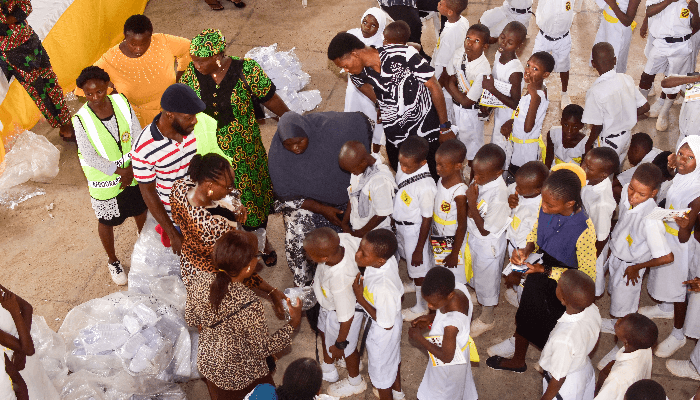
The 9602 set of ACGS distributed over 700 pairs of regulation white sneakers to every student in Junior Secondary School 1 (JSS1) during a brief ceremony on Tuesday. Unlike many public schools where sandals may suffice, ACGS maintains a strict dress code requiring white sneakers, making the financial burden on families even greater and the consequences of non-compliance more immediate. For many pupils, this uniform standard, while fostering discipline and identity, can become a barrier when basic necessities like shoes are out of reach.
Read also: NBS begins 2025 survey in Kaduna to boost women, children’s welfare
The initiative, aptly named “Lace a Child,” was conceived after alumni observed the widespread absence of the regulation white sneakers mandated by the school and sometimes any shoe at all.

The issue reflects a broader national crisis which gained national attention during the 2011 presidential campaign, when then-candidate Goodluck Jonathan poignantly recalled his own childhood hardship: “I went to primary school without shoes,” he said during a rally, highlighting how poverty had shaped his early education. More than a decade later, that same struggle persists.
“For many children, having any footwear isn’t enough,” said Kunle Babatunde, Public Relations Officer of the 9602 set. “At our school, you must wear white sneakers. Without them, you stand out in the wrong way. We’ve been there. We know how shame and discomfort can rob a child of confidence, let alone the chance to learn. This project is about restoring dignity and saying, quite literally, ‘We’ve got your back, and your feet.’”
Jamiu Olakunle Agboola, president of the alumni group, described the distribution as only the first stride in a broader vision. “We aim to cover the entire school in the coming years,” he said. “But more than that, ‘Lace a Child’ has become a symbol of what ordinary people can do when they choose empathy over indifference. These sneakers carry hope and the message that someone believes in these children’s future.”
For 12-year-old Ayorinde Oscar, a JSS1 pupil and one of Tuesday’s beneficiaries, the gift was deeply personal. “My shoes were falling apart,” he said, holding up his new white sneakers. “I was dreading the new term.”
For Obafemi Juliana, the gift eases the tension of asking for new shoes over the holidays.

“Now, I won’t have to worry about being sent home or teased. My parents won’t have to choose between shoes and food,” she said.
Read also: Over 200,000 Nigerian children receive new malaria vaccine – NPHCDA
School Principal Oluseyi Kusimo commended the alumni for addressing a critical need that often falls through the cracks of education policy. “This isn’t just about footwear, it’s about easing the financial burden on struggling families and reinforcing to our pupils that their education matters,” he said. “Such acts strengthen the very fabric of our school community.”
With national data indicating that over 10 million Nigerian children remain out of school, many due to poverty-related issues like lack of uniforms or footwear, the “Lace a Child” project offers a replicable model of grassroots social responsibility. In a time of widespread educational inequity, the 9602 set of ACGS Abeokuta has proven that sometimes, change begins at the feet—and moves upward.