Nigeria’s entertainment industry didn’t accidentally become a global force. While the rest of Nigerian business was still debating whether digital presence mattered, our musicians, filmmakers, and content creators were building audiences of millions, securing international partnerships, and turning cultural capital into actual revenue streams that now contribute billions to GDP.
The question every other sector should be asking is why we’re not learning from them.
When Davido headlines sold-out shows across Europe and North America or Funke Akindele’s films break box office records, that success didn’t come from traditional business development. Nobody handed them export licences or introduced them to international distributors through chamber of commerce meetings. They built their own visibility, cultivated their own audiences, and made deliberate strategic choices about how to build presence in global markets.
Understanding those choices matters for every sector seeking international growth.

Three specific approaches distinguish how Nigeria’s creative economy built global reach.
Firstly, authentic market positioning rather than imitation of Western templates. Afrobeats succeeded globally precisely because it maintained a distinctive African identity. This created differentiation in crowded international markets where generic approaches often get lost. The strategic lesson applies beyond entertainment; the elements that make Nigerian operational experience distinctive often represent competitive advantage rather than limitation.
Secondly, building visibility before waiting for traditional opportunity pathways. International record labels didn’t discover Nigerian artists through conventional industry channels. Artists built demonstrated audiences first, creating demand that made partnerships inevitable rather than uncertain. This reverses the traditional approach where businesses wait for perfect market conditions or official introductions before establishing a presence.
Read also: Creative economy receives boost as employers engage jobseekers at Lagos fair
Thirdly, treating digital platforms as a core business infrastructure rather than marketing supplements. When Ayra Starr releases her music, her digital presence functions simultaneously as a distribution system, customer relationship platform, and revenue generator. Most Nigerian businesses still approach digital presence as something the marketing department handles separately from core operations.

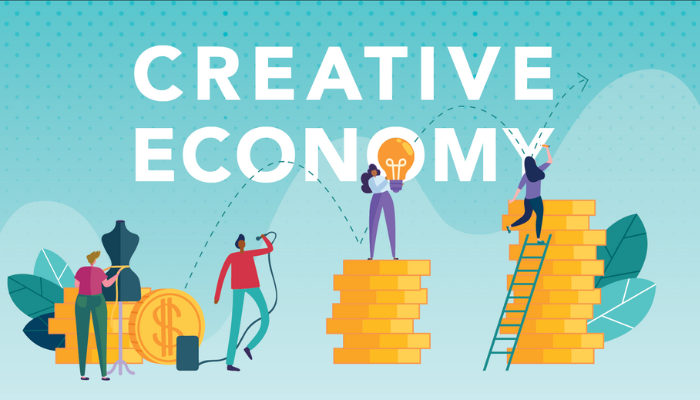
The Federal Government’s creative economy agenda recognises what entertainment has proven. Digital presence has become fundamental business infrastructure for global competitiveness. The question for other sectors is how to adapt these strategies to their contexts.
Nigerian technology founders working to attract international venture capital face a specific challenge. International investors can readily evaluate Nigerian musicians because artists have built visible track records demonstrating market validation. A promising Nigerian fintech startup without a superior product often struggles because decision-makers can’t easily find the founder online to assess their operational credibility or market understanding.
The gap isn’t competence. It’s visibility. And visibility determines who gets the meeting.
Manufacturing executives seeking export markets face similar dynamics. Nigerian fashion designers successfully sell globally through digital platforms, while manufacturers with decades of operational excellence struggle to connect with international buyers. The capability exists. The discoverability doesn’t.
Professional services firms experience this acutely. When international clients choose between Nigerian and South African or Kenyan competitors despite Nigeria’s larger market, they’re often choosing whoever they could find and evaluate most easily through digital channels.
What makes this strategically urgent rather than theoretical is infrastructure accessibility. The platforms that enabled our creative economy success are available to every sector now. LinkedIn reaches decision-makers globally. Digital publishing platforms provide distribution at minimal cost. Video content creation and sharing require modest investment compared to traditional visibility-building approaches.
What separates sectors capturing global opportunity from those struggling isn’t availability. It’s whether leadership decides to deploy available tools strategically.
The banker with deep expertise navigating Central Bank policy complexity and managing Naira volatility possesses knowledge international firms entering Nigerian markets specifically need. When that expertise remains invisible in formats global stakeholders use for expert identification, it represents a missed commercial opportunity.
The manufacturer who has solved supply chain challenges under infrastructure constraints that would halt Western operations demonstrates problem-solving capability that translates across geographies and sectors. When that operational experience is not documented in discoverable formats, potential international partners can’t evaluate the capability that would justify partnerships.
The technology executive building across multiple African markets understands operational complexity that most global investors have never navigated. When those insights aren’t shared in platforms where investors conduct due diligence, they miss signals that would increase confidence in market entry strategies.
When the government prioritises creative economy development, this reflects recognition that the sector has demonstrated successful frameworks for global market penetration. Other sectors can study those frameworks or continue with approaches that have produced different results.
The creative economy didn’t wait for comprehensive policy support or infrastructure completion before building international presence. Nigerian artists succeeded by deploying available tools strategically under existing conditions. This suggests that while supportive policy helps, it isn’t a prerequisite for individual sectors and companies to begin building strategic visibility.
The Federal Government’s digital economy initiatives create more favourable conditions. But the core work of establishing presence and making expertise discoverable operates at the organisational and individual leadership level. The government can facilitate. Individual strategic choices determine outcomes.
The competitive dynamic
Nigerian business leadership currently has an opportunity that won’t remain open indefinitely. While debates continue about whether digital presence matters or which traditional pathways remain viable, competitors from other markets are building visibility that determines who captures partnerships, board positions, speaking platforms, and international contracts.
The creative economy provided proof of concept. Nigerian talent can dominate global markets when visibility matches capability and the infrastructure that enabled that success is available to every sector now.
Manufacturing executives who’ve solved supply chain challenges under conditions that would paralyse Western operations possess rare expertise. Technology leaders who’ve built across African markets understand complexity most global investors have never navigated. Bankers managing naira volatility and policy uncertainty have knowledge international firms entering Nigeria will pay for.
However, the key question remains: will that expertise remain invisible to the global stakeholders who need it, or will Nigerian business leaders make the same strategic choices our artists made?
The creative economy showed the path. Other sectors can follow it or continue wondering why entertainment succeeds where they struggle.
Datari Ladejo is a multi-jurisdictional lawyer and leading digital strategist with over 18 years of entrepreneurial experience. She is the CEO of Fernhill Digital, where she helps organisations, brands, and entrepreneurs articulate their vision, strengthen public image, and drive measurable impact through strategic marketing and digital transformation. She is also the founder of Digital Women Africa (DWA), a pan-African initiative dedicated to equipping African women with digital skills, resources, and community support to thrive in today’s economy.