|
Getting your Trinity Audio player ready...
|
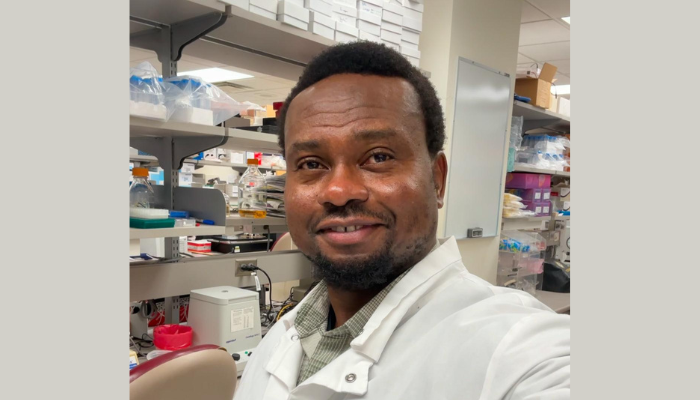
In a period where infectious diseases continue to evolve faster than available treatments, a Nigerian-born molecular and translational scientist, Conrad Achilonu, is emerging as one of the voices shaping global infectious disease research.
From his academic roots in Nigeria and South Africa to advanced molecular translational research at Mayo Clinic in the United States, Achilonu’s work is gaining international recognition for addressing some of the world’s most urgent scientific gaps.
Africa, despite its biodiversity and significant disease burden, remains underrepresented in pathogenic and genomic surveillance, antimicrobial resistance (AMR), and antimicrobial therapeutic intervention research. Experts note that Nigeria continues to face limited research funding, inadequate high-throughput laboratory facilities, and a shortage of mentorship-driven research ecosystems. These challenges hinder the continent’s ability to detect emerging pathogens, support drug discovery, or contribute meaningfully to global scientific databases.
It is in this environment, marked by underinvestment and limited visibility, that Achilonu has focused his career on addressing pressing research gaps. His journey began with an interest in understudied fungal and bacterial pathogens affecting agriculture and human health in South Africa. Over time, he expanded his work into translational microbiology, focusing on how molecular-level discoveries can directly improve clinical responses to infectious diseases.

As a Research Scientist at Mayo Clinic, Achilonu is involved in studies on biomarker discovery, molecular immunology, and novel targets for antifungal drugs. He works with scientific platforms such as LC-MS/MS proteomics, high-throughput gene expression tools, and precision lung tissue models. Colleagues say he aims to “deepen understanding of host–pathogen interactions and accelerate antifungal drug development.”
Achilonu has authored peer-reviewed publications on fungal genomics, antifungal resistance, nanoparticle therapeutics, and the global epidemiology of emerging pathogens. His systematic review on multidrug-resistant Candida auris and Aspergillus fumigatus provided one of the most comprehensive analyses of the pathogen’s spread, including African data often missing from international health assessments.
His research also includes studies on carbapenem-resistant Pseudomonas aeruginosa, fungal disease ecology in Africa, nanoparticle-based antifungal strategies, and therapeutic pathways for invasive fungal infections. Senior researchers say his work “fills critical knowledge gaps and positions African scientific perspectives within global health discourse.”
Beyond the laboratory, Achilonu advocates for building research talent across Africa. He has supervised postgraduate researchers, guided master’s and honours students, and trained young scientists in microbiome science, molecular diagnostics, and fungal genomics. His participation in conferences in Austria, Kenya, and France has helped amplify African contributions to global health research.
Speaking at one event, he said, “Pathogens do not recognise borders. Scientific solutions must therefore be informed by data from all regions, including Africa, where disease burdens are often highest.”

As antimicrobial resistance accelerates and the threat of new pandemics grows, scientists connecting local realities with global needs have become important. With expertise in molecular biology, proteomics, nanoparticle therapeutics, microbiome research, and translational immunology, Achilonu represents a generation redefining what African scientists contribute to global health innovation.
His journey from Nigeria to one of the world’s leading medical research hubs reflects a broader shift in global science, where African researchers are no longer on the periphery but are actively shaping international solutions.