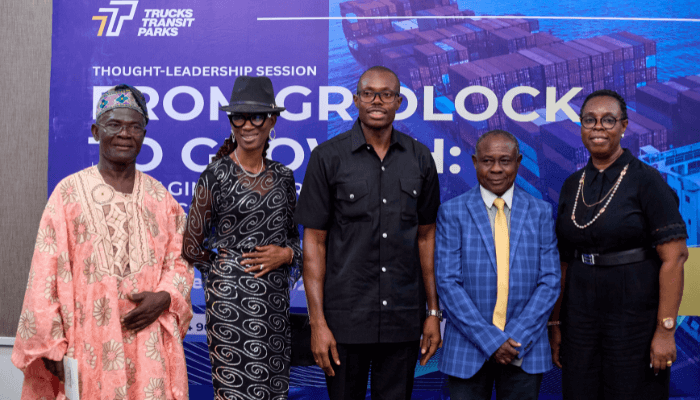
Nigeria’s ports must urgently overhaul the way their regulatory agencies work together if the country hopes to unlock a more competitive trading system, according to Bolaji Sunmola, chairman of the Nigeria Ports Consultative Council (NPCC).
He says the reforms Nigeria seeks will remain out of reach until the ports shift from fragmented operations to a coordinated, technology-driven ecosystem.
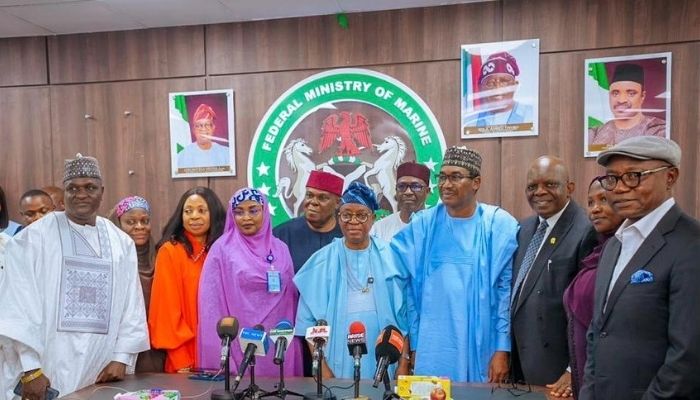
The NPCC chairman, represented by Jean Anishere, at a stakeholder meeting in Lagos, argues that while infrastructure remains critical, the real issue lies in the way the institutions at the ports function.
Read also: NPCC plans to create a databank for Nigerian seaports

“Our ports are the backbone of Nigeria’s trade and economic development. Yet the effectiveness of these ports depends not only on infrastructure, but also on how well our regulatory institutions work together,” he said.
His concern is that the present system is defined by siloed agencies, manual processing, prolonged cargo dwell time, and multiple overlapping checks. He said this structure imposes delays that ripple through the economy, raising production costs, discouraging investment, and weakening Nigeria’s global competitiveness.
But he insists that Nigeria can replicate global efficiency standards in ports like Tangier Med and Rotterdam. “With the right approach, the transformation we seek is within reach,” he said, noting that leading ports worldwide have embraced regulatory collaboration, digital integration, and strong public–private partnerships.
He believes progress begins with deeper inter-agency alignment, which would be enabled by a fully functional Port Community System linking Customs, the Nigerian Ports Authority, terminal operators, shipping lines, and all regulatory bodies to create faster, more transparent cargo processing that is less vulnerable to human interference.
Read also: Stakeholders demand port taskforce to tackle $9bn annual Maritime sector loss

“No port system can thrive where agencies work at cross purposes,” he said.
The PCC chairman also called for multimodal links, faulting Nigeria’s dependence on road transport alone.
“Our dependence on road transport is not sustainable. Efficient links to rail, barges, inland depots, and organised truck operations will drastically reduce congestion and improve cargo evacuation,” he said.
With freight forwarders, shippers, logistics operators, and truck owners serving as the ports’ everyday users, he says their involvement is crucial. “Their experience, insight, and innovation are too valuable to be ignored in national planning.”