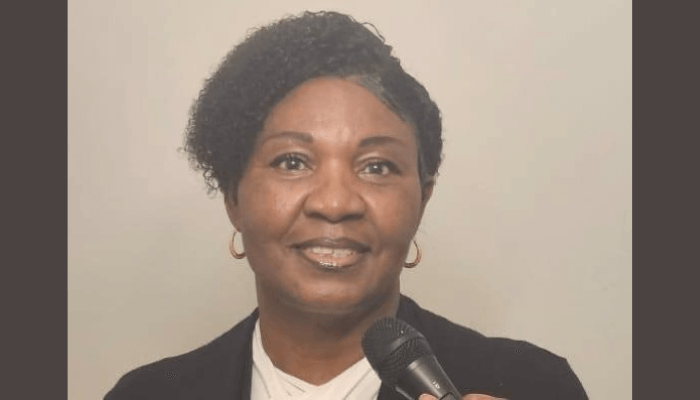
At a time when Nigeria faces tightening global financial conditions and mounting domestic economic pressures, a new generation of economists is emerging to shape smarter, data-driven policymaking. Among them is Ifeoma Augusta Eboh, whose research offers one of the clearest and most rigorous blueprints yet for strengthening the country’s economic resilience.
Fresh from completing her PhD in Economics at Nnamdi Azikiwe University in 2025, Dr Eboh has quickly established herself as a leading voice on the complex relationship between capital flows and economic growth. Her doctoral work breaks from the conventional use of linear models, opting instead for a Nonlinear Autoregressive Distributed Lag (NARDL) approach that captures how the economy responds asymmetrically to positive and negative shocks in official capital inflows.
Her findings are both intuitive and alarming: negative shocks in capital inflows harm Nigeria’s growth far more severely than positive shocks help it. Put simply, when foreign capital dries up, the damage to the economy is deeper and longer-lasting than the benefits accrued when capital increases. This asymmetry exposes Nigeria’s vulnerabilities to global interest-rate hikes, investor sentiment shifts, and domestic instability.
By pairing the NARDL framework with error-correction techniques and extensive robustness checks, Eboh provides policymakers with a clearer understanding of how shocks transmit through the economy, both in the short term and over the long run. Her models quantify how growth reacts to specific percentages of capital-flow disruptions and reveal how long recovery can take under varying conditions. This turns economic policymaking from guesswork into informed scenario planning.

Eboh’s earlier research from 2019 to 2022 laid important groundwork. Her studies on social protection, financial depth, and inclusive growth showed that Nigeria’s development gains remain fragile without strong financial systems and targeted safety nets. When placed next to her 2025 asymmetry findings, a coherent message emerges: Nigeria must manage capital-flow volatility while fortifying its domestic financial architecture.
Her policy recommendations reflect this dual approach. She advocates for: Building context-specific predictive models tailored to Nigeria’s institutions and data; monitoring capital-flow cycles with early-warning indicators derived from these models; deepening financial markets, especially through improved credit infrastructure and digital finance; and expanding social protection programmes to cushion the most vulnerable during external shocks.
Beyond her academic contributions, Eboh is becoming a recognisable figure in the Nigerian Economic Society and regional development forums. Her growing presence signals a broader shift: Nigerian economists are increasingly driving evidence-based policymaking, not merely responding to it.
In a world marked by volatility, Dr Ifeoma Augusta Eboh’s work offers both a warning and a roadmap. The warning: unmanaged capital-flow shocks can derail growth and stability. The roadmap: use robust models, anticipate risks, and protect both the macroeconomy and ordinary citizens.
With researchers like her shaping policy conversations, Nigeria’s journey toward a more resilient and inclusive economic future appears not just possible, but increasingly well-defined.