Introduction: Africa — The cradle of Mathematical wisdom
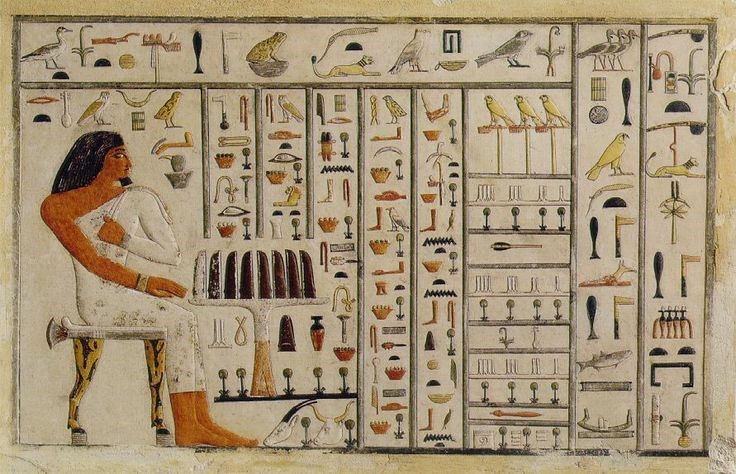
Before modern universities and digital classrooms existed, Africa was already home to a continent of mathematicians, architects, physicians, and innovators. From Imhotep, the legendary Egyptian polymath who designed the first stone pyramid and is regarded as the world’s first pharmacist-physician, to the creators of the pyramids of Giza, the astronomical calendar of Nubia, and the geometry of the Nile, mathematics was not a foreign science; it was the African way of understanding the world.
For early Africans, mathematics was not confined to numbers on papyrus. It was embedded in daily life — in the precise measurements used to build temples and pyramids, in astronomical observations that guided planting seasons, in ratios used to compound herbal medicines, and in symmetrical patterns woven into African art and architecture. Mathematics gave structure to knowledge, form to faith, and discipline to creativity.
As Africa now stands on the threshold of the Fourth Industrial Revolution, it must reclaim that ancient mathematical genius — and position mathematics once again as the foundation for its transformation through STEAM: Science, Technology, Engineering, Agriculture, and Mathematics.

1. The African roots of Mathematical civilisation
The story of mathematics cannot be told without Africa. The Ishango Bone, discovered near the headwaters of the Nile and dated to over 20,000 years ago, is one of humanity’s oldest mathematical artefacts — evidence that ancient Africans were already using arithmetic operations and base systems long before Greek or Roman numerals were conceived.
In ancient Egypt, mathematics was the foundation of civilisation. Imhotep’s design of the Step Pyramid at Saqqara required precise calculation of angles, load distribution, and geometric alignment with celestial bodies. Egyptian scribes mastered algebra and geometry to calculate taxes, measure flood levels, and manage food storage — creating an early form of data-driven governance.
The Great Pyramids of Giza remain unmatched marvels of mathematical precision. Each side is aligned almost perfectly to the cardinal points of the compass, and the ratio of their perimeter to height approximates the value of π (pi)—an astonishing mathematical feat for 2500 BCE.
Similarly, mathematics shaped science and spirituality across Africa — from Timbuktu’s astronomical manuscripts to Yoruba divination systems based on binary logic (a forerunner to computer science). Africans understood what the world is rediscovering today: that mathematics is not merely a tool but a language of creation.

2. Mathematics as the DNA of science and technology
Science explains nature, but mathematics decodes it. The numbers’ script contains every formula, model, and discovery. Mathematical thinking is indispensable for Africa’s scientists — whether in laboratories studying malaria resistance or research centres developing clean energy.
Mathematics is the DNA of technological progress in the age of artificial intelligence, nanotechnology, and quantum computing. Algorithms, the invisible engines behind every search engine, e-commerce platform, and mobile application, are built on mathematical logic. In health sciences, mathematical models predict disease outbreaks and optimise treatment delivery. In environmental sciences, mathematics helps Africa manage resources, forecast climate impacts, and design sustainable energy solutions.
Without mathematics, science becomes descriptive rather than predictive — and Africa’s progress becomes reactive rather than transformative.
3. Mathematics in engineering and infrastructure development
Every structure — from bridges and power grids to roads and satellites — is a physical expression of mathematical thought. Ancient Egyptian and Nubian engineers understood this truth, and so must modern Africa.
Geometry, calculus, and trigonometry form the core of design and construction. The same principles used to align the Pyramids of Giza now underpin the creation of smart cities, hydroelectric dams, and digital infrastructure. Mathematical literacy ensures efficiency, safety, and sustainability in an era when Africa is building roads, railways, and renewable energy systems.
Mathematics transforms raw ambition into durable architecture. It ensures that Africa’s infrastructure boom builds not just structures but systems that endure.
4. The Mathematical revolution in agriculture
Africa’s future food security depends on combining traditional wisdom and mathematical precision. Today’s smart agriculture uses mathematics to model soil fertility, predict rainfall, and optimise irrigation. Through data analytics, machine learning, and predictive modelling, farmers can anticipate pest invasions, forecast yields, and determine the best time to plant or harvest.
In essence, mathematics turns farming into data farming. Startups across Africa are already using mathematical models to connect smallholder farmers to markets, reduce post-harvest losses, and enhance profitability. These innovations demonstrate that mathematics is not an abstract classroom exercise but a practical tool for feeding a continent.
5. Mathematics and the emerging data-driven world
The 21st century is a data-driven age, where information is the new gold and algorithms are the new architects of power. Every digital footprint, from mobile transactions to health records, becomes data that must be analysed, interpreted, and used to make decisions.
Mathematics lies at the heart of this revolution. Data science, artificial intelligence, machine learning, and cryptography are all mathematical at their core. African nations that invest in mathematical education will produce data scientists, AI engineers, and innovators capable of shaping industries and policy with intelligence rather than intuition.
Without mathematical competence, Africa risks becoming a consumer rather than a creator in the global digital economy. However, with it, Africa can own its data, train its own algorithms, and define its own destiny.
6. Mathematics and the human mind: From calculation to creation
The most significant impact of mathematics is on the mind itself. It cultivates logical reasoning, patience, precision, and the ability to think abstractly — all essential for leadership, entrepreneurship, and innovation.
When mathematics is taught creatively, through stories, experiments, and problem-solving, it becomes the mother of invention and imagination. The more contemporary STEAM model (which adds “Arts” to STEM) is powerful: it blends mathematical logic with artistic creativity, producing thinkers who can balance precision with passion.
Africa’s future innovators must code and create, seeing mathematics as a bridge between numbers and nature, logic and life, and calculation and compassion.
7. Rebuilding Africa’s Mathematical future
For mathematics to drive Africa’s transformation, systemic reform is essential. Key actions include:
• Integrating indigenous African mathematical heritage into the curriculum, linking modern concepts to ancestral achievements.
• Training teachers who can make mathematics engaging, relevant, and empowering.
• Promoting gender inclusion in mathematical education to harness the full spectrum of talent.
• Investing in digital learning platforms that personalise mathematical learning.
• Embedding mathematical thinking across all fields—from business to governance—as a foundation for analytical decision-making.
Africa must teach mathematics not as a subject to fear, but as a superpower to master.
Conclusion: Rediscovering our Mathematical soul
Mathematics is not new to Africa; it is native to her. From Imhotep’s geometry to modern data analytics, the story of Africa’s greatness, past, present, and future, is written in numbers, patterns, and precision.
If Africa is to rise, it must once again become the continent of thinkers who can calculate, predict, and create. Mathematics is not merely a school subject but the language of transformation. It connects our ancient wisdom to modern innovation, our pyramids to digital platforms, and our past excellence to our future prosperity.
To transform Africa through STEAM, we must reclaim mathematics — not as a relic of the classroom, but as the rhythm of civilisation, the compass of creativity, and the key to our continental renaissance.
Prof. Lere Baale, DBA, MBA, BPharm: President & Chairman, Governing Council – Nigeria Academy of Pharmacy; CEO – Business School Netherlands International (Nigeria).