For the first time, stakeholders, including the government and the private sector gathered to celebrate the huge potential of the African creative industries, as well as profer solutions to some of the challenges in order to maximise the potential.
The three-day gathering in Accra, the capital of Ghana, flagged off Creatives Connect Afrika, a brainchild of the African Continental Free Trade Area (AfCFTA) Secretariat, which was hosted in partnership with the Black Star Experience and African Tourism Partners (ATP).
For the three days, La Palm Royal Beach Hotel, the venue and Accra, the host city, felt the presence of Africa on its soil as participants drawn from across the continent enjoyed its wonderful hosting, yet calling for a unified approach to unlocking Africa’s tourism and creative potential to the benefit of the people and economy at large.
The clarion call, especially from the speakers at the event, also extended to market expansion, cultural preservation and cross-sector collaborations.

The excitement for the organisers is that the event got the right people in one space, from influential leaders, to creators, to policymakers, entrepreneurs and industry experts, to celebrate African feats in the creative space, tackle challenges and offer solutions to help maximise the potential of the sectors.
For the AfCFTA, the event is one of the pillars to achieving its mandate, especially with a focus on the creative industries.
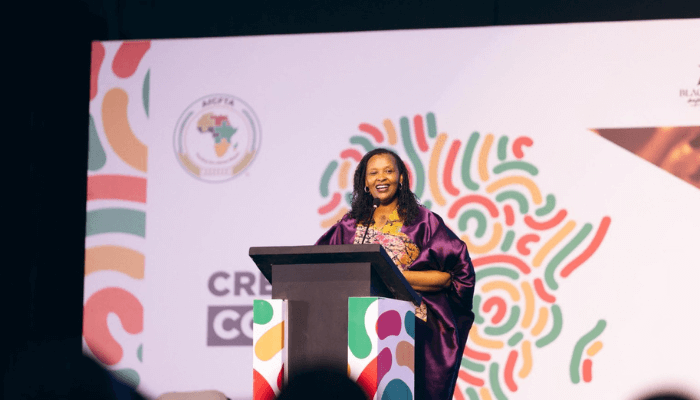
In his address at the opening day, Wamkele Mene, secretary general, AfCFTA, who was represented by Emily Mburu-Ndoria, director, Trade in Services, Investments, Intellectual Property Rights and Digital Trade, sent a compelling message to the continent. For him, Africa’s creative economy stands at a defining moment of transformation, driven by collaboration, strengthened policy frameworks, and a shared commitment to cultural preservation and global market expansion.
Furthering the AfCFTA secretary-general’s message, Mburu-Ndoria called for a unified approach to unlocking Africa’s creative potential.
She insisted that Creatives Connect Afrika is not just an event, but a platform to boost the strength of African creativity and ensuring that film, fashion, music, design, gaming, literature and tourism can thrive across borders.

According to her, the bottomline is a continental digital marketplace, which the AfCFTA is committed to, amid focus on harmonizing intellectual property frameworks, and enabling creators to trade, earn and scale without barriers across the continent.
“Our creatives are the heart of Africa’s cultural identity. We must provide the right structures to protect their work, strengthen metadata, and support seamless cross-border business,” she said.
At the opening, Kwakye Donkor, chief executive officer, Africa Tourism Partners, who expressed joy at partnering in the event, took time to analyse the potential of Africa’s creative economy, and also called for structured industry collaboration and a unified ecosystem.
“Africa’s creative economy has immense value, but it cannot grow in isolation. We must collaborate, innovate and share knowledge, because that is how we build competitiveness, seize emerging opportunities, and unlock new markets,” Donkor said.
According to Donkor, a Ghanaian-born tourism expert, who is based in Johannesburg, South Africa, the Creatives Connect Afrika has initiated a platform for long-term partnerships, policy alignment and investment mobilization.
In his address, John Dramani Mahama, president of Ghana, expressed excitment at the choice of his country for the maiden event, as well as set out a clear policy architecture and financial commitment intended to accelerate sectoral growth in his country, while encouraging others to do the same.
In the address read by Rex Owusu Marfo, coordinator, Black Star Experience, one of the organisers of the event, President Mahama said, “Creative industries are the energies of our economic future, and we stand at the cusp of a new African Renaissance”.
However, one of the many highlights of the first day of the event was the panel discussions, where the knowledgeable speakers exposed the opportunities of the creative industries, from film distribution, fashion value chains, creative financing, and the use of digital trade to scale their products. From Fola Oke of Hypen Media; Huguette Umutoni, founder, Umu Group; Khadijat El-Alawa, head, Music and Talent for AfroFuture Ghana, to many other speakers, it was all about compelling insights, practical solutions and call for collaborations among African creatives.
The panelists also deliberated on issues such the development of intellectual property frameworks, the role of tourism in amplifying cultural expression, and the need for intra-African collaboration to drive global market competitiveness.
But the discussions reinforced the importance of the AfCFTA in enabling creators to scale their businesses and reach new audiences, allowing the speakers to highlight the need for digital trade, harmonized policy, improved data systems, and strengthened intellectual property protections, required for unlocking revenue streams and expanding Africa’s influence in global creative markets.
Meanwhile, there were many interludes of music and cultural performances, which excited the audience and further set the mood for the event.
Of course, a huge exhibition of African art, craft, fashion, designs, cosmetics and heritage from across the continent at the venue, added colour to the event.
It also offered the exhibitors opportunity to engage with delegates, amid patronage.
Across the days, the participants were excited that the Creatives Connect Afrika has come to stay, hence their call for sustainability of the event and optimism that it will become a long-term platform for advancing the creative industries, empowering African creators and impacting the people and economy generally.