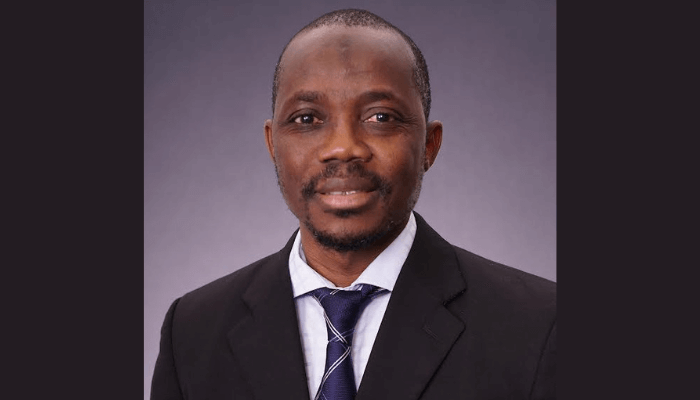
Most mature oilfields come with two competing stories. You see one on the surface through falling production and the other tucked away in the data, suggesting the field still has more to offer. Abdul-Wahab Sa’ad has built his work around finding that hidden possibility.
Across Nigeria’s producing basins, Sa’ad has become known for helping operators rethink how to evaluate and manage older reservoirs. Much of his work focuses on mature fields that many assume are nearing the end of their best years, showing instead that, with the proper understanding, they can still perform in meaningful ways.
Nigeria’s energy landscape explains why this matters. In 2017, according to the Nigerian Extractive Industries Transparency Initiative (NEITI), the country earned around US$21 billion from oil and gas, with the sector contributing 8.7 percent of GDP. Even by 2020, despite market swings, revenues were still about $20.4 billion, and the industry made up more than 85 percent of Nigeria’s export earnings.
As companies began shifting attention from significant discoveries to squeezing more value from existing assets, Sa’ad’s work, focused on field development planning and recovery reassessment, became increasingly important. One of Sa’ad’s strengths is his ability to bring several pieces together: geoscience, engineering, and the economic realities that shape development decisions. He has led subsurface studies that combine seismic interpretation, petrophysics, and dynamic simulation to help teams understand where additional value may lie within older reservoirs.

In several cases, he uncovered overlooked compartments or flow barriers that earlier evaluations did not fully capture. These kinds of insights make a difference when deciding how to classify reserves and where to direct investment.
His work in modelling and infrastructure-linked forecasting has supported the reclassification of more than 500 billion standard cubic feet of reserves and helped identify significant incremental production opportunities in fields long viewed as mature. Colleagues have noted that his approach often brings clarity to projects where the subsurface picture once felt uncertain. By clearly laying out the technical range, he has helped extend field life without inflating expectations or deviating from sound reservoir behaviour.
Sa’ad’s work also feeds directly into field development planning. He has delivered probabilistic forecasts —P10, P50, and P90 ranges—that have helped guide major development decisions. These forecasts allowed decision-makers to understand the upside, the downside, and the most likely result, which is critical when planning wells or surface modifications that may take years to pay off. As he often says, “My objective was to make technical rigour the foundation of commercial certainty.”
His reservoir assessments supported new well opportunities with a combined potential of more than 75,000 barrels per day, and he received formal recognition for the precision and quality of his work. These evaluations helped obtain approvals for important development activities under both internal and regulatory review, giving leadership the confidence needed to move forward in a challenging operating environment.
Beyond the technical work, a lot of what makes Sa’ad effective is his style. He works closely with multidisciplinary teams, explains uncertainties in straightforward language, and communicates the logic behind each recommendation so that non-technical leaders can see the full picture. Predictive analysis, thoughtful interpretation, and open communication form the core of his approach to reservoir management.

More operators are recognizing the importance of this kind of leadership. With increasing pressure to improve efficiency, reduce emissions, and make existing assets work harder, Sa’ad’s approach offers a practical and repeatable model for mature field redevelopment. His work, identifying bypassed zones, refining reserve estimates, and tying subsurface insights to surface needs, reflects the kind of thinking required to keep aging assets competitive.
For Sa’ad, the conclusion is straightforward: the future of energy depends not only on discovering new fields but also on how responsibly and intelligently existing ones are managed. His career shows how careful analysis, integration across disciplines, and a willingness to look deeper into the data can reveal opportunities others might miss. Through this lens, mature fields are not just remnants of past production but reservoirs with untapped stories still waiting to be told.