…Experts say withdrawal good for public safety, but reform critical
President Bola Tinubu’s order for the withdrawal of police officers attached to Very Important Persons (VIPs) threatens to upend an opaque N108 billion-a-year economy built on the quiet deployment of state security personnel to politicians, executives, celebrities and luxury estates.
For decades, this shadow market has diverted tens of thousands of officers from frontline policing into private protection gigs that generate steady, often untraceable cash flows for senior officers and brokers.
Now, with as many as 100,000 policemen set for redeployment, the administration is confronting not just a law-and-order problem but an economic realignment that could reshape who pays for security in Africa’s largest economy and who profits from it.

The European Union Agency for Asylum (EUAA) Country-of-Origin Information report (Nov 2025) and multiple Nigerian outlets cite an estimated Nigeria Police Force strength of about 371,800 officers.
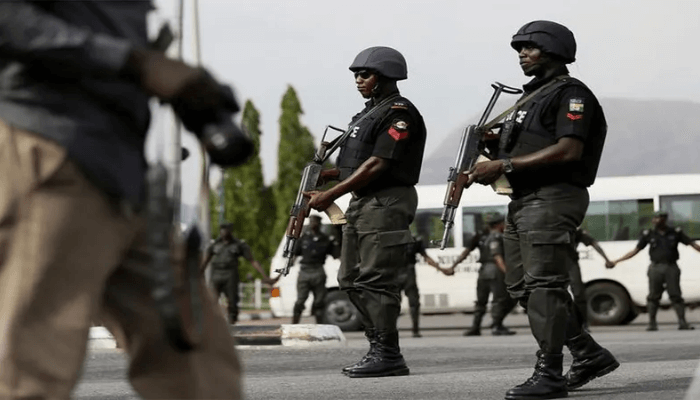
The EUAA report says, “More than 100,000 police officers were assigned to the protection of politicians and VIPs,” a figure widely reported by local media.
Data obtained from top bank executives, celebrities, high-end residential estates and private individuals suggest that these officers are paid between N60, 000 to N120,000 each per month.
For 100,000 police officers, that comes to between N6 billion and N12 billion monthly, giving an average of N9 billion per month and N108 billion per year.
What happens if Tinubu’s order is enforced?

Enforcing that directive to withdraw police officers from VIP protection could trigger immediate disruption, boost policing capacity, and reshape Nigeria’s shadow security economy, experts say.
The most immediate impact will be political. Tens of thousands of officers currently guarding politicians, executives, celebrities, and luxury estates will be removed, leaving the elite to scramble for substitutes. Private security firms, Nigeria Security and Civil Defence Corps (NSCDC) detachments, and off-duty policemen hired through informal channels are likely to fill the gap, potentially generating backlash from those accustomed to uniformed protection.
Read also: Tinubu orders withdrawal of police from VIP security duties
If redeployed effectively, roughly 100,000 officers could bolster community policing and improve response times. Analysts note that with adequate vehicles, fuel, communications equipment, and oversight, deployable manpower could rise by 25 percent–30 percent, a rare operational gain for Nigeria’s overstretched police force. Expanded patrols and faster emergency response could deliver tangible benefits to ordinary citizens and local communities.
The withdrawal also carries the risk that the lucrative cash flows underpinning VIP attachments will simply reappear in new forms. Senior officers could profit through private security firms or brokers, estates might subcontract officers, and political actors could hire off-duty personnel via intermediaries. Analysts warn that without transparency and enforcement, the incentives driving attachments will persist.
Potential winners include communities benefiting from more police on the streets, licensed security firms securing formal contracts, and state governments able to reassign resources. The losers are the intermediaries, senior officers, high-net-worth individuals preferring uniformed guards, and local networks that leveraged police attachments as patronage.
Implications
Kabir Adamu, managing director of Beacon Consulting Limited, called the directive, ‘a positive step,’ but not a silver bullet for Nigeria’s broader policing crisis.
Speaking in an interview with BusinesDay, Adamu explained that while some VIPs are constitutionally entitled to police protection, many others, such as wealthy businesspeople and musicians, receive police escorts only after applying and making payments.
But he noted that these payments do not always enter official government accounts.
“An account was created for the receipt of payments, but the reality is that most of these payments now go into personal accounts of different people within the system,” he revealed.
Read also: Senate prescribes death sentence for kidnappers, terrorists
According to him, the fee for VIP police protection ranges between N70,000 and N250,000 monthly. With the new presidential directive, those benefitting informally from such payments, not the Nigerian state, will experience the financial impact.
“It will not affect the corporate finance of Nigeria, but it will affect the finances of individuals who have been benefitting,” he said.
Adamu referenced a recent report by the European Institute for Crime Prevention and Control, which estimated that around 100,000 police officers – nearly one-thirds of Nigeria’s 360,000 personnel – are currently deployed as VIP escorts.
He described the report as ‘credible’ and consistent with available field findings.
“If 100,000 are deployed to protect VIPs and they are withdrawn and added to protect you, me and everyone else, then it’s better,” he said.
However, Adamu stressed that the policy alone will not fix the deep-rooted problems within the Nigeria Police Force.
He recalled that after the #EndSARS protests, a government-led committee, including civil society organisations, developed a comprehensive police reform agenda.
Those recommendations, he said, remain critical. “I don’t want to kid myself to think that this policy will solve the limits within the police. No. We need a full-blown police reform,” he said.
Adamu added that implementing the post-#EndSARS reform blueprint is the only path to achieving a truly professional and effective police service.
Read also: Tinubu declares security emergency, orders more recruitments into police, army
On his part, Shehu Sadeeq, another security analyst, explained that the order was influenced partly by international scrutiny, especially a recent U.S. congressional hearing on Nigeria’s insecurity.
During that hearing, American lawmakers were told that Nigeria suffers one of the world’s worst police-to-civilian ratios, worsened by the country’s heavy diversion of police personnel to private individuals.
“A good number of the policemen who should be policing our communities are actually providing security for VIPs,” Sadeeq noted.
He added that lawmakers abroad are often unaware of the scale of private security assignments involving not only police officers but also soldiers and mobile police units.
“Even oil companies, especially in the Niger Delta, routinely use these public security personnel for private protection,” he added.
The security expert described the extent of misuse of police officers as ‘shameful and dangerous,’ citing examples of a celebrity being escorted by as many as 10 police officers, while ordinary Nigerians remain unprotected.
Sadeeq condemned the practice of officers being turned into domestic assistants for VIPs, carrying umbrellas, handbags, or even food home for their spouses.
Despite the President’s decisive tone, Sadeeq expressed concern about Nigeria’s history of unimplemented security directives.
He pointed out that the current Inspector General of Police, on April 24, had also ordered the withdrawal of mobile police officers attached to VIPs, yet nothing changed.
“We still see foreigners in our country heavily protected by policemen and soldiers,” he said.
Shehu Sani, a former senator, has dismissed the new presidential directive as “another statement that will not be implemented.”
“It’s bad that a president will make a policy statement and Nigerians are convinced it will not see the light of day,” Sadeeq added.
A major concern, he said, is whether the NSCDC has enough trained personnel to take over VIP protection duties at the scale envisioned.
“Civil Defence officers have historically been deployed to protect oil installations and other critical assets. Expanding their responsibilities to cover VIP protection will require additional manpower and training,” he said.
But Sadeeq agreed with Tinubu’s overarching goal, insisting that “true security is measured not by the protection of the few but by the safety of the majority.”
The policy, he said, is sensible and overdue, but unless the government breaks its long-standing pattern of unfulfilled security reforms, the withdrawal of VIP police escorts may again stop at the announcement stage.
“The devil is in the implementation. Hopefully, this time, the government will follow through and stop the misuse of our police officers,” he noted.