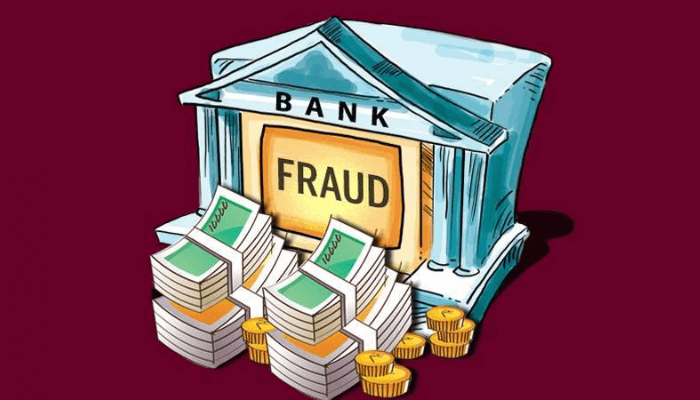
Nigeria’s banking sector is confronting an accelerating wave of financial-payments crime, with losses from electronic fraud now exceeding N1tn annually, prompting renewed calls for the Central Bank of Nigeria (CBN) to overhaul its decade-old security framework and upgrade the country’s authentication standards from two-factor authentication (2FA) to a more advanced three-factor authentication (3FA).
Industry data shows that the scale and sophistication of digital theft—particularly unauthorised transactions—have increased sharply, far outpacing regulatory protections available to consumers.
Public complaints continue to mount, especially among customers who say they have not been reimbursed after disputed or fraudulent transfers.
Under current Nigerian law, commercial banks are only required to compensate affected customers up to N5m per account, a limit critics say is grossly inadequate given rising digital exposure.
Read also: Bank fraud epidemic leaves customers empty-handed

Even at that level, customer advocates argue that repayment timelines are discretionary and rarely enforced, leaving many victims without relief.
According to industry executives, annual electronic fraud losses in Nigeria have risen nearly tenfold in six years, from around N133bn to more than N1tn today.
While this brings Nigeria close in nominal value to the UK’s 2024 recorded fraud losses of £700m (about N1.3tn), the comparison masks a stark disparity: in the UK, 98% of victims are reimbursed, thanks to strong consumer-protection standards and large-scale insurance coverage.
By contrast, Nigeria’s banking and insurance ecosystem is far smaller—roughly 130 times smaller than that of the UK by sector value—leaving domestic depositors disproportionately exposed.
Ive Chike Meme, director at Environ, a financial-technology intelligence firm, told Businessday that Nigerian banks remain “dangerously under-protected” as criminals adopt sophisticated digital tools, including artificial intelligence.
“AI has already rendered voice-biometric banking obsolete, and criminals will soon be able to compromise passwords, PINs and tokens at scale,” Meme warned.
“Nigeria’s financial-payments sector has been one of the world’s fastest-growing, but bank fraud has grown even faster—and without adequate consumer protection.”

Read also: Cyber fraud surge threatens banking sector, public trust
Meme noted that a “significant share” of fraud is facilitated by insider collusion or internal financial leakage, as rogue bank staff circumvent existing controls. This, he said, strengthens the case for a biometric proof-of-life digital-signature system that cannot be spoofed by employees or external actors.
Environ says it is in discussions with the Nigerian Financial Intelligence Unit (NFIU) to deploy such a system as part of Nigeria’s inaugural Financial Intelligence Public-Private Partnership.
The company describes its proof-of-life platform as a “non-spoof, high-security system already used by global financial institutions and high-security government agencies to ensure digital-data integrity.”
Industry veterans note that it has been 10 years since the CBN last enforced a major fraud-control upgrade—namely, the rollout of 2FA in 2015. Since then, the rapid evolution of cyber-fraud has outpaced regulatory intervention, with both the Economic and Financial Crimes Commission (EFCC) and the NFIU lacking the legal authority to compel banks to adopt new authentication systems.
“The CBN will inevitably have to intervene again,” Meme said. “To maintain confidence in Nigeria’s payment system, the country must move from 2FA to 3FA proof-of-life authentication. Technology is the only scalable solution—certainly more realistic than trying to build a N250tn insurance buffer to protect depositors.”
Environ, which launched its Payments Protection Intelligence Platform to the Nigerian banking sector this year after regulatory consultations, argues that early adopters could see an advantage.
Read also: Inside story of electronic bank fraud in Nigeria
“Banks that embrace stronger security will attract more depositors,” Meme said. “In a climate where customers worry about unauthorised transactions, people will simply place their money where they feel safest.”
While retail customers frequently report fraud, analysts note that criminals often target accounts with higher balances—including large corporate, government and high-net-worth accounts. Yet even these accounts remain subject to the same N5m reimbursement cap, leaving wealthier and institutional depositors exposed to potentially catastrophic losses.
“Until Nigeria updates its fraud-combat controls and extends consumer-protection frameworks, bank customers—large and small—remain at growing risk,” Meme said.