What the Lekki–Ajah delay really means for ‘Detty December’ and beyond
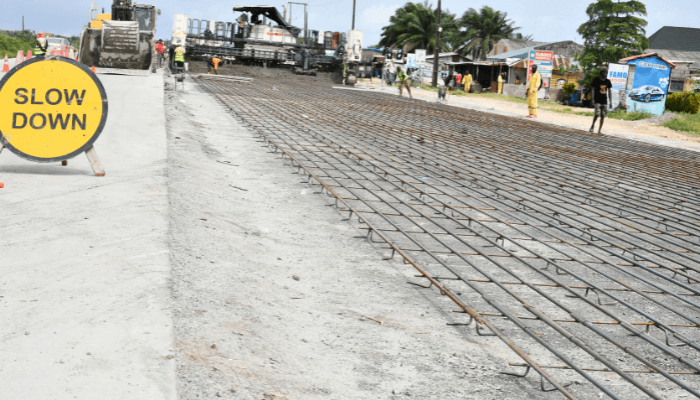
The Lekki–Ajah corridor is one of Lagos’s most economically important arteries, a gateway that moves people, commerce and culture. When the Lagos State government announced an eight-month rehabilitation beginning 15 November 2025, it triggered an understandable wave of concern. The timing seemed to collide with the city’s most profitable social season: Detty December. For a city that now earns tens of millions of dollars from holiday returnees, nightlife, hospitality and high-profile events, the fear of a mobility choke was real.
But just days later, the government quietly postponed the project. The official statement was simple: a new commencement date will be communicated. No timeline, no explanation, no conditions, only uncertainty. That single move alters the entire equation. On one hand, postponement removes the immediate threat of December gridlock; on the other, it introduces a more structural anxiety: if the project can be delayed without clarity today, it can also resume unexpectedly tomorrow.
Read also: FG assures 21-month delivery of Lekki Deep Seaport–Epe road

This is where Lagos finds itself, a city trying to expand while keeping the lights on, build while still dancing, and modernise without interrupting its most reliable revenue season. And that is the real tension: not the project itself, but the planning logic around it.
Detty December is not a cultural accident; it is an economic engine. Official figures put its 2024 contribution at $71.6 million, with hotels alone generating about $44 million and short-let operators adding another $13 million. Diaspora returnees bring foreign currency, international visitors bring attention, and the local hospitality sector enjoys a temporary but powerful lift that sustains jobs and investments. A corridor like Lekki–Ajah is not a strip of asphalt; it is the spine of this ecosystem.
The government’s earlier assurances were not misplaced: alternative routes would be prepared, traffic teams deployed round the clock, and coordination with the Federal Government would allow the Lagos–Calabar Coastal Highway to absorb some of the pressure. Those plans made sense. The real issue now is whether these promised routes were sufficiently developed before postponement and whether they will be ready by the time the new start date is eventually announced. A postponement without readiness simply restarts the same fear later.
An opposite argument also deserves attention: Detty December itself may not deliver the same high-spending boom as previous years. The national economic climate is harsh; inflation has weakened purchasing power, transport costs are high, and nightlife operators are already complaining of thinning crowds. In that sense, mobility is only one part of the problem, affordability is the other. Even if the roads are free, some visitors and locals may cut back on the spending that made past editions so profitable.
“ A corridor like Lekki–Ajah is not a strip of asphalt; it is the spine of this ecosystem.”

Still, Lagos can shape a positive outcome if it acts with more strategic transparency. Postponement should not be a passive pause; it should be used as an active window to prepare. Alternative routes must be truly operational, not promised but ready, lit, signposted and traffic-policed. The city should communicate clearly to event organisers, transport unions and hospitality operators to allow better planning instead of anxious speculation. And equally important, the festive network must work for more than the top tier of hotels and high-end clubs. Informal vendors, small caterers, mid-tier accommodation providers and transport workers often receive only the leftovers of the December surge; a more inclusive logistics plan would help spread the gains.
The broader narrative matters too. If Lagos can manage rehabilitation without chaos, even if it begins in January, it sends a critical signal to investors: that infrastructure upgrades no longer require paralysis or crisis. The city would show that it can build while staying open for business, a reputation Lagos desperately needs as it competes for tourism, talent and investment in Africa’s urban race.
None of this eliminates risk. A new start date could still catch Lagos unprepared. If the alternative routes remain incomplete, if congestion spikes, or if the government announces partial lane closures in the middle of the festive rush, the backlash will be severe. Visitors remember pain more than excitement. A December defined by gridlock and frustration could discourage future returns and weaken Lagos’s emerging status as a cultural capital.
Read also: After BusinessDay report, Lagos postpones work on Lekki–Ajah corridor
Yet the postponement, if used wisely, gives Lagos something rare: time. Time to prepare, time to coordinate, and time to ensure that the next announcement is not another surprise but a structured calendar that businesses and residents can work around. Time to prove that the city can modernise without undermining the economic moments that keep it afloat.
The best version of Lagos is one that builds and celebrates at the same time, a city where infrastructure upgrades and tourism cycles coexist rather than collide. Detty December should not be a reason to halt progress. But neither should progress be executed in a way that undermines a season that feeds thousands of livelihoods. Lagos does not need to choose one or the other; it simply needs to plan like a megacity.
If the government uses this postponement to fix its coordination gaps, strengthen alternative routes, and communicate a clear timeline, then the city can walk into December with ease and into January with improved mobility. Lagos can party and still progress but only if it stops surprising its own citizens.