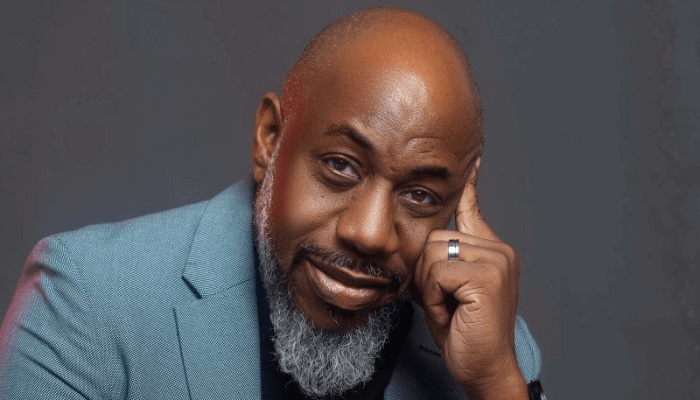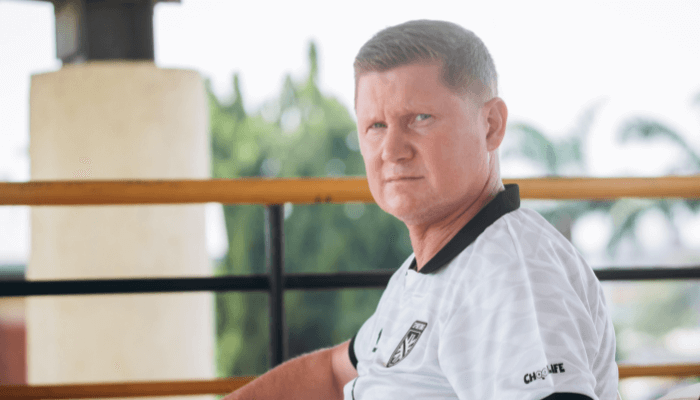
Sporting Lagos Football Club has taken a bold step toward reshaping football development in Nigeria, announcing a landmark collaboration with Luke Dowling, one of England’s most respected football strategists.
Known for his influential leadership at top clubs, including West Bromwich Albion, Nottingham Forest, and Watford, and his consulting role with Leeds United, Dowling brings decades of experience in elite recruitment, talent identification, and high-performance squad building.
His arrival signals Sporting Lagos’s growing ambition to develop some of the best young football talent in Nigeria and connect them to global opportunities.
In this interview with Obinna Emelike, Dowling shares why Sporting Lagos stood out, why its model aligns with African football’s future, the elite standards required for promotion, structural deficits in the Nigerian league system, and his refusal to view Sporting Lagos through the lens of a second-tier club. Excerpt…

Considering your enviable feats in Europe, why do you accept an offer from a Nigerian football club while opportunities abound in Europe, America and the Middle East?
It comes down to the ambition of the project. Shola Akinlade, the owner of the football club, reached out and laid out his vision, and frankly, it was compelling. He is not just looking to run a football club; he wants to change the landscape of how a club operates in Nigeria. When you meet someone with that level of drive and a clear plan to reach those heights, it is easy to get on board. I can bring my experience here while maintaining my network and other professional commitments in Europe, so it works perfectly.
Also, why Sporting Lagos Football Club, which competes in the second tier of the Nigeria National League, instead of a first-tier club?
There was never a discussion about the tier; it was always about the project. When you speak with Shola, you don’t look at the league table today; you look at the plan for tomorrow. The potential of this club outweighs its current league status. We are building something designed to be at the top, regardless of where we are right now.
What are your views on the talent at the club currently?

I watched the academy’s game in the TCC against Iganmu Tiger, and seeing them come back with three goals in 17 minutes showed me the elite level of talent, coaching and mentality that exists here. I saw glimpses of that quality at the Gothia Cup in Sweden earlier this year as well. I also saw the season opener against Osun United. The technical quality in the team was really good. Good passing and a solid understanding of the game.
Your leadership and robust strategy have seen relegated clubs being promoted back to the English Premier League. How are you going to do that for Sporting Lagos?
It is about standards. You don’t get promoted just by winning on matchday; you get promoted by setting elite standards in training, recovery, and recruitment every single day. If we get the process right behind the scenes, the results on the pitch will follow.
As a talent scout and developer, how will those skills rub off on your new job in Lagos?
There is already an abundance of talent here. My role is not necessarily to find the players but to help refine them and find the best opportunities for them.
Also, coming from one of the best league systems in the world, how do you see the Nigerian league, and what is your strategy for navigating through its possible challenges to deliver on your job here?
The major hurdle is the infrastructure, specifically playing surfaces and access to elite facilities. It is difficult to play technical, high-level football on not-so-great pitches. That is why we are prioritising the development of our own training facility. It gives us control over our environment and allows us to execute our developmental plans without external limitations.
What about the facilities at Mobolaji Johnson Arena, the home of Sporting Lagos? Are they good enough or do they require an upgrade?
There is work to be done. The turf needs improvement to support the kind of football elite teams play. It is a work in progress, but upgrading the playing surface is important for the quality of the product on the pitch.
The success of your job here also requires collective responsibilities from the coaching crew and other team members. What is your relationship with them?
It has been excellent. The standards in the team are high. The relationship between the technical staff and me is seamless. We have had a number of strategic meetings, both in Nigeria and when we first met in Sweden, and everyone is pulling in the same direction.
If you succeed with Sporting Lagos, will you consider handling other clubs, maybe in the Nigerian National League?
No. I am committed to this project. Shola’s vision is unique, and my focus is entirely on helping Sporting Lagos achieve its potential. I am not looking elsewhere.