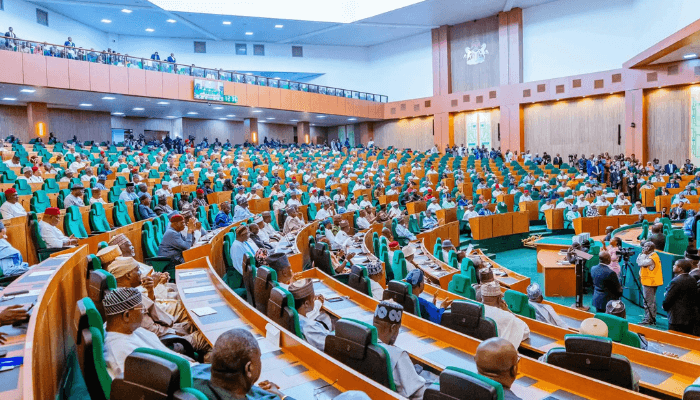
With one week left to December and just under four weeks before the House of Representatives winds down for the year, the Green Chamber appears to be failing on its promise to deliver the much-touted promise of electoral reforms.
Despite repeated assurances from Abbas Tajudeen, Speaker of the House and Benjamin Kalu, the Deputy Speaker that the House was “serious” about delivering electoral changes on or before December 2025, ahead of the upcoming general elections, the reforms are still stuck in the early stages and far from completion.
Abbas had boasted before a European Union delegation in Abuja that things would be different. He revealed that the House had resolved to isolate electoral amendments from other constitutional issues and push them through by December.
Read also: Reps race against time to deliver electoral reforms by December

“We agreed that because of some of the amendments that we want to bring forth , some are by way of Act of Parliament, some are by constitutional amendment – we will fast track and isolate the electoral issues and take them as one, single entity; and push them forward for the National Assembly to deliberate and take a position; and then send them to the sub-nationals (state Houses of Assembly) to also consider them within a short timeframe, between now and December,” he said.
“We will not be late,” he stressed with confidence, stressing that the reforms would give INEC enough time to implement changes well before the 2027 polls. His assurance was a direct response to EU concerns on whether the House could deliver on the promise
The delegation was led by Barry Andrews, a Member of the European Parliament, who told Lawmakers that “Time is of the essence.”
It’s December soon and Nigerians are still waiting for the reforms which the House said would guarantee free, fair and credible elections.
Lawmakers had pledged to start voting on constitutional amendment bills in October, with electoral reforms as a key priority. That didn’t happen. An aide to the Deputy speaker who also chairs the Committee on Constitutional amendment later hinted that November would be the month for votes, but as the month draws to a close, there is no sign that parliamentary bells will ring for this crucial exercise.
Over the past three months, none of the proposed reforms have moved beyond committee stages, leaving critical bills still awaiting their third reading. Meanwhile, the political calendar marches on, campaign activities for 2027 are expected to kick into high gear from February next year.

The electoral reforms are ambitious: First, lawmakers want to hold all elections in one day. In practice, this would mean that presidential, governorship, National Assembly, and state assembly contests are all decided in a single outing. Abbas Tajudeen, Speaker of the House of Representatives believes this could slash election costs by up to 40 percent and boost voter turnout, as citizens tend to show up more for the high-stakes presidential vote than for state-level polls.
Read also: Strengthening democracy: A call for electoral reforms
Second, the proposals would open the door for independent candidates. This has long been a demand of civil society groups who argue that Nigeria’s political parties are gatekeepers that shut out credible contenders. Allowing independents could give voters more choice – though it may also splinter the ballot.
Another proposed shift would be transferring the power to appoint the chairman of the Independent National Electoral Commission (INEC) away from the President and into the hands of the National Judicial Council. The thinking is simple: fewer political fingerprints on the appointment process could strengthen the perception of INEC’s neutrality.
Lawmakers are also pushing for stricter rules on party politics. For instance, party executives would be barred from holding elective offices at the same time, reducing conflicts of interest.
Other ideas on the table include establishing an Electoral Offences Commission, ensuring that all pre-election matters are resolved before officeholders are sworn in, creating a Local Government Elections Commission, and even reserving parliamentary seats for women and persons with disabilities.
The big question, of course, is whether all this can be done in time. Electoral reforms are notorious for dragging on in Nigeria, often getting caught in partisan crossfire or slowed by the cumbersome process of amending the constitution.
Read also: EU wants urgent electoral reforms ahead of 2027 elections
In Nigeria, the process for amending the Constitution is deliberately rigorous to ensure broad consensus. A constitutional amendment such as the ones seeking to reform elections must pass through several formal stages before it becomes law:
Even if the National Assembly passes the bill, it must be sent to the 36 state Houses of Assembly. To succeed, at least two-thirds of the state assemblies, this means 24 states must approve the amendment to ensure federal-state consensus.
Once the required number of state assemblies approve, the bill is returned to the National Assembly and then sent to the President for assent. The President must sign the bill into law before any electoral amendment can become law. But the electoral reforms are not even half way through this journey.