Every so often, a narrative unfolds that demands more than reportage. It demands reflection. Interpretation. Contextual excavation. The newly released 2026 Times Higher Education Interdisciplinary Science Rankings is one such narrative, a moment where statistics transcend spreadsheets and become symbols of institutional destiny. Covenant University has just made history by placing 49th globally and first in Africa, the only African university to break into the world’s top 50. That headline will expectedly enjoy the limelight. But if one shifts the gaze slightly – if one peers beyond the dazzle of Covenant’s triumph, another story emerges, quieter yet equally consequential – the University of Nigeria, Nsukka securing second place in Nigeria, second in Africa, and 161st globally. For UNN, an institution often romanticised for its founding philosophy but criticised for inconsistent performance, this ranking is a subtle rebirth. It is a quiet re-entry into the conversation of relevance, a declaration that the Lion is still capable of roaring.
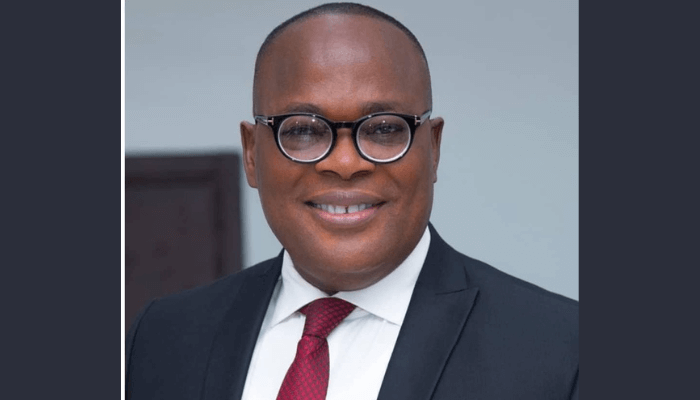
But like all good stories, this one has a compelling subplot: the coincidence of this ranking with the first 100 days of the new Vice Chancellor, Prof. Simon Uchenna Ortuanya, who assumed office in August 2025. The ranking does not credit him with instant miracles. No serious scholar would make such a claim. Instead, it offers something perhaps more important; it is a providential timing, a symbolic endorsement, an unexpected tailwind propelling the early days of his leadership. To understand this moment correctly, we must deconstruct the ranking, revisit its historical undercurrents, interpret its present implications, and project its future possibilities. Only then can we appreciate why this confluence of events is neither trivial nor accidental – and why it validates, in tone and texture, my earlier verdict: indeed, Simon is working.
The Interdisciplinary Science Rankings, now in their second edition, are not the typical STEM-or-publication-heavy metrics familiar to the academic world. They measure universities across 11 indicators that reflect the global shift toward knowledge integration: interdisciplinary research quality, cross-disciplinary publications, external funding, measures of research success, facilities, administrative support, structures that promote interdisciplinarity, academic reputation, etc. These metrics reward institutions that can break disciplinary silos and create ecosystems, where engineering dialogues with ethics, medicine with machine learning, agriculture with economics, psychology with public policy, language with AI, and environmental science with legal frameworks. In this emerging global academic architecture, interdisciplinarity is not a buzzword; it is the engine of innovation. The ranking therefore rewards institutions that not only produce knowledge, but connect it. That UNN has performed strongly in these metrics tells a deeper story, one that predates the current VC but aligns perfectly with his administrative temperament and stated vision.
UNN’s present ranking is not the result of a single administration, nor the work of 100 days. It is the cumulative outcome of years of incremental reforms, sometimes visible, sometimes invisible – undertaken by successive leaderships. The past vice chancellors strengthened digital infrastructure, improved Senate processes, expanded postgraduate enrollment, initiated curricular reforms, revamped research centres, encouraged international linkages, and nurtured a slow but steady culture of interdisciplinarity across departments. Their efforts built the scaffolding from which UNN now projects itself into global visibility. It is academically proper and ethically necessary to acknowledge this heritage. Universities, unlike governments, do not operate on four-year or eight-year cycles. Their achievements accumulate over decades. What we celebrate today is therefore the fruit of long-term institutional investments, policy adjustments, and intellectual perseverance. However, the fact that the ranking was released just as Prof. Ortuanya marks his 100th day in office gives the moment a symbolic coherence that one cannot ignore. History often chooses its own punctuation marks.

Prof. Simon Ortuanya assumed office with a reputation for administrative precision, legal clarity, and systemic discipline. His leadership style, even within 100 days, has reflected a calm, methodical, and purposeful approach, focused less on noise and more on structure. Even though this ranking predates his tenure, its emergence during his early days does three things. First, it confers legitimacy early. New Vice Chancellors often struggle with internal resistance, competing interests, and the inertia of long-standing university cultures. A ranking of this magnitude is a psychological enabler. It boosts morale, softens resistance, and gives the new administration a stronger mandate to pursue reforms. Second, it offers a platform for acceleration. Since the ranking highlights interdisciplinarity as UNN’s rising strength, Ortuanya inherits a clear, data-driven direction. Expand cross-disciplinary research clusters, strengthen multi-faculty laboratories, incentivise team grants, and integrate technology with traditional scholarship. It is now possible to intensify momentum rather than create it from scratch. Third, it positions UNN for global partnerships. Visibility attracts collaborations. Grants follow reputation. Philanthropists support institutions that demonstrate measurable impact. With UNN at 161 globally and 2nd in Africa, Ortuanya can approach international partners with confidence rather than persuasion. Thus, the ranking is not merely a feather in the cap; it is fuel for a larger journey. Altogether, the Ortuanya moment is a tonic, a turning-point, a tailwind.
Covenant University’s exceptional performance – Africa’s No. 1 – is a landmark achievement. But for UNN, this should not be a discouragement. It should be a benchmark. If a private university with a shorter lifespan can rise to global prominence, then a public institution with UNN’s breadth, diversity, intellectual capital, and historical grounding can surpass it – if governance sustains the present trajectory. Interdisciplinarity is UNN’s entry point into this competitive future. It is a university’s reawakening beyond nostalgia, and towards renewal. For decades, UNN’s reputation rested heavily on the mythos of its founding. The nostalgia of being “the first indigenous university” became both a source of pride and a subtle burden. Too often, that heritage became a hiding place for contemporary underperformance. But this ranking signals a philosophical shift – from a past-oriented narrative to a forward-facing identity. UNN is no longer resting on its founding story. It is writing a new chapter—one measured, not in slogans, but in metrics; not in sentiment, but in data. The old Lion is stirring again with a renewed roar, hitting the road ahead towards a future of greater possibilities.
The future that this ranking unlocks is expansive, but it requires deliberate leadership. For UNN to climb from 161 into the top 100 – or even contest Covenant’s continental lead – several imperatives must be pursued. Institutionalise interdisciplinarity through joint degrees, shared laboratories, and thematic research clusters. Strengthen administrative efficiency to support grant management, research ethics, and digital workflows. Expand global partnerships with universities prioritising cross-disciplinary research. Prioritise digital research infrastructure, data repositories, and open-access scholarship. Promote postgraduate research, particularly in emerging fields: AI, biotechnology, environmental governance, digital humanities, health economics, and climate science. All of these fall within the natural temperament of the new Vice Chancellor – structured, deliberate, research-oriented, and strategically ambitious. The timing could not be more auspicious.
Ultimately, the 2026 Times Higher Education Interdisciplinary Science Ranking is more than an institutional accolade. It is a call to action. It affirms the labour of UNN’s past leaderships.
It offers symbolic wind to Ortuanya’s early sails. It opens doors, widens horizons, and sharpens possibilities. It transforms a university from a relic of past glory into a contender for future greatness. Most importantly, it challenges the new administration to do more, aim higher, and sustain momentum. Because rankings do not reward history; they reward performance. And as UNN stands on this threshold – with its legacy behind it and its destiny before it – one truth resonates with clear, resonant conviction. This is not UNN’s summit; it is its starting point;

not the climax of a journey, but the overture of a renaissance.
In the final reckoning, the Times Higher Education ranking does more than shuffle universities on a global ladder; it reshapes narratives, sharpens perceptions, and recalibrates what is thinkable for an institution long weighed down by nostalgia and episodic underperformance. It affirms the cumulative labour of past administrations and gifts Prof. Simon Ortuanya a symbolic tailwind just as he crosses his 100-day threshold – an auspicious moment when coincidence becomes consequence, and consequence becomes mandate. The challenge before UNN is clear: consolidate this momentum, deepen interdisciplinarity, and transform promise into permanence. And as the Lion begins to stir again, reclaiming its place not by sentiment but by metrics, one truth stands tall in the quiet clarity of its own eloquence – that Prof Ortuanya is, indeed breaking new grounds.
And because leadership is language, and rankings are narratives, and narratives are the architecture of institutional destiny, this moment reminds us – forcefully and beautifully – why we pay attention to the things we say, the stories we tell, and the meanings we make of them. In the end, as always, word indeed, matters.
.Agbedo, a professor of Linguistics, University of Nigeria Nsukka, Fellow of Netherlands Institute for Advanced Study, is a public affairs analyst.