|
Getting your Trinity Audio player ready...
|
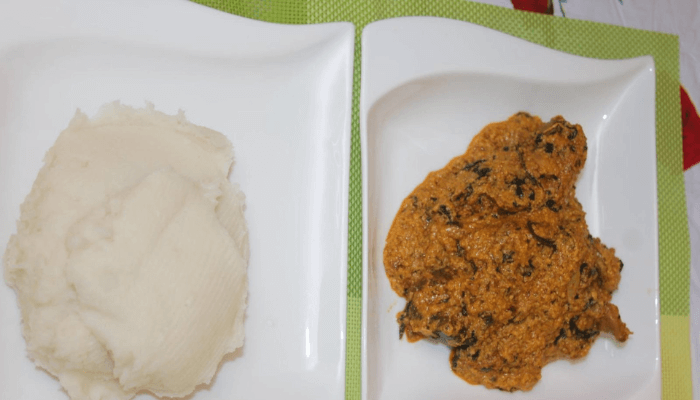
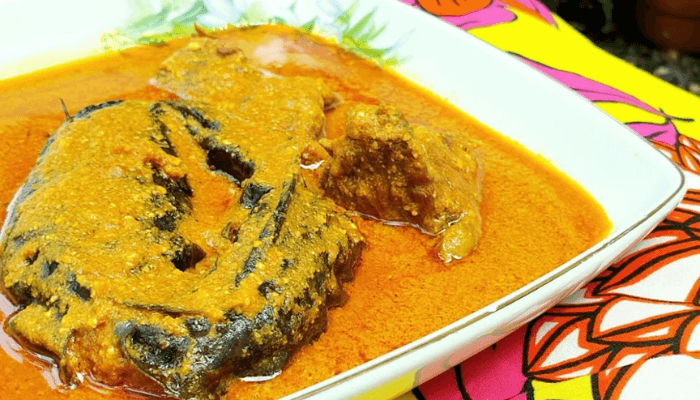
Egusi Ijebu is a proudly South Western Nigerian delightful stew – like soup that is relished across most Yoruba land, with focus on Ijebu, Ogun State.
This community and cultural soup can comfortably pass as a unity and even a diaspora soup.
This is because the migration of Egusi Ijebu loved by Nigerians to other parts of the world has also knowingly or unknowingly prompted the movement of the soup to other countries like Ghana, Togo, Senegal, Cameroon, the United Kingdom, United States and Australia, among others.
With the way Egusi Ijebu has travelled from one generation to generation, this soup should be on track to gain recognition as part of UNESCO’s Intangible Cultural Heritage list.

Known for its rich flavour, nutritional value, health benefits, and cultural significance, Egusi Ijebu is more than just a meal, it is a culinary emblem of identity.
Egusi, the key ingredient for the preparation of the soup, comes from protein-rich melon seeds (Cucumeropsis mannii or Citrullus lanatus), commonly used as a thickening agent in many traditional soups.
In preparing this type of soup, the melon seeds are usually washed with water, with the likes of fresh tomatoes, onions, atarodo, tatashe and sumbo, all added to the egusi and blended into a thick puree. Most times, dried crayfish and shrimps are also washed and added to the pepper and wet egusi mix, before being blended. The final outcome always would like a new born baby’s fecal matter.
The uniqueness of the soup is that, it is prepared like any south western oily stew and can be used for not just swallows like eba, lafun, fufu, and amala, but for boiled yam, rice, or any other starchy Nigerian food that need stew or soup accompaniment.
Egusi Ijebu can therefore be described as a unique cultural and traditional soup that holds a central place at most Ijebu homes, and special occasions like traditional wedding ceremonies, funeral ceremonies, communal tables, villiage meetings and especially special cultural ceremonies.

The best and most commonly used leaves for this soup is efo – shoko or tete. Once the soup is fried in a stew-like form, it is really for serving.
Beyond its taste and texture, Egusi Ijebu offers impressive nutritional value. It is packed with protein, healthy fats, and essential vitamins like A, B1, B2, and E. It provides vital amino acids like arginine and lysine, making it a key food source in many South Western communities.
Egusi Ijebu, because of the use and frying of extra oil is pack with much edible oil and pure protein. Egusi seed as a great source of Arginine helps in regulating metabolism and improves the cardiovascular system while Lysine helps in the formation of collagen and connective tissues in the body. It is also low in calories.
The Egusi seed is an excellent source of nutritional minerals and vitamins such as carbohydrates, fat, zinc, vitamin B1 (Thiamine), dietary fibre, sulphur, magnesium, vitamins B2 (Riboflavin), niacin and manganese amongst others.
Through the voice of food journalism and tourism, efforts must now be made to list Egusi Ijebu part of the UNESCO Intangible Cultural Heritage list.
Its sociocultural value is undeniable. This is because, in many rural areas across the Nigerian landscape, especially Yoruba land, this soup is not just a delicacy, it is seen and relished as a therapy, tradition, and a means of identity, oneness and togetherness. Many women and food sellers also selling food across small restaurants, Bukkas, and eateries in the inter ior villages and towns are known for selling this soup to many lovers of swallow and soup.
Egusi Ijebu can go with different types of swallow – from eba to pounded yam, fufu, semo, cassava flour [lafu], amala, and so many other kinds of swallow.
Egusi Ijebu has fulfilled and met the following criteria: The cultural identity is deeply rooted in the life of various Nigerian communities, both locally, across the continent and in diaspora, as a unique soup and food, as well as a symbol of identity and celebration.
Oral traditions like recipes, techniques, and rituals around Egusi Ijebu have been passed down through Ijebu and Yoruba oral storytelling, family heritage, and communal teaching.
Traditional knowledge is still maintained in some indigenous Yoruba and Ijebu communities. These include the grinding of all ingredients and spices with the native stones until pureed. The use of charcoal stoves and clay pots as well as firewood is also factored in.
There is a need for the Nigerian government to take collaboration, documentation, preservation and recognition seriously.
The inclusion of Egusi Ijebu in Nigeria’s national heritage inventory will be a great accomplishment that could help preserve the culinary culture, and the traditional cooking methods of this soup.
The cultivation and sustainable agriculture of the melon seeds is equally helping to empower local farmers in Nigeria.
As Nigerians continue to celebrate our culinary diversity, Egusi Ijebu stands tall, as a symbol of culture, culinary heritage, tradition, health, and homeliness.
Let’s visit the kitchen:
Recipe for 4 servings
3 cups of egusi
10 fresh tomatoes
12 fresh atarodo peppers
12 fresh tatase peppers
10 fresh sumbo peppers
1 large onion [sliced]
2 cooking spoons palmoil
1 kilogram assorted meat
1 cup crayfish
1 cup shrimp
½ cup locust beans [iru woro or pete]
Salt and seasoning to taste
1 bunch fresh shoko or tete leaves [shredded]
Method
• Wash season and cook the meat and fish until tender.
• Set aside while you wash the tomatoes, peppers, crayfish and onions.
• Pour into a blender.
• Pick the egusi seeds neatly, wash thoroughly and add to the blender as well.
• Blend into into a puree and pour into a bowl.
• Set a pot on fire and pour in the palm oil.
• Add some sliced onions, stir before adding the egusi puree.
• Add some salt and seasoning to taste.
• Stir and cover to allow to cook until set or the oil floats atop the soup.
• Add the well cooked meat and fish, as well as the locust beans.
• Stir gently and remember to taste for salt and seasoning.
• Cover and simmer for about two minutes.
• Uncover the pot and add the shredded green vegetables as garnishing for the soup
• If shoko or tete is not available, use the likes of spinach, ugu, bitter leaves, or any other green veggies.
• Simmer for 60 seconds and remove from heat.
• Serve warm with that swallow of your choice.