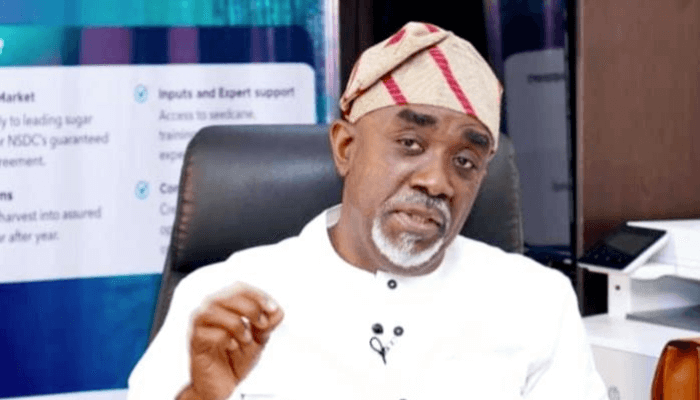
Samuel Onyinye Okoro, senior special adviser to the Enugu State Governor on Solid Minerals and Mining, and chairman, Mineral Resources and Environmental Management Committee (MIREMCO), Enugu State Branch, in this exclusive interview with REGIS ANUKWUOJI, spoke on the geological projection of coal in Enugu and the state government’s strategic plans for the use in boosting the state’s economy. Excerpts:
Enugu is popularly known as the Coal City. Do we still have coal deposits or has that era passed with the colonialists?
Coal is a blessing from God to our people. Enugu still has a significant deposit of coal. Currently we are producing between 40 to 50 tons per month, and we are working towards increasing production to about 200,000 tons by the end of this year or in the first quarter of next year.
Presently, we supply to local companies like the Ceramic and Tiles Company in Oji River and a Tissue Company in Emene, among others. These are just some of the local industries benefiting from our coal resources for now.

It’s said that Enugu has one of the best grades of coal in the world. Why is the state not exporting it yet?
Yes, Enugu’s coal is one of the best in the world. However, His Excellency, Governor Peter Mbah has emphasized that we should first use our coal locally to develop our industries and improve energy supply. That’s why we’re focusing on building power plants with a target capacity of 1,000 megawatts. The idea is to process and add value to our coal locally before considering exportation.
How many mining sites are currently operational in the state and what is their impact on the state’s economy?
We currently have seven operational mining sites spread across various local government areas in Enugu State. About 90percent of these are owned by indigenous companies, which means more jobs and economic empowerment for our people—particularly the youth. This has greatly helped in reducing youth restiveness and improving community peace.
What modern mining methods are used to ensure safety of lives and property?

We no longer use the old underground mining methods. Instead, we now employ surface mining techniques using mechanical excavators, bulldozers, and trucks. This method is safer, more efficient, and reduces the risks associated with underground mining.
Considering the environmental implications, how do you ensure compliance with environmental standards?
We have robust mechanisms to manage the environment. We ensure that water bodies are not polluted, and we strictly enforce Environmental Impact Assessments (EIA) and other regulatory standards. We also have safety and environmental officers who ensure compliance on a daily basis. For us, mining is not just about production—it’s also about protecting and sustaining the environment.
Are these mining operations owned by the government or are they in partnership with private companies?
What we do is obtain the lease and then seek private partnerships. The governor has a vision to grow the state’s GDP from ₦4.4 billion to ₦30 billion, and that kind of exponential growth cannot be driven by the government alone. That’s why we engage private sector investors to drive growth in the mining sector.
Who are the mining contractors—are they mostly local or foreign?
About 90percent of the mining companies operating in Enugu are indigenous. We’re proud of that because it translates to local job creation, local content, and community development.
Solid minerals fall under the exclusive legislative list controlled by the federal government. How do you navigate that?
Yes, that’s true. But that’s where MIREMCO (Mineral Resources and Environmental Management Committee) comes in. It serves as a bridge between the federal and state governments, as stipulated in Section 19 of the Mining Act. The committee comprises five members from the state and three from the federal government—including representatives from the Federal Ministry of Environment and the Federal Ministry of Solid Minerals. While the Governor nominates the chairman, the Minister confirms the appointment.
Since this administration came into office, we’ve worked hard to revive MIREMCO in Enugu to reflect our renewed commitment to the mining sector. We have obtained numerous licences from the federal government and even acquired some coal blocks through federal allocation.