When basic healthcare and reliable food are still out of reach for millions, the most promising answers are often built from the ground up, by women designing
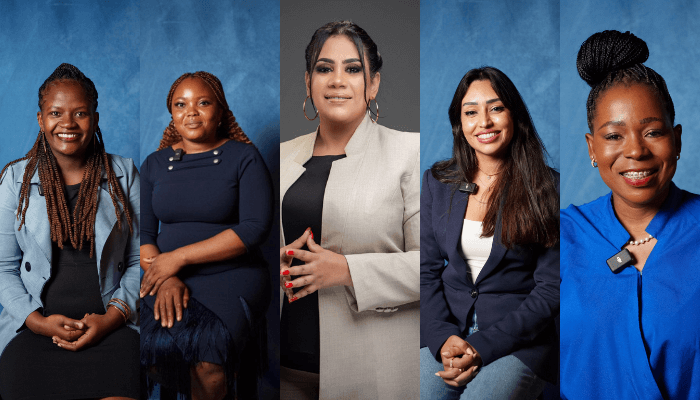
solutions shaped by local realities. In 2025, five African founders were recognized by the Bayer Foundation Women Entrepreneurs Award, supported in partnership with Impact Hub.
Their work was celebrated at The Bloom, a virtual showcase held on 19 November 2025, which gathered investors, media, partners, and changemakers to spotlight practical, scalable solutions for food and health equity.
The winners bring different tools to the same challenge: making health and food
systems more accessible, resilient, and fair. Salma Tammam of Egypt founded
REME-D to produce affordable molecular diagnostics locally, a move that has helped tens of thousands access timely care.
REME-D now supplies scores of hospitals and labs across the region and is expanding into new African markets.
In Zimbabwe, Chiedza Mushawedu runs Zimbos Abantu Healthcare on Wheels, a
solar-powered mobile clinic model that takes primary care straight into underserved neighbourhoods.

The initiative has reached thousands of patients and created local
employment while launching an affordable micro-insurance product that helps families pay for care without catastrophic costs.
Faith Koki in Kenya addresses post-harvest loss with SmartSilo, a solar airtight storage system equipped with sensors. By cutting spoilage and linking farmers to buyers and credit via her Kuza Trading Hub, she’s helping smallholders capture more value from their harvests. In Ghana, Anaporka Adazabra’s Farmio Limited combines solar greenhouses, drip irrigation, and a farmer SuperApp to boost yields and build climate resilience.
And in Sudan, Alaa Salih Hamadto’s Solar Foods uses solar drying plus IoT tools to preserve produce affordably as a lifeline for farmers and communities, especially during crises.
Across these initiatives, a pattern emerges: technologies and services that respect local context, create dignified incomes, and scale sustainably.
With backing from Impact Hub and the Bayer Foundation, the entrepreneurs gain funding, mentorship, and networks of support that turn promising pilots into
systems-changing solutions. The Bloom event made clear that investing in women innovators is not charity; it is a strategic route to stronger food and health outcomes across regions.

Reme-D Test Kit
A nanotechnology researcher turned entrepreneur, Salma built REME-D to produce affordable molecular diagnostics locally. REME-D now serves 92 hospitals and laboratories, delivering tests to over 50,000 patients per month and exporting to neighbouring markets.
For Salma, diagnostics are the entry point to care: local testing capacity shortens the path from symptom to treatment and keeps health
systems responsive during outbreaks and everyday care alike.
Chiedza’s fleet of solar-powered mobile clinics brings primary care to settlements where the nearest clinic can be 15 kilometres away.
By meeting communities where they are, Zimbos Abantu has reached over 108,000 patients and created 48 full-time
jobs. Its recent micro-health insurance product, Mukando weHwutano, addresses financial barriers to care a reminder that accessibility is both geographic and economic.
Solar-powered food dryer after the war.
Impact Hub and the Bayer Foundation play complementary roles: one provides a global network and local ecosystem support, the other provides targeted funding, technical mentorship, and credibility.
Together they offer:
● Seed and scaling capital: early investments plus follow-on funds that help
pilots grow into sustainable models.
● Technical and business support: mentorship in product development,
regulatory navigation, and market entry.
● Network access: introductions to investors, buyers, research partners, and
policy actors.
● Visibility: platforms like The Bloom amplify founders’ stories to audiences that can accelerate adoption and investment.
This mix matters because entrepreneurs working on health and food systems face technical barriers (regulation and standards), logistical barriers (distribution and cold chains), and financial barriers (access to affordable capital).
Support that combines
money, mentorship, and market access helps bridge those gaps.
The solutions on display at The Bloom event are not isolated innovations; they are building blocks for more resilient, inclusive systems.
Diagnostics reduce unnecessary referrals and speed treatment; mobile clinics reach populations that would otherwise
slip through the cracks; better storage preserves farmers’ income and local food supplies; climate-smart farming improves yields with fewer resources; and solar preservation expands shelf life where refrigeration is scarce.
Each intervention reduces loss and cost, increases autonomy, and creates jobs, all central to equitable development.
While their sectors differ, from biotech to agritech, from mobile healthcare to
renewable-powered food systems, these five women share a common approach:
solutions that are locally anchored yet globally scalable, and which place dignity, sustainability, and equity at the center.
Through the Bayer Foundation Women
Entrepreneurs Award and the Impact Hub Network, they have not only gained
funding and mentorship but also access to a global community that amplifies their impact and accelerates their growth.
The collaboration between Bayer Foundation and Impact Hub has been
instrumental in unlocking this potential. Together, they are demonstrating that the future of health and food security will not be delivered by one innovation alone, but by many, each rooted in the realities of the people it serves.
In a time when global crises can feel overwhelming, the work of these five women is a reminder that meaningful change is not only possible, it is already happening.