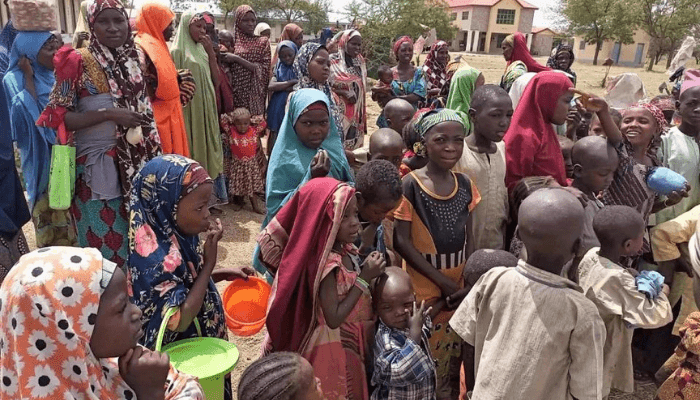
The National Human Rights Commission (NHRC) says Nigeria recorded 39,852 new displacements across 11 states within six months, with Benue emerging as one of the most affected areas.
Tony Ojukwu, Executive Secretary of the NHRC, disclosed this on Wednesday in Abuja during a consultation forum on protecting the rights of Internally Displaced Persons (IDPs) and Forcibly Displaced Persons (FDPs).
The forum, organised in partnership with the United Nations High Commissioner for Refugees (UNHCR), focused on promoting durable solutions through improved collaboration among government institutions, civil society and humanitarian partners.
According to Ojukwu, the joint NHRC/UNHCR project remains a key platform for documenting and responding to human rights concerns affecting IDPs, refugees, asylum seekers and returnees.

Read also: Abuja, Benue record highest child rights violations as October complaints hit 406,000 — NHRC report
He listed the affected states as Benue, Adamawa, Akwa Ibom, Borno, Cross River, Taraba, Kano, Katsina, Sokoto, Yobe and Zamfara.
“Between February and September, we recorded a 58 per cent increase in the number of IDPs reached, reflecting improved field coordination and the commitment of both NHRC and UNHCR to expanding human rights protection,” he said.
Cumulative data shows 72,119 females and 62,403 males displaced during the period. Children constituted the largest group, with 64,058 minors affected.
The NHRC/UNHCR dashboard for August to September recorded 2,452 human rights incidents, with the most significant violations linked to lack of access to education (865 cases) and denial of socio-economic rights such as food and shelter (1,283 cases).

Overall, 135,358 forcibly displaced persons were identified, while 8,372 human rights incidents were documented across the 11 project states. Kano State recorded the highest number of cases related to lack of access to socio-economic rights and education.
Ojukwu noted that although Human Rights Monitors and Community Protection Action Groups are tracking and referring cases, they continue to face structural barriers. He stressed the need for stronger inter-agency coordination at state and local government levels.
Timothy Zadom, representing UNHCR Nigeria, described the engagement as timely and emphasised the importance of safeguarding the rights of forcibly displaced persons whether IDPs, refugees, returnees or stateless individuals who often face significant vulnerabilities.
He called for deeper reflection on the experiences of displaced populations and urged stakeholders to work together to ensure their protection, inclusion and dignity.
Zadom commended the NHRC for its commitment to its mandate and reaffirmed UNHCR’s support for its leadership in protecting displaced persons across the country.