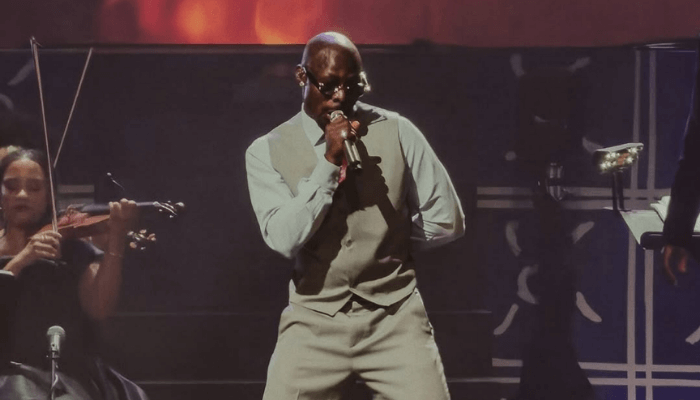
When Asake took the stage at Kings Theatre in Brooklyn on November 8, 2025, for the Red Bull Symphonic concert, the night felt like a cultural reckoning, one of those rare moments when sound, space, and storytelling aligned perfectly. Watching clips from that performance, the energy in the room was palpable. Here was an artist who built his sound from the streets of Lagos, now commanding a full symphony orchestra in one of New York’s most iconic theatres. This was more than music; it was a statement. And for those in marketing, media, and communications, it was a masterclass in how culture, authenticity, and collaboration can redefine storytelling.
Red Bull’s work with Asake went far beyond sponsorship. The brand wasn’t chasing logos or visibility; it sought to understand the artist’s essence and amplify it in a way that felt honest and deliberate. That is the first lesson for anyone in communications: authenticity remains the strongest strategy. People connect to truth, and that night, truth occupied centre stage; a genuine exchange between a brand that thrives on creative experimentation and an artist who embodies the rhythm of a generation.
To understand the magnitude of that moment, consider Red Bull Symphonic itself, a global showcase that fuses contemporary music with orchestral composition. Since its inception, it has featured collaborations like Rick Ross with Orchestra Noir and Metro Boomin with John Legend, proving how opposing genres can merge into something original and human.
Asake’s performance marked the first time an African artist headlined Red Bull Symphonic and the first on U.S. soil. Conducted by Glenn Alexander II and arranged by Anthony Parnther, his chart-topping songs such as Lonely at the Top, Sungba, and Amapiano were reimagined with orchestral precision. Layers of brass and strings met Yoruba rhythm, creating a dialogue between heritage and innovation. Here lies the second lesson: great storytelling doesn’t dilute culture, it magnifies it. Red Bull didn’t attempt to westernise Asake’s sound; it elevated it. The brand showed that cultural amplification, not appropriation, builds trust; the most valuable currency in communication.

The Kings Theatre added symbolic weight. Built in 1929, it stands as a monument to creative excellence. Watching an Afrobeats artist from Lagos own that stage beside a 33-piece orchestra showed that African creativity belongs everywhere. Context is part of the message; where a story is told matters as much as how it’s told.
Then came an unscripted moment: Wizkid’s surprise appearance. As he joined Asake to perform MMS with the orchestra, the audience erupted. Social media was abuzz, and that moment revealed another truth: the most powerful stories often emerge from spontaneity. In a world of curated perfection, authentic emotion still cuts deeper.
Through live streams, behind-the-scenes content, and documentaries, Red Bull turns one-off performances into a living narrative. For communicators, this is an essential lesson: continuity sustains relevance. Campaigns may fade, but stories endure when documented, shared, and archived.
Cultural storytelling also demands fairness and structure. Partnerships built on trust require transparency, equitable compensation, and shared visibility. Cultural credibility is not achieved through exposure alone; it’s earned through consistency and respect. Asake’s journey from Lagos to Brooklyn mirrors a broader shift in global communication, one where local stories drive international relevance. Afrobeats, once seen as niche, now defines global culture. For brand leaders, the lesson is this: authenticity fuels influence. The deeper a story’s roots, the further its reach.
The greatest lesson of all is that modern communication thrives on participation, not performance. That night, the audience wasn’t passive. They sang, filmed, and shared the experience in real time. Every clip and every cheer became part of the narrative. Today’s audiences don’t want to be spoken to; they want to “belong”. The brands that understand this will build communities, not campaigns.

For African communicators, the message runs even deeper. What Asake achieved through Red Bull Symphonic signals what becomes possible when our stories are told on our terms. African brands and PR professionals have the opportunity to present local creativity as globally relevant without losing the essence. We can export narratives that carry the rhythm of our cities, the language of our people, and the truth of our lived experience to a global audience.
.Egbomeade is a marketing, communications, media, and PR professional. He is a member of Chartered Institute of Public Relations (UK) and ForbesBLK.