The giant statues of the three white-cap chiefs known as Agba Meta that greet travellers at the toll gate remain a monumental symbol when entering Lagos. However, what follows next is far less welcoming — heaps of refuse dumped along the roadside, open gutters clogged with waste, and the occasional stench from makeshift dumps or open defecation sites. For a megacity of more than 18 million people, with about 6,000 visitors arriving daily, Lagos struggles to manage the waste it generates. The city may boast some of the best infrastructure in Nigeria, but its waste management system remains in a troubling state.
The Lagos Waste Management Authority (LAWMA) estimates that between 5.46 million and 13 million tonnes of waste are generated annually, much of it ending up in open spaces, streets, and waterways. Markets remain filthy, drains are clogged, and refuse piles block pedestrian walkways. According to the United Nations Environment Programme (UNEP), about 34 kilograms of plastic waste per person leak into Lagos’ waterways each year – the equivalent of every resident throwing ten plastic bottles into water bodies daily. This contributes to Lagos’ periodic cholera and diphtheria outbreaks and places Nigeria among the top three African countries with the highest exposure to unsafe pollution levels, according to the World Air Quality Index.
Urban waste management challenges are widespread across Africa. UN-Habitat notes that only half of the solid waste generated in African cities is collected, while more than 80 percent is poorly managed. Yet, several cities on the continent have made significant progress – and Lagos can learn a lot from them.
Kigali, Rwanda’s capital, is widely recognised as Africa’s cleanest city. With around two million inhabitants, its success stems from strict regulation, community participation, and cultural ownership of cleanliness. The 2008 ban on non-biodegradable plastic bags is enforced with fines and, in severe cases, prison terms. Beyond regulation, a monthly national cleanup exercise called Umuganda has shaped a collective identity around public hygiene. Kigali pairs this with clear waste fee structures, recycling cooperatives, a hotline for sanitation violations, and strict monitoring.

Cape Town in South Africa provides another model. Its estimated 5 million residents benefit from an organised waste management system supported by City Improvement Districts (CIDs), a public-private partnerships that maintain safety and cleanliness. With this arrangement, waste is properly aggregated, and recycling infrastructure is expanded, integrating cleanliness with quality of life.
In Tunis, the capital of Tunisia, cleanliness is maintained through innovative wastewater disposal systems, including underground and seabed pipelines. These investments protect public health while ensuring long-term environmental sustainability.
In comparison, the ‘city of Lagos’ still faces fundamental problems. About 60 percent of waste remains uncollected, with only 13 percent recycled — including 3–6 percent of plastics and less than 1 percent of organic waste. The rest is left to rot in the open or block the city’s drainage channels. The root of these problems lies in weak infrastructure. Lagos lacks adequate waste trucks, recycling plants, community bins, and formal transfer stations. Many existing trucks are outdated, frequently breaking down and interrupting service delivery.
The institutional history shows that this problem is far from new. LAWMA was established in 1977 to manage waste collection and disposal across the state. Over the years, its name and structure have changed several times, including the introduction of private sector participation in 1997 to improve efficiency. Yet, despite these reforms, waste continues to pile up. Poor coordination, inadequate supervision, and the repeated failure of contractors to deliver consistent service remain defining weaknesses of the system.
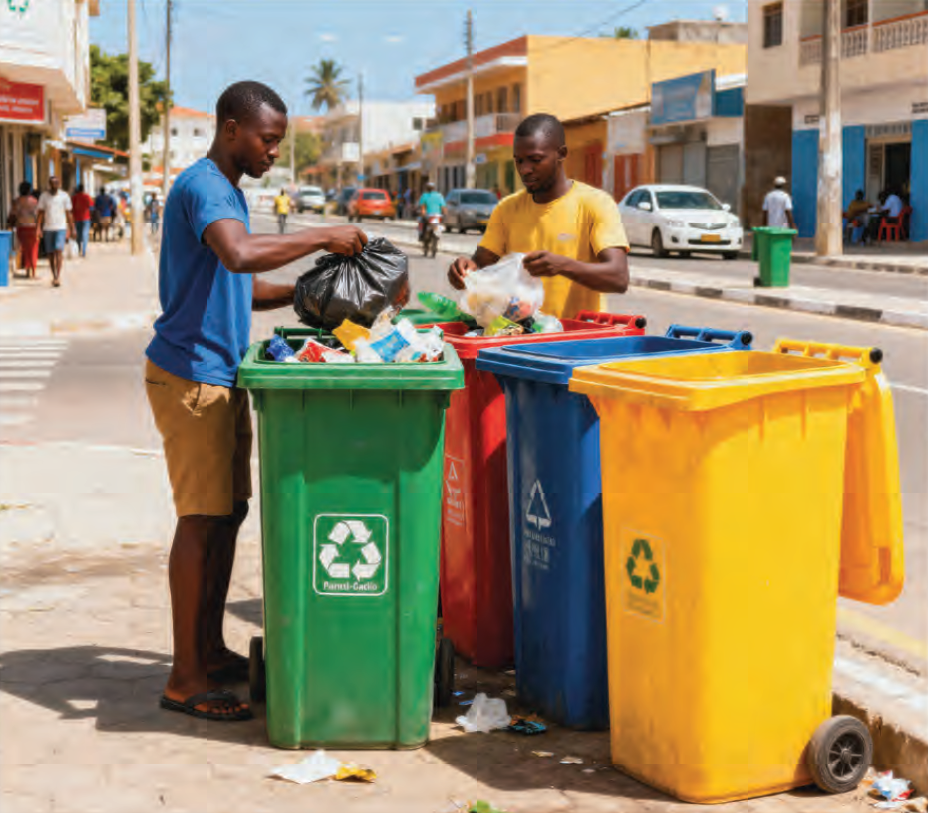
A pathway forward requires more than awareness campaigns; it demands a structural overhaul of how Lagos manages, finances, and enforces waste systems. Waste disposal remains an individual burden rather than a shared public obligation partly because the city lacks the infrastructure that makes responsible behaviour possible. Currently, Lagos generates over 25,000 tonnes of waste daily and would require about 1,250 collection trucks to manage it – several hundred more than the 600-plus fleet currently available. Most neighbourhoods and markets also lack public waste bins, leaving residents with few proper disposal options beyond gutters and open spaces.

Strengthening public–private partnerships is also essential. For Lagos to close its waste–infrastructure gap, government fleets alone cannot meet the city’s daily volume. Therefore, private operators must expand collection capacity, recycling plants, and transfer stations through competitive concessions and performance-tied contracts. These partnerships can also create citywide plastic-return points in supermarkets, warehouses, and major markets, allowing residents to exchange bottles for cash or discounts. Germany’s ‘Pfand’ system shows how such incentives build a recycling culture. With LAWMA oversight and private-sector investment, Lagos can grow its fleet, reduce plastic leakage, and embed responsible waste behaviour across communities.
Enforcement, meanwhile, must shift from episodic crackdowns to consistent, transparent regulation. The Lagos Environmental Sanitation Corps needs better tools, digital reporting, and protection from corruption. Automated penalties for illegal dumping would drive compliance.
Lastly, Lagos should return and modernise monthly environmental sanitation into a coordinated civic programme involving estates, markets, unions, and community associations. A look at the legal framework is required for this to be actualised. With predictable drainage clearing, twice-weekly pickups, and strategic bin placement, cleanliness becomes a shared civic responsibility. Lagos has the scale to lead Africa in sustainable urban management, and it can play a leadership role to carry along other Nigerian states too. What it needs now is coordinated strategy anchored on infrastructure, accountability, and collective responsibility.