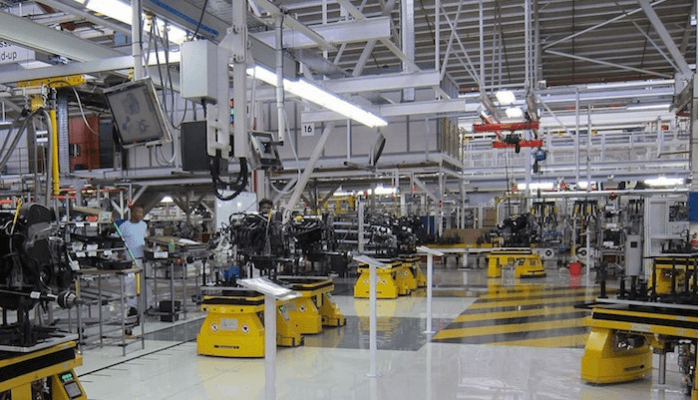
Across Nigeria’s factories, workshops, and production hubs, from Nnewi’s auto-parts clusters to Lagos’ beverage plants and Kano’s textile mills, the conversation has shifted. It is no longer just about keeping the machines running but about optimising efficiency and sustaining productivity in the face of rising costs, erratic power, and shrinking margins.
The workshop, that heartbeat of manufacturing, is where real value is created. It is the floor where men and women turn raw materials into finished goods, where automation meets human skill, and where Nigeria’s ambition for industrial growth is either achieved or frustrated. Yet, in most manufacturing enterprises, the workshop or shop floor is also where inefficiencies quietly erode profit and where the gap between policy and practice becomes most visible.
Nigeria’s manufacturing sector, according to the National Bureau of Statistics (NBS), grew by only 1.3 percent in the second quarter of 2025, a marginal recovery from the contraction recorded in 2024. The Manufacturers Association of Nigeria (MAN) attributes this sluggish growth to rising energy costs, unstable exchange rates, and import dependence for machinery and raw materials. In such a climate, every minute lost to downtime or machine failure on the shop floor translates directly into financial loss.
Globally, productivity is the measure of how efficiently resources – labour, capital, and technology – are converted into output. But in Nigeria, labour productivity remains constrained by outdated equipment, limited technical skills, and infrastructural bottlenecks. A recent report by the National Productivity Centre (NPC) noted that average labour productivity in Nigeria fell to N930,000 per worker per year in 2024, down from N1.2 million in 2019, due largely to low technology adoption and frequent disruptions in electricity supply.

Optimising productivity in Nigerian factories requires rethinking three interlinked factors: power, people, and process.
For power, the World Bank estimates that Nigerian firms lose about $29 billion yearly to unreliable electricity. Manufacturers either operate expensive diesel generators or reduce working hours to cope with blackouts. In many workshops, energy costs now account for up to 40 percent of total production expenses. Without reliable and affordable power, whether from grid supply or captive solar, efficiency targets remain elusive.
For people, the Nigerian workforce is vibrant but under-skilled for the demands of modern manufacturing. Many operators lack formal training in machine calibration, quality control, or process optimisation. MAN’s 2025 survey revealed that over 60 percent of factory workers in the sector have no access to ongoing technical training. The result is high error rates, low equipment utilisation, and frequent rework, all productivity killers.
Investing in human capital through on-the-job training, vocational partnerships, and digital upskilling is not a luxury; it is a survival strategy for competitiveness.
While for processing, most Nigerian factories still run on manual or semi-automated processes. This not only limits scalability but also reduces transparency in production tracking and inventory control. The global shift toward Industry 4.0, which integrates data analytics, robotics, and Internet of Things (IoT) systems, offers lessons. Even modest digital adoption, such as real-time monitoring of production lines or predictive maintenance tools, can improve output by 10 to 15 percent, according to a PwC study on African manufacturing competitiveness.

Optimising efficiency in the Nigerian workshops is not about cutting corners or squeezing labour; it is about smarter resource use. Government, industry, and workers each have a role:
The government must create a stable policy environment, ensure power sector reforms translate into affordable electricity, and incentivise investment in automation through tax credits or soft loans.
Manufacturers must shift from cost-saving mindsets to innovation-driven management, using data to track downtime, energy use, and quality losses. Workers must embrace continuous learning, because in the digital factory of tomorrow, productivity will depend as much on mental skill as on manual effort.
If Nigeria must diversify its economy beyond oil, then the workshop must become a space of innovation, not just perspiration. The country’s industrial future will not be built in boardrooms or policy memos; it will be built where machines hum, sparks fly, and skilled hands turn effort into enterprise.
Optimising productivity is not just an operational task; it is a national economic necessity.