|
Getting your Trinity Audio player ready...
|
Nigeria on Monday sought to tackle the root causes of violent extremism with the launch of a new era of prevention-driven security cooperation in Abuja.
This move seeks to break the region’s cycle of conflict by confronting the deep social, economic and political fault lines that extremist groups continue to exploit.
To this effect, Nigeria convened a three-day workshop with the aim of strengthening regional coordination and advancing preventive strategies against violent extremism.
The forum brought together policymakers, security practitioners, researchers and representatives of regional and international organisations in a renewed push for collective action.

Delivering opening remarks on behalf of Nuhu Ribadu, National Security Adviser, Adamu Laka, National Coordinator of the National Counter Terrorism Centre (NCTC) said the gathering signalled a decisive shift in the region’s counterterrorism posture.
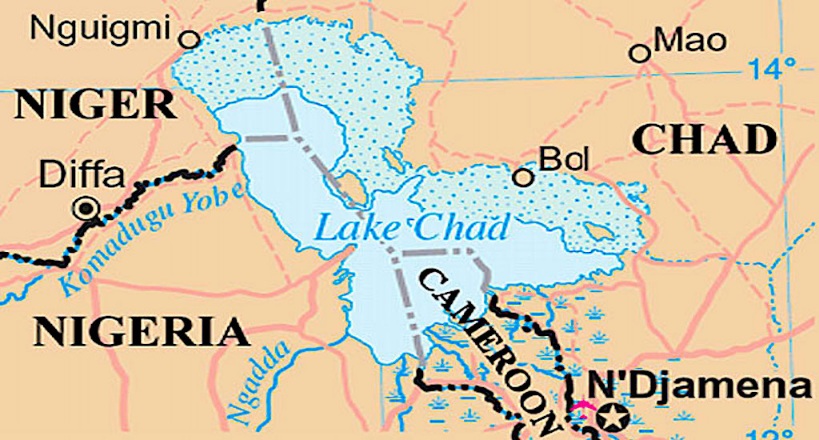
He noted that despite years of military operations, intelligence efforts and law-enforcement initiatives across the Lake Chad Basin, violent extremism has persisted, underscoring the limits of enforcement-focused approaches.
He said the entrenched drivers of extremism, from poverty and marginalisation to political grievances, cultural tensions and ideological manipulation, require responses that prioritise people, communities and prevention.
The workshop, he added, aligns with a broader push for preventive action by the African Union, ECOWAS, ECCAS and the United Nations.
The Coordinator pointed out that the Lake Chad Basin has lived through more than a decade of insurgency, mass displacement, organised crime, illicit trafficking and social upheaval, making a transition to preventive strategies not only strategic but urgent.

He said the workshop offers a platform for countries to examine their shared challenges, review lessons learned and develop a more coordinated, region-wide prevention framework.
He commended the African Union Counter-Terrorism Centre for convening the forum and for its continuing support to member states through training, technical assistance and strategic guidance.
He noted that the AU’s provision of logistics, travel support, interpretation and facilitation underscores its commitment to regional solidarity and collective security.
On Nigeria’s domestic and regional role, the Coordinator highlighted the work of the NCTC as the country’s central hub for policy coordination on counterterrorism and preventing and countering violent extremism (P/CVE).
He outlined progress made in implementing Nigeria’s national P/CVE framework, enhancing interagency cooperation, improving data systems, and managing strategic communications as well as rehabilitation and reintegration programmes for former extremists.
He also recalled that Nigeria’s leadership was further recognised during the Africa Counter-Terrorism Summit held in Abuja in April 2024, where the NCTC was designated a Regional Centre of Excellence for Counterterrorism in West Africa and the Sahel.
The designation, he said, comes with increased responsibilities to support neighbouring states through capacity building, policy harmonisation, operational coordination and research-driven interventions.
“The Centre has since ramped up regional engagement through advanced training programmes, standardised intelligence-sharing frameworks, enhanced early-warning systems and deeper partnerships with AU institutions, regional economic communities and international partners”, he stated.
Read also: Insurgency: Chad calls for stronger cross-border security cooperation
The current workshop, he said, fits into Nigeria’s broader vision to build a prevention-oriented and collaborative security architecture for the Lake Chad Basin.
Declaring the workshop open, he urged participants to engage with openness and a focus on practical, actionable solutions that can shape future policies and interventions.
The outcomes from the meeting, he said, are expected to inform regional strategies and community-level initiatives that could significantly impact long-term stability in the Basin.
He expressed confidence that the engagement would produce concrete recommendations, strengthen partnerships and improve coordination among countries confronting violent extremism.
The workshop is being organised by the African Union Counter-Terrorism Centre in collaboration with Nigeria’s National Counter Terrorism Centre and other regional and international partners.