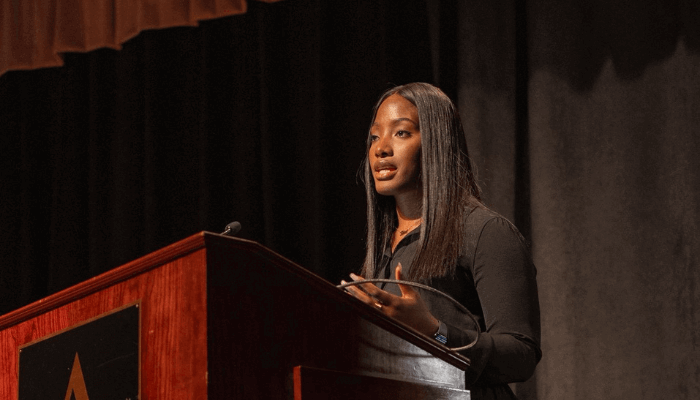
Seven years after Lisa Mmesoma Udechukwu, data governance expert, cautioned that biased data creates biased AI, she says the world has entered a far more dangerous phase, one where generative AI systems are silently harvesting and remixing people’s digital lives into new content without their consent.
Udechukwu, now a data quality analyst at Pinterest after influential stints at Meta and Nike, tells BusinessDay that the fight for ethical AI has shifted from correcting bad algorithms to confronting the mass extraction of personal data powering today’s AI models. Emmanuel Ndukuba brings excerpts:
Lisa, your 2018 paper was a warning about how biased data creates biased AI. It feels like the industry largely failed to heed that warning. How has the landscape of data privacy and AI ethics evolved since then?
It is evolved from a problem of interpretation to a problem of creation. Back then, the primary concern was discriminatory outcomes from predictive models, a bank’s algorithm denying a loan, or a hiring tool filtering out qualified candidates. That danger is still terrifyingly present. But the explosion of large language models and generative AI has introduced a paradigm shift. The new crisis isn’t just about how our data is used against us in a decision, but how our collective data is being alchemised into entirely new content, often without our consent, compensation, or even knowledge. The very definition of “personal data” is dissolving.

You’re referring to models trained on vast, indiscriminate scrapes of the internet. Can you break down the tangible risk for the average person?
It is abstract until it’s not. The real risk is the erosion of authenticity and personal agency. Your old photos could end up training an image generator. Your writing style could be copied by a language model. And in markets like Nigeria, where fintech apps and verification systems rely heavily on personal data, the impact is even more immediate. My time at Meta showed me how massive these data pipelines are. The scale is beyond what most people imagine. We are all, in a sense, becoming unwilling and uncredited co-creators of these systems. The short-term risk is reputational harm from deepfakes or synthetic content; the long-term risk is a world where we can’t fully trust what we see or read.
You are now at Pinterest, one of the world’s largest visual discovery platforms with a direct connection to millions of users. From your vantage point as a data quality analyst, how do you see these data quality challenges playing out on the inside?
It is a fascinating challenge to observe. At Pinterest, trust is everything. It’s the foundation of how people discover ideas, express themselves, and make decisions. As a data analyst, my role is to surface insights that improve the quality and relevance of our platform, how recommendations are made, how content performs, and how diverse audiences engage with what they see. For me, a “better” decision also has to be a “more ethical” one. So, in my day-to-day work, I apply the same principles from my research, questioning the data itself, not just the outputs. Are certain creators or perspectives underrepresented in this dataset? Could optimising for one engagement metric unintentionally limit visibility for others? I try to champion that ethical lens in a very practical, ground-level way through the questions I ask, the context I provide with my analysis, and the way I define success.
You recently delivered the keynote address at the Cal State Long Beach (CSULB) Annual Datathon in the United States. What message did you share with the next generation of analysts?

My message was simple: your biggest advantage won’t be your technical skill, but your ethical imagination, especially around data quality. I urged the students to see themselves not just as coders, but as architects of systems that aUect real people. The hardest questions in data science aren’t about accuracy; they’re about the quality and integrity of the data itself—where it came from, who it includes or excludes, and the consequences of how we use it. The future of trustworthy AI will be shaped by analysts who treat data quality as a moral responsibility, not just a metric. Those are the leaders the world will depend on.
Looking forward, what’s the next big privacy battleground we’re not paying enough attention to?
Emotional and biometric data collected through wearables and ambient computing. We’re moving from tracking simple things like steps and heart rate to systems that can guess your mood, stress level, or even how focused you are. As the line between our bodies and our devices fades, companies will have access to incredibly personal information.There’s a lot of good that can come from this, for health, wellness, and early detection of issues, but there is also a very real risk of misuse. It could open the door to a new kind of profiling and influence that goes far deeper than anything we’ve seen. That’s why we need to start building the right ethical guardrails now, not later. And Nigeria has a real chance to get this right. We can build AI systems that are innovative but also fair, transparent, and trustworthy from the start. If we do that, we won’t just join the global AI conversation – we’ll help shape it