



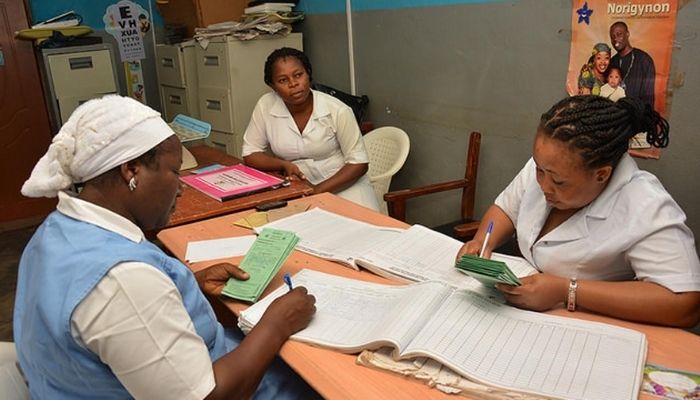
Nigeria’s public health system is slowly breaking down. Across teaching hospitals and federal medical centres, wards once filled with eager young doctors in training now echo with exhaustion and silence, BusinessDay findings revealed.
In some departments, only junior residents are left to attend to dozens of patients, run emergency calls, and manage clinics that were previously manned by teams of 10 or more.
The collapse of the residency system, which is the pipeline for producing future specialists, now threatens the very backbone of the country’s healthcare workforce.
A decade-long haemorrhage of doctors

Over the past decade, the brain drain has turned into a full-blown haemorrhage. Twenty years ago, Nigeria had tens of thousands of residents in training. Today, that figure has dwindled sharply.
The Nigerian Association of Resident Doctors (NARD) estimates that at least 9,000 doctors have left the country in the past five years alone, with many more waiting for their licensing exams for the United Kingdom, Canada, or the United States.
Read also: NTDs hinder children’s learning, trap families in poverty – Health ministry official
In some teaching hospitals, consultants admit they are literally begging people to apply for residency programmes that used to attract hundreds of applicants.
“We are training doctors for export. Ninety to 95 percent of medical students already plan to leave before they graduate. During NYSC, they save money and study for PLAB or USMLE. Some don’t even wait to complete their service before relocating,” one senior doctor, who has watched the situation deteriorate over the last 20 years, told BusinessDay.

He said 12 years ago, Nigeria reportedly had about 25,000 resident doctors, but the number hovers around 11,000 to 15,000 today, a dramatic fall that understates the true operational shortfall.
That decline stems from a mix of poor pay, crushing workloads, insecurity, bureaucratic hiring delays and the lure of better opportunities overseas.
The scale of the staffing gap is hard to overstate. Studies and reporting in recent years have estimated Nigeria’s doctor-to-population ratio at far poorer levels than global recommendations, commonly cited at between 1:6,000 (WHO recommendation) and roughly 1:9,000 to 1:10,000 in practical assessments, leaving many hospitals operating with a handful of residents to staff wards and theatres.
What this looks like on the ground
At the University of Benin Teaching Hospital (UBTH), a reliable source who spoke on the condition of anonymity said units that once had 30 to 40 junior residents now manage with six or seven.
In the urology unit, for example, routine prostatectomies that was once scheduled within weeks now sit on waiting lists for months. A patient seen in November may not get surgery until January or February because the team can only perform two or three elective procedures weekly.
One exhausted resident doctor told BusinessDay that he often leaves the hospital at 7 p.m., only to be called back for a night shift because there is no one else available.
“We have reached the point where people are physically and mentally breaking down,” he said.
At the Federal Teaching Hospital in Lokoja, a source reports that there are 89 senior specialists but only about 32 residents, a ratio that makes continuous service provision unsustainable.
In some departments at the Lagos University Teaching Hospital (LUTH), there is literally one junior resident holding the fort.
The consequences are predictable: longer patient waits, cancelled elective lists, and overreliance on exhausted juniors to carry emergency and routine care.
Federal Medical Centre (FMC), Keffi, tells a similar story. Where nearly 400 resident doctors worked in 2017, the hospital now has barely 180. Departments that once welcomed applicants for residency training say they now struggle to find any candidate when vacancies arise.
At the University of Nigeria Teaching Hospital (UNTH), Enugu, clinicians say roughly half of recent graduating cohorts leave within two years, with many immediately registering for PLAB (UK) or USMLE (US) exams during their NYSC year, a period used for the relocation preparation.
Read alsoi: HFN commends private sector inclusion in revised health coverage
Bureaucracy that bleeds the system
Consultants and union leaders repeatedly point to federal-level bureaucracy as a core driver. Recruiting for federal teaching hospitals and medical centres often requires Abuja approval. Interviews and waivers are secured locally, but final appointment letters can take months to come through.
By then, sources say, candidates have accepted roles in private hospitals or emigrated. The result is that, by the time a vacancy is addressed, burnout and attrition have already cost the system new hires and services, Muhammad Suleiman, the president of the Nigerian Association of Resident Doctors (NARD), told our correspondent.
Ironically, while federal hospitals are collapsing under bureaucracy, some state institutions appear to be faring slightly better. The Lagos State University Teaching Hospital (LASUTH) and the Enugu State University Teaching Hospital (ESUTH) have managed to attract and retain staff through improved remuneration and quicker recruitment processes.
“It used to be that federal hospitals paid better. But now, the states have overtaken them because they don’t wait six months for Abuja’s approval before hiring. They just act,” said a consultant in Lagos.
NARD president said the bureaucratic red tape is bleeding the federal system dry. In the current arrangement, even after interviews are concluded and candidates selected, it can take months before official employment letters are issued from Abuja.
“By that time, most candidates have already secured better offers abroad or taken private sector jobs. The system still runs as if it is the 1980s when everyone was desperate for a government job. But the reality is that doctors now have options. The bureaucracy has to evolve, or we will keep losing people,” he said.
“The problem is compounded by the three-year employment embargo imposed during the Buhari administration, which froze recruitment in federal hospitals. That gap created a generational vacuum, one that has never been filled.”
In many institutions, the number of consultants continues to dwindle as senior doctors retire or emigrate without a new crop of residents to replace them. The structure of Nigeria’s specialist training system is now so fragile that even a modest uptick in migration could bring parts of it to a standstill,” Suleiman stated.
In the midst of this, doctors who remain are left to carry an unbearable load. Many are owed months of unpaid allowances, hazard pay, and arrears from the long-promised salary adjustments.
They work with limited equipment, in facilities where basic consumables are sometimes lacking, and without functioning welfare support. “We are running a system that refuses to accept reality. Everyone pretends things are fine because they don’t want to offend the ministry, but people are dying. Patients are dying. Doctors are dying,” Suleiman averred.
Human cost: exhaustion, arrears and deaths
Beyond sheer numbers, clinicians highlight working conditions. Some residents report being on call for 20 days–30 days a month, doing 72-hour stretches, shifts that the medical community elsewhere would consider unsafe. In countries with regulated working hours, overtime is compensated. In Nigeria, however, doctors often work without limits and without adequate pay.
Many resident doctors are also owed months of arrears from previously negotiated salary adjustments and hazard payments. Promised wage reviews, including the collective bargaining adjustments of 2014 and partial increases in 2023, were either poorly implemented or delayed, deepening financial strain on front-line staff.
The human cost of this collapse is becoming more visible. For instance, when the death of Oluwafemi Rotifa, a 28-year-old resident doctor at the Rivers State University Teaching Hospital (RSUTH), hit the news, it was more than a tragedy, as it was a mirror held up to a crumbling system. Rotifa reportedly collapsed after working a 72-hour shift.
Before Rotifa, there had been Ahmed Isaiah, who collapsed in 2022 while performing surgery, and Okeoghene Edigba, who died after multiple back-to-back procedures without rest.
The Public Health Sustainable Advocacy Initiative (PHSAI) described their passing as deaths on duty, the inevitable result of overwork, neglect, and a national indifference to the suffering of frontline doctors.
The group’s reaction captured a growing fear among healthcare workers that Nigeria’s system is not only losing people to migration but also to exhaustion and death on the job.
Each tragedy, PHSAI says, exposes the same underlying rot, a system that demands sacrifice but offers no protection or reward.
Read also: Healthcare should be personalised, predictive, and data-driven — Tokunbo Fasuyi
What must change and fast
PHSAI and other advocates now call for an emergency recruitment and retention plan: immediate hires to fill critical gaps, competitive wages, regulated working hours, welfare and insurance for frontline staff, and streamlined federal approvals to let hospitals recruit directly.
“If we do not reform the system, more lives will be lost – both doctors and patients alike,” Ayo Adebusoye, a public health advocate and lawyer, told BusinessDay in a recent interview.
“Fast-tracked hiring to plug emergency gaps; prioritise residency posts in the most depleted departments; allow teaching hospitals and federal medical centres to appoint locally within approved budgets to avoid months-long central approvals; adopt clear shift limits and pay overtime; protect trainees from unsafe workloads; implement the 2014/2023 collective bargaining commitments and index salaries to current inflation and invest in infrastructure and welfare like modern theatres, accommodation and insurance to make public service viable,” NARD president appealed.
“If the government does not show urgency, the health sector will continue bleeding. This is no longer just brain drain, it is a system drain,” Abiodun Ajayi, PHSAI’s executive director, told our correspondent





