Introduction
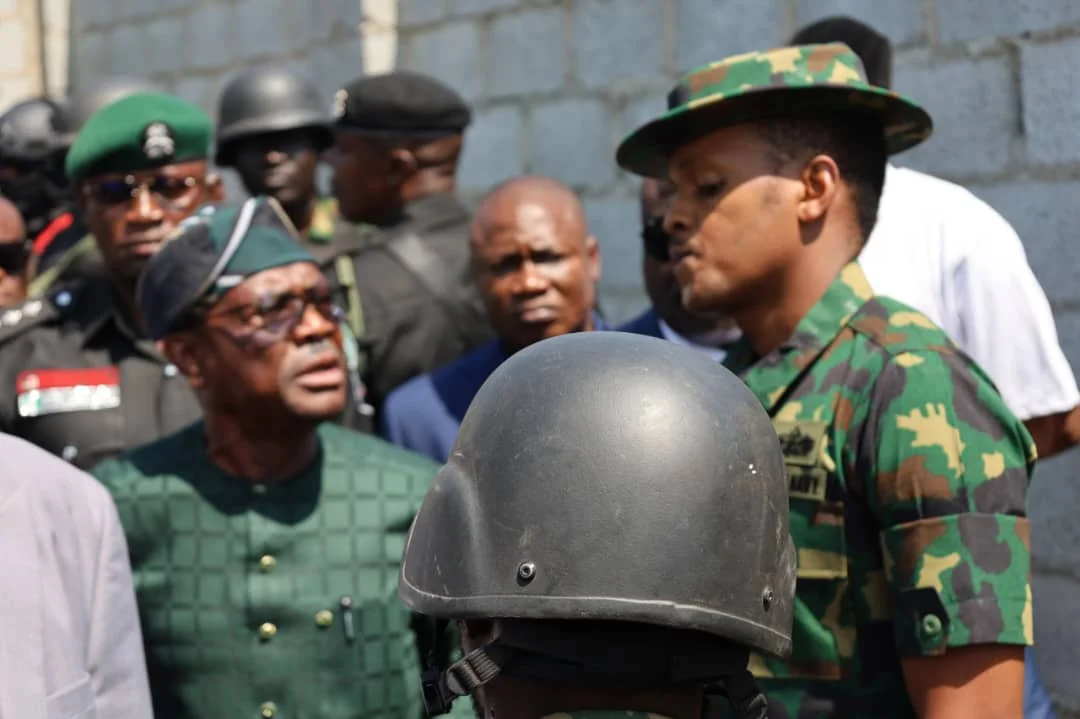
On Tuesday, November 11, 2025, social media was agog with videos showing a heated confrontation between Nyesom Wike, Minister of the Federal Capital Territory (FCT), and Navy Lieutenant A.M. Yerima, reportedly attached to former Chief of Naval Staff, Vice Admiral Zubairu Gambo (rtd). The clash occurred when officials of the FCT Administration, led by the Minister, were allegedly prevented by military personnel from accessing Plot 1946, Gaduwa District, Abuja, where construction activities were ongoing.
Beyond the viral clip of the Minister calling the officer “a very big fool,” the incident raises more consequential questions about the limits of civil and military authority, the legality of both parties’ actions, and the boundaries of public power in a democratic state.
The Minister’s Powers Under the Law

Under the Constitution of the Federal Republic of Nigeria 1999 (as amended), a Minister of the Federal Republic derives authority from Section 147(1) and acts as an agent of the President in charge of an assigned portfolio. In this case, the FCT Minister, pursuant to Section 302 of the Constitution, exercises presidential powers over the administration of the FCT.
Land administration in Nigeria is primarily governed by the Land Use Act. Section 1 of the Act vests all land in each state in the Governor, to be held in trust for the people, except land vested in the Federal Government or its agencies. In the case of the Federal Capital Territory (FCT), these powers are exercisable by the President of the Federal Republic of Nigeria.
Read also: Wike, military officer clash over alleged land grabbing in Abuja
However, the Federal Capital Territory Act (Cap F6 LFN 2004) establishes a unique administrative framework. Section 18 of the Act empowers the President to delegate executive powers relating to the FCT to a Minister. Consequently, the FCT Minister functions as the de facto “Governor” responsible for land allocation, granting and revoking rights of occupancy, approving building plans, and enforcing urban development laws. Therefore, when the FCT Administration issues a stop-work order or seeks to enforce planning regulations, it is acting squarely within its lawful remit.
In the videos circulating online, the FCT Minister can be heard demanding for the documents authorizing the development of the property and the officer responding that the documents had been submitted to the appropriate authority. In practice, the FCDA frequently issues stop-work notices and serves revocation or demolition orders on developers whose sites lack valid building permits or whose works deviate materially from approved plans. Although the FCT Act does not expressly label “illegal structures” in a single phrase, the combined planning framework empowers the Minister/Administration to halt works, revoke titles or allocation and remove non-compliant structures, subject to adherence to due process.

By confronting and allegedly berating commissioned officer, the Minister may have crossed into territory reserved for military command structures. The Armed Forces Act vests disciplinary powers in commanding officers, not in civil functionaries. The Armed Forces Act provides that only superior officers within the chain of command may issue orders or impose sanctions for alleged misconduct. Any directive or interference from a non-military authority is ultra vires, except where authorized by law or by the President in his capacity as Commander-in-Chief under Section 218(3) of the Constitution.
The Military Officer’s Conduct and Legal Boundaries
Public reaction to the army officer’s demeanor has been divided. Some accuse him of insubordination; others commend his composure in the face of political intimidation. Legally speaking, the conduct of military personnel when interacting with civilians is also regulated. The Armed Forces Act, mandates members of the military to maintain discipline and respect for constituted civil authority. However, obedience to civil authority does not equate to submission to unlawful or extra-hierarchical commands.
Read also: Minister Wike: Power, process, and the rule of law
The Constitution provides that the Armed Forces may be deployed to suppress insurrection and in aid of civil authorities to restore order but subject to such conditions as may be prescribed by an Act of the National Assembly. One of such Acts is the Armed Forces Act (AFA), which regulates operational deployment, chain of command, and discipline. Particularly, neither the Constitution nor the Armed Forces Act permits soldiers to be used for private or commercial protection, or to obstruct civil authorities performing lawful duties. The Armed Forces Act envisages “aid to civil authority” in situations where there is a threat to public order, breakdown of law and order, or emergency. Even then, such deployment must be authorised by the President or a properly delegated superior command. If the officer was indeed acting on the orders of a retired senior officer and guarding a private property, such action could be termed ultra vires, i.e beyond the limits of the law.
Nevertheless, the commissioned officer’s refusal to obey the Minister’s directive cannot be said to amount to a disobedience of superior officer’s orders as the Minister is neither a military personnel nor was he delegated by the President (who is constitutionally mandated to delegate his powers to a military officer relating to the operational use of the Armed Forces.)
Conclusion
While the Minister may have acted within his legal powers, his verbal aggression and use of abusive language toward the officer raise questions of ethical propriety. Public officials are bound by the Code of Conduct for Public Officers which mandates them to maintain the dignity of their office and to refrain from conduct that brings disrepute to public service.
The incident underscores the delicate balance between civilian control of the military and military professionalism.
The Armed Forces remain subordinate to civil authority by virtue of the Constitution, yet such subordination is institutional, not personal. Civil authority must act through lawful channels, while military personnel must obey legitimate orders within the chain of command. The episode highlights how the lawful exercise of power can easily slide into personal confrontation when not tempered by professionalism and respect for institutional boundaries.