Nigeria’s palm oil sector is set for renewed growth as stakeholders rally behind a new roadmap designed to drive sustainable, inclusive, and deforestation-free production — with projections indicating the potential to unlock over $1.6 billion in value across the industry.
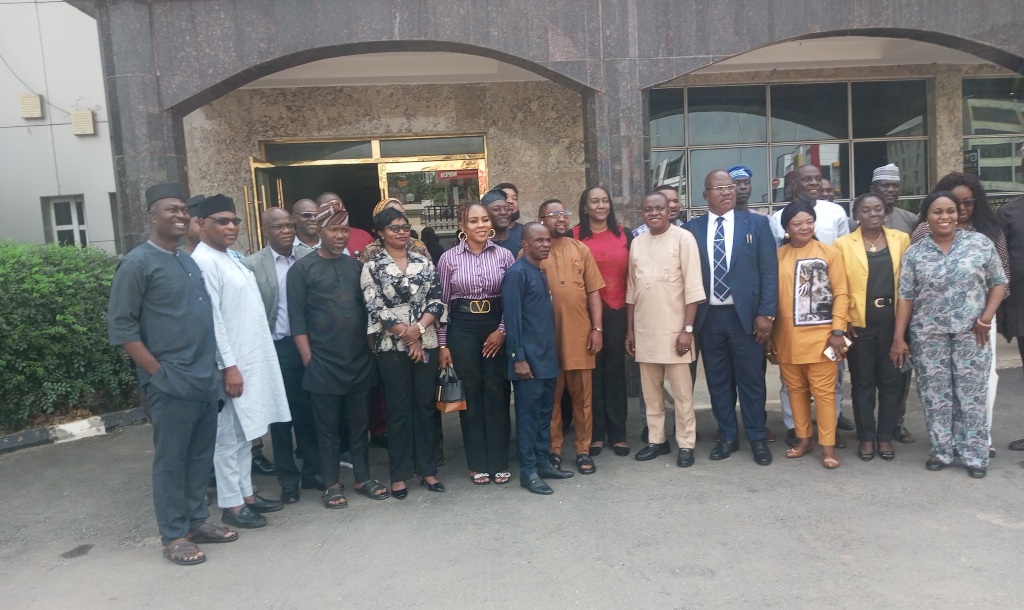
This renewed push for reform was the highlight of a Policy Dialogue on the Comprehensive African Agricultural Development Programme (CAADP) held in Abuja on Thursday. Themed “Policy Funding and Strategic Roadmap for Nigeria’s Oil Palm Sector,” the dialogue brought together key policymakers, industry players, and development partners to outline strategies for revitalising the sector.
Speaking at the event, Kene Onukube, programme manager at Solidaridad Nigeria, said the organisation’s ongoing work under the National Initiative for Sustainable and Climate-Smart Oil Palm Smallholders (NISCOPS) is aligned with the six strategic pillars of the CAADP III Kampala Declaration.
According to Onukube, the initiative targets four key outcomes — boosting productivity through climate-smart practices, integrating smallholders into sustainable supply chains, promoting deforestation-free production, and improving farmers’ incomes.

“We want to make sure that palm oil production in Nigeria is not only productive but also policy-governed, deforestation-free, and smallholder-inclusive,” he stated. “Everywhere oil palm is being produced should align with sustainable practices that enhance livelihoods and protect forests.”
Once a global leader in palm oil production, Nigeria now faces a deficit of about 1.6 million metric tonnes annually, despite possessing the natural capacity to produce over five million tonnes. Onukube noted that 27 of Nigeria’s 36 states have suitable conditions for large-scale oil palm cultivation.
“If these states are fully mobilised, the economic benefits could be enormous — from increased rural incomes to foreign exchange gains,” he said.
Under the NISCOPS initiative — currently implemented in Edo, Akwa Ibom, Cross River, Enugu, and Kogi States — Solidaridad and its partners are promoting best management practices, enhancing access to improved seedlings, and supporting farmers to adopt climate-smart production methods. Since 2019, the organisation has worked with local communities to strengthen productivity and environmental sustainability.
Onukube called on government at all levels to prioritise investment in smallholder development, particularly in access to finance, improved seedlings, and extension services.

“The federal, state, and local governments must deliberately invest in smallholders’ capacity to produce high-yield varieties and scale up sustainable oil palm development,” he urged.
He further emphasised the importance of collaboration through the NISCOPS Nigeria Forum (NNF) — a multi-stakeholder platform comprising representatives of the Federal and State Ministries of Agriculture, Environment, and Trade, the Nigerian Institute for Oil Palm Research (NIFOR), and private-sector groups such as OPGAN, NPPAN, and POFON.
“Our collaboration with these partners has influenced state-level policies, strengthened forest protection, and expanded awareness of sustainability practices,” he said.
Onukube cautioned against “extractive” corporate sourcing models where large companies purchase palm oil from smallholders without reinvesting in their productivity or sustainability capacity.
“Sourcing alone is not enough. Companies must invest in smallholders, promote best practices, and increase yields without expanding into forest areas,” he warned.
Read also: Nigeria’s top palm oil makers’ profit to hit N161bn as prices climb
Also speaking, Ogu Abraham Dayo, senior programme manager at IDH – The Sustainable Trade Initiative, underscored the need for improved data harmonisation to inform national and regional policies.
“There is a paucity of reliable data at subnational levels. We need to partner with agencies like the National Bureau of Statistics (NBS) to synchronise and validate data that can guide effective policy implementation,” Dayo said.
He explained that IDH’s current interventions in Edo State are connecting smallholder farmers with private investors to enhance capacity, improve market access, and promote responsible sourcing.
Both Solidaridad and IDH called for stronger public-private collaboration, better farmer training, and clear sustainability standards to reposition Nigeria’s palm oil industry as a globally competitive and environmentally responsible sector.
“This is not just about policies on paper — it’s about measurable progress toward a sustainable and inclusive oil palm industry that benefits both smallholders and the environment,” Onukube concluded.