|
Getting your Trinity Audio player ready...
|
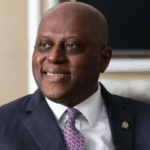
Leading economist Bismarck Rewane is not known for generous optimism, which is why his recent claim that Nigeria’s recovery is now “tangible” deserves serious attention. Inflation is easing from its violent peak, FX turnover has improved, and fiscal consolidation is gaining some rhythm. These are not illusions. They are early signs of an economy edging toward stability.
But optimism, on its own, is not a development strategy. The hard truth is that Nigeria’s economic story has never been about the absence of ideas. It has been about the absence of governments capable of turning those ideas into functioning institutions. A nation does not become prosperous by publishing reform blueprints; it becomes prosperous by delivering them.
Nigeria’s long history of reform programmes has produced a gallery of glossy documents that rarely survive contact with political reality. Vision 2020, the ERGP, and the Renewed Hope agenda share a familiar fate: bold objectives diluted by weak execution. The gap between policy ambition and administrative capacity is now so wide that it has become the country’s defining growth constraint.
Rewane’s analysis underscores a point Nigeria has spent years avoiding. Recovery is not the same as resilience. What Nigeria currently enjoys is the breathing space created by global conditions, improved revenue inflows, and incremental policy adjustments. What it lacks is the institutional machinery needed to convert short-term relief into long-term stability.

Nowhere is this clearer than in public finance. Nigeria’s revenue-to-GDP ratio remains stuck near 10 percent, one of the lowest in the world. Without a stronger fiscal base, no amount of monetary tightening will deliver sustainable stability. Yet the reforms required to lift revenue depend on administrative systems that remain deeply fragile. Tax collection is uneven, leakages persist, and the digital infrastructure needed for efficiency is still evolving.
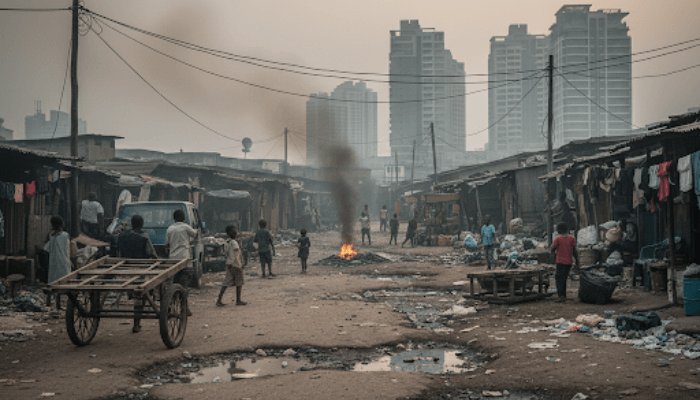
This is the pattern across the economy. The FX market is steadier, but contradictory circulars continue to unsettle investors. Manufacturing is showing pockets of revival, but power supply remains unreliable. Agriculture could be a growth engine, but security challenges distort production cycles. The country is not suffering from a crisis of ideas. It is suffering from a crisis of delivery.
The danger is that Nigeria begins to trust momentum without strengthening the engine producing it. A nation can mistake motion for progress and eventually find itself stranded. This is why Rewane’s cautious optimism should be treated not as evidence of arrival but as an invitation to fix the structural faults that have repeatedly sabotaged growth.
Three priorities demand attention.
First: restore administrative competence across core state institutions. Nigeria cannot grow faster than the quality of its public sector. Recruitment must prioritise skill, not patronage. Digital systems must replace paper-based processes. Transparency must become a habit, not a slogan. An economy cannot outperform the institutions regulating it.

Second: design reforms that are sequenced, realistic, and insulated from political volatility. Policy reversals have been one of Nigeria’s most expensive traditions. Investors can tolerate risk; what they cannot tolerate is unpredictability. A consistent policy environment is more valuable than a dramatic one.
Third: link economic goals to measurable outcomes that citizens can feel. A recovery that does not show up in electricity supply, food affordability, job creation, and transport efficiency is not a recovery worth celebrating. People do not experience GDP. They experience governance.
Nigeria is not running out of ideas. It is running out of excuses. The country has reached the stage where the real debate is no longer about what to do but about whether the political class can summon the discipline to do it. A fragile state does not collapse overnight; it corrodes quietly through repeated failures of execution.
Rewane’s signal should not be misread. Nigeria has an opportunity to turn a fragile recovery into sustained progress. But that transformation will not come from hope, rhetoric, or line items in a policy document. It will come from governments, at every level, that can deliver results.
The future belongs to the countries that can make their institutions work. Nigeria still has time to join them. The window is open, but it is no longer wide.