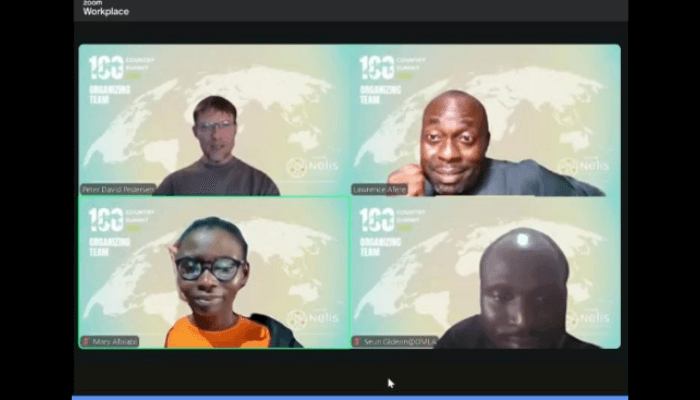
The Network of Next Leaders for Sustainability (NELIS), a global non-profit dedicated to cultivating ethical and visionary leadership, has launched the ‘Governors for the Future Africa’ initiative — a pioneering movement empowering Africa’s young leaders to drive sustainable development and meaningful change across the continent.
The initiative was unveiled during the 2025 African Youth Virtual Town Hall Meeting and the 100-Country Summit, which brought together over 2,000 emerging leaders from across Africa and the Global South. The gathering sought to address some of Africa’s most pressing challenges — from climate change and energy access to digital transformation, economic inclusion, and regional stability.
By inspiring, empowering, and connecting the next generation of African changemakers, NELIS aims to build a dynamic continental network of purpose-driven young leaders who can unlock Africa’s competitive advantages and accelerate inclusive growth.
“No one will save Africa except you — the next generation of leaders on this continent,” said Peter David Pedersen, Co-founder of NELIS, in his welcome address.

“You are today the governors for the future, and this title is not symbolic. Choose collaboration over competition, creation over complaint, trust over fear — and build the Africa you want.”
He added, “The future will be written by those who hold purpose, dare to dream, and commit to action.”
In her keynote address, Josephine Nzerem, director of Venture and Talent at Ashoka Africa, emphasized Africa’s vast potential and called on young leaders to create systems that work for all.
“We don’t have to depend on grants or donors. We can create wealth here in Africa — because there is wealth in Africa,” she said.
“To reach that space, we must first believe in our wealth. Show up with your authentic, solution-driven self and begin to build systems that serve everyone.”

Nzerem encouraged participants to design innovations that address the root causes of Africa’s challenges, rather than surface-level symptoms.
“Solve problems from the root cause — at the systems-thinking level,” she urged.
Lawrence Afere, director of NELIS Africa and co-founder of Springboard Nigeria, described the event as “a movement defining the future of the continent.” Participants joined from more than 15 countries — including Somalia, Ghana, Rwanda, Uganda, Malawi, Zimbabwe, Zambia, Cameroon, Kenya, Madagascar, and Nigeria — reflecting the truly Pan-African and global character of the dialogue.
“When I look at this generation of young Africans gathered here today, I am reminded of something profound: Africa’s future is not ahead of us — it is within us. Visionary leadership begins when we stop waiting for tomorrow and start building it today,” Afere said.
He noted that despite holding over 30 percent of the world’s natural resources, Africa continues to struggle with underdevelopment — a challenge rooted in leadership and governance.
“Africa needs visionary leaders who connect purpose with policy, and policy with people,” he emphasized.
“Seeing tomorrow requires clarity of purpose and unity of vision — that’s what we’re creating through the African Youth Vision 2040 Framework emerging from this summit.”
Afere reiterated that leadership transformation is not the government’s responsibility alone.
“It is the duty of every citizen who believes Africa can rise,” he said.
“We are not blaming politicians — we’re simply saying that young Africans must bear the responsibility of shaping the future. That starts with building this shared vision for our continent.”
The Town Hall concluded with a collective commitment to develop the African Youth Vision 2040 Framework — a youth-led blueprint that will be shared with African institutions including the African Union (AU), African Development Bank (AfDB), and ECOWAS, as a contribution toward achieving Agenda 2063.