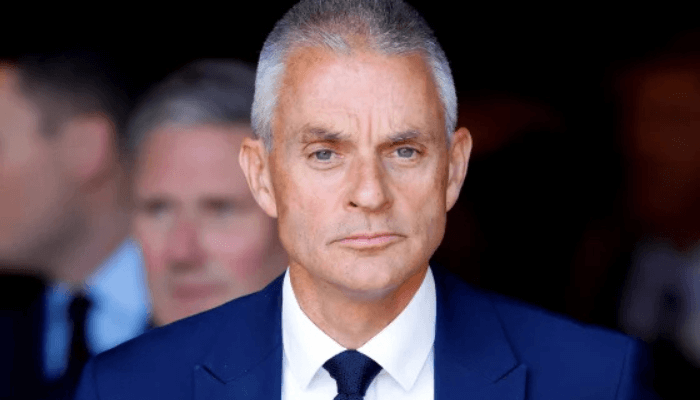
Tim Davie, the Director-General of the British Broadcasting Corporation (BBC), resigned on Sunday following a fierce controversy over the editing of a documentary about former U.S. President Donald Trump. The resignation came as Trump accused the broadcaster of bias and labelled its journalists “corrupt.”
Davie’s resignation, alongside that of BBC’s Head of News, Deborah Turness, followed public outrage over claims that the network’s flagship investigative programme, Panorama, had edited parts of Trump’s speech in a misleading manner. The row has since ignited intense debate over journalistic integrity, media accountability, and political influence in public broadcasting.
The controversy centred on a Panorama documentary titled “Trump: A Second Chance?”, aired shortly before the 2024 U.S. presidential election. The programme featured an edited version of Trump’s January 6, 2021 speech, during which he addressed supporters before the Capitol riot. Critics alleged that the BBC’s version spliced together separate sections of the speech, omitting portions where Trump urged his followers to protest “peacefully” and “patriotically.”
In the broadcast, Trump was shown saying, “Let’s walk down to the Capitol” and “fight like hell,” which appeared to encourage confrontation. However, the missing lines calling for peace significantly altered the context, leading to accusations that the BBC had intentionally shaped the footage to portray Trump in a more inflammatory light.

Following widespread backlash, internal investigations and leaked memos criticised the BBC’s editorial process, citing “a lapse in impartiality and judgement.” The findings pointed to inadequate oversight in the newsroom and questioned whether political pressure had influenced the documentary’s final cut.
Under growing scrutiny from both the British public and international media observers, Tim Davie announced his resignation through a statement on the BBC website. “Like all public organisations, the BBC is not perfect,” he said. “We must always be open, transparent and accountable.” Davie acknowledged the seriousness of the issue and expressed regret over the editorial missteps that damaged the broadcaster’s reputation for neutrality.
Reacting to the development, Donald Trump celebrated the resignations, saying the exposure of “corrupt journalists” vindicated his long-standing criticism of mainstream media. “These are very dishonest people who tried to step on the scales of a Presidential Election,” he said, reiterating his claim that global media outlets sought to undermine his political image.
Deborah Turness, in her own statement, admitted “errors of judgement” but defended the BBC’s overall commitment to fairness. “Our intention was never to mislead,” she said, adding that the controversy should prompt renewed reflection on the standards of journalism in a polarised world.
The fallout from the Panorama documentary has reignited broader discussions about trust in media institutions. Critics argue that the scandal underscores the urgent need for stronger editorial checks, while supporters of the BBC warn against political interference undermining press freedom.

As the BBC faces one of the biggest crises in its history, the resignations mark a turning point in the broadcaster’s effort to rebuild public confidence and reaffirm its commitment to impartial reporting.