|
Getting your Trinity Audio player ready...
|
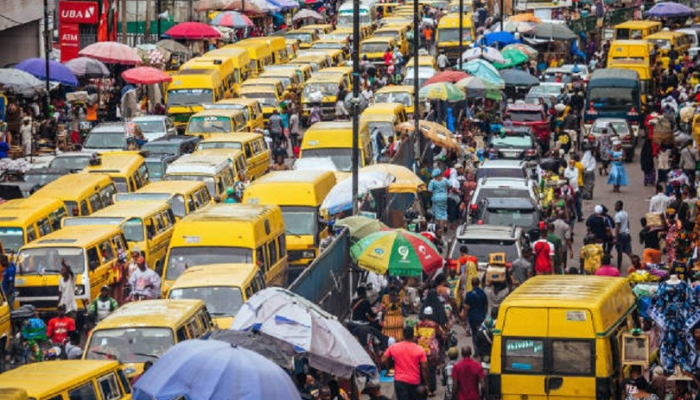
Lagos, Nigeria’s economic heartbeat, moves to the rhythm of its traffic — and that rhythm is chaos. Every dawn, millions of residents brace for the familiar gridlock that drains not only patience but also productivity. Beneath the frustration, however, lies a less visible truth: the city’s congestion isn’t just a nuisance — it’s an economic catastrophe.
According to the Danne Institute for Research’s “Connectivity and Productivity Report” (July 2023), traffic congestion costs Lagos about ₦4 trillion annually in lost productivity, wasted fuel, vehicle wear, and missed business opportunities. The Lagos State Government, in June 2025, reaffirmed the same figure, calling it a “massive economic drag” that slows growth and inflates living costs. To put that in perspective, ₦4 trillion represents roughly 4 percent of Nigeria’s GDP — a staggering productivity leak from one city alone.
“Traffic management is reactive, not systemic. The Lagos State Traffic Management Authority (LASTMA) spends more time firefighting gridlocks than enforcing lane discipline or long-term flow optimisation.”
A city moving at the speed of frustration
At rush hour, major corridors like Ikorodu Road, Apapa–Oshodi Motorway, and Third Mainland Bridge crawl at average speeds below 20 km/h. Commutes that should take 30 minutes often stretch to 3 hours. For the estimated 8 million daily trips in Lagos, that lost time translates directly into lost value.

The Danne Institute’s 2023 report found that the average commuter spends 2.21 hours in traffic daily, resulting in about 14.12 million productive hours lost each day. Car owners spend an extra ₦133,978 annually on fuel; public transport users, ₦79,039. Multiply that across millions of commuters, and the picture becomes stark — an entire economy idling on the road. Traffic has quietly become Lagos’s most expensive daily ritual.
Read also: Lagos traffic lockdown: Business analysts and project managers ignored
Counting the cost of congestion
Let’s put numbers to the pain:
Fuel waste: Lagos motorists burn tens of millions of extra litres of petrol monthly due to idling, according to the National Bureau of Statistics (2024). At ₦700 per litre, this equates to over ₦25 billion monthly in lost fuel value.

Man-hour loss: If 3 million workers lose two productive hours daily at ₦1,000 per hour, that’s ₦6 billion a day — or ₦120 billion a month — in lost labour value.
Vehicle maintenance: Constant stop-and-go driving means faster wear. The Danne Report (2023) attributes ₦10–₦12 billion monthly in additional vehicle repairs to congestion.
Add these up, and Lagos’s gridlock becomes a silent economic haemorrhage — a productivity drain that could finance entire infrastructure projects annually.
Why it persists
Lagos has one of Africa’s most detailed transport frameworks—the Lagos Urban Transport Master Plan, prepared with the Japan International Cooperation Agency (JICA) in 2019. Yet, implementation remains painfully slow.
The Blue Line Rail, inaugurated in late 2023, carries fewer than 200,000 passengers daily, a fraction of potential demand. The Bus Rapid Transit (BRT) network covers barely 15 percent of commuter routes, leaving millions dependent on private cars and minibuses. Worse, urban planning often ignores road capacity: high-rise estates keep sprouting on narrow feeder roads built for the 1980s.
Traffic management is reactive, not systemic. The Lagos State Traffic Management Authority (LASTMA) spends more time firefighting gridlocks than enforcing lane discipline or long-term flow optimisation.
A ₦4 trillion opportunity hiding in chaos
Yet within the crisis lies opportunity. If just 30% of Lagos commuters worked remotely twice a week, congestion could drop by 25%, saving up to ₦1 trillion annually, according to projections in the Connectivity and Productivity Report (2023). Digital logistics platforms could optimise delivery routes; smart traffic systems could regulate intersections automatically.
From roads to systems
The real issue isn’t just road shortage — it’s system failure. More flyovers won’t fix chaos if coordination and discipline remain absent. Lagos must shift from “build more” to “move smarter”:
Integrate transport data across agencies.
Enforce zoning laws that match density with road capacity.
Incentivise remote work and staggered shifts.
Expand non-motorised options like walkways and ferries for short-distance commutes.
If Lagos recovered even half its ₦4 trillion yearly loss, it could fund a new metro line every year or provide affordable transport subsidies for low-income workers.
Every honk in Lagos traffic is not just noise—it’s the sound of productivity slipping away. Until mobility is treated as an economic emergency rather than an engineering challenge, Lagos will keep crawling while its potential idles in neutral.
The data is public, the loss is measurable, and the path forward is clear. The question is whether Lagos will move from motion to progress—before the city’s economy chokes on its own growth.
Emmanuel C. Macaulay is a development thinker and writer who examines the unseen logic behind everyday realities — where leadership, systems, and design shape collective progress.