January 16, 2024, will be remembered as one of the darkest days in Oyo State’s recent history – the day a powerful explosion ripped through Bodija, an upscale neighbourhood in Ibadan, shattering its calm and exposing a deeper crisis beneath the surface. The blast destroyed homes, injured dozens, and killed several residents. Days later, investigations revealed that explosives stored by illegal miners inside a private residence had caused the tragedy – a cache of dynamite concealed during daylight.
Almost a year later, the Oyo State government has compensated victims, but the core question remains: how did unlicensed miners operate so freely in a supposedly regulated sector? The Bodija explosion is emblematic of Nigeria’s opaque and poorly governed solid minerals industry – a sector that could transform youth unemployment but instead remains dominated by shadow networks, entrenched elites, and unaccountable foreign interests.
Nigeria’s mining potential is vast. Beneath its soil lie more than forty commercially viable minerals – gold in Zamfara, iron ore in Kogi, lithium in Nasarawa, limestone in Sokoto, and coal in Enugu. Yet despite these riches, mining contributes less than 0.63% to Nigeria’s GDP, compared to Ghana’s 7% and Tanzania’s 4%. Above ground, millions of young Nigerians remain jobless, revealing the absurdity of a nation rich in extractive potential yet unable to connect that wealth to its people. This is the paradox of Nigeria’s mining sector – rich ground, locked doors.
This exclusion runs deep. After the oil boom of the 1970s, Nigeria shifted almost entirely to petroleum. The once-active Nigerian Mining Corporation (NMC) was neglected, and by the 1980s, during the Structural Adjustment Programme (SAP) era, mining collapsed. Licences expired, institutions decayed, and technical expertise vanished. Unlike Ghana or Zimbabwe, which diversified and modernised their mining frameworks, Nigeria abandoned its own. The result today is a sector of immense promise but weak governance – where illegal operators thrive while ambitious youths remain fenced out by bureaucracy and corruption.

Mining in Nigeria is, in practice, a sector for the few, not the many. The process of securing a mining licence, though open in theory, is complex in reality – burdened by opaque fees, endless delays, and conflicting regulations. For young entrepreneurs, the barrier is steeper. Banks dismiss small-scale ventures as too risky, investors favour faster returns, and exploration data is costly. The idea of young Nigerians owning legitimate mining ventures feels more like myth than reality.
In contrast, Zimbabwe has deliberately opened mining to its youth. Through the “Youth in Mining Programme” (YMP) and community cooperatives, thousands now participate in small-scale legal enterprises. NGOs train young people in sustainable extraction, mineral processing, and gemstone polishing. By their late twenties, many Zimbabweans are exporting processed minerals through regulated markets – a model that turns mineral wealth into inclusive opportunity. It shows what political will and deliberate reform can achieve: a mining sector that empowers rather than excludes.
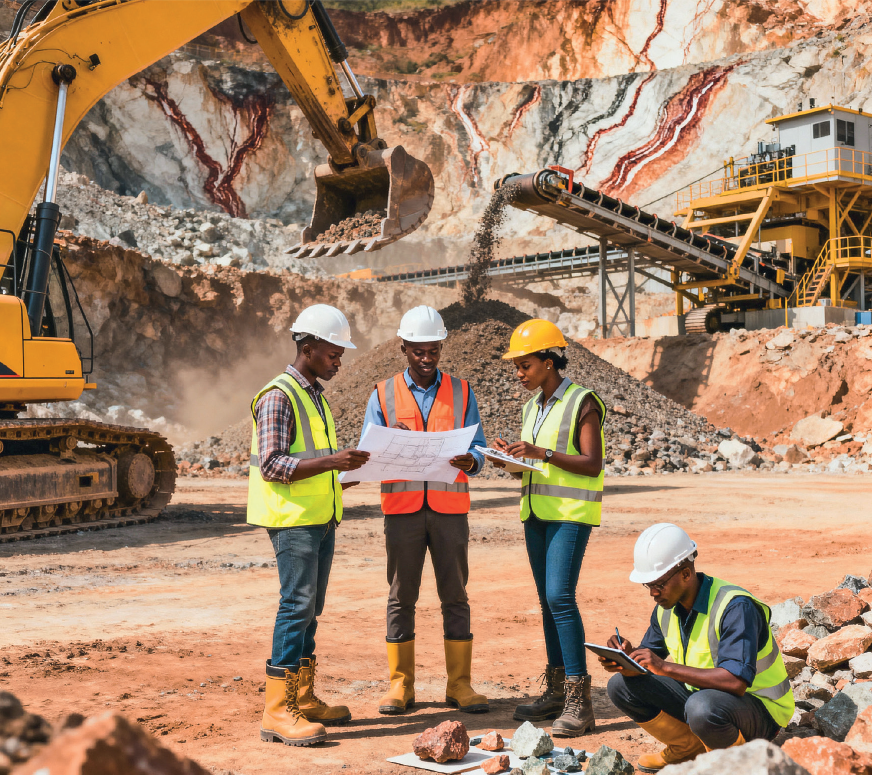
In Nigeria, however, most young people simply do not see mining. Decades of neglect have erased it from national imagination. Public conversations about mining are mostly about crises – banditry in Zamfara or illegal Chinese operations – not opportunity. Few youths realise there are prospects beyond digging: logistics, equipment leasing, data mapping, marketing, and environmental remediation. Without visible success stories or structured mentorship, mining feels abstract and unappealing.
Cultural attitudes deepen the disconnect. For many urban youths, mining conjures images of dust, danger, and corruption – far removed from the sleek allure of tech or entertainment. Yet beneath this image lies a deeper structural truth: Nigeria’s extractive sectors have long been symbols of state patronage. Access depends on proximity to power, not innovation. This gatekeeping has convinced generations that mining is reserved for the well-connected – a message that continues to exclude ordinary citizens.
Efforts to reverse this trend exist but remain weak. Programmes such as the “Solid Minerals Development Fund” (SMDF) and the “Nigeria Youth Investment Fund” (NYIF) have yet to meaningfully integrate mining-related youth enterprises. While the government promotes artisanal formalisation schemes, implementation rarely reaches young people. A genuine youth-centred policy must make licensing transparent, provide mentorship, and offer targeted credit to small-scale operators. The National Youth Service Corps (NYSC) could even include mining internships in rural postings to expose graduates to real opportunities.

Other African countries offer lessons. Ghana’s 2006 Small-Scale Mining Framework set clear rules for community miners with equipment and technical support, while Tanzania’s 2009 Minerals Policy promotes youth and women’s cooperatives. Both show that regulation and inclusivity can coexist – that protecting national resources requires good governance, not exclusion.
Unlocking the potential of Nigeria’s solid minerals sector demands deliberate, youth-focused reform. Mining must become accessible not only to investors with capital but also to young Nigerians with creativity and drive. Simplifying the licensing process, creating youth mining incubators, and integrating mining education into vocational schools can begin this transformation. Equally vital is storytelling – celebrating legitimate success, promoting sustainability, and showing that mining can be innovative, digital, and dignified.
The tragedy of Nigeria’s mining story lies not in what is buried underground, but in the untapped potential of those walking above it. Nigeria’s challenge is no longer resource scarcity but the will to let its youth unearth them. A nation that excludes its young people from wealth creation risks becoming a field of missed opportunities.