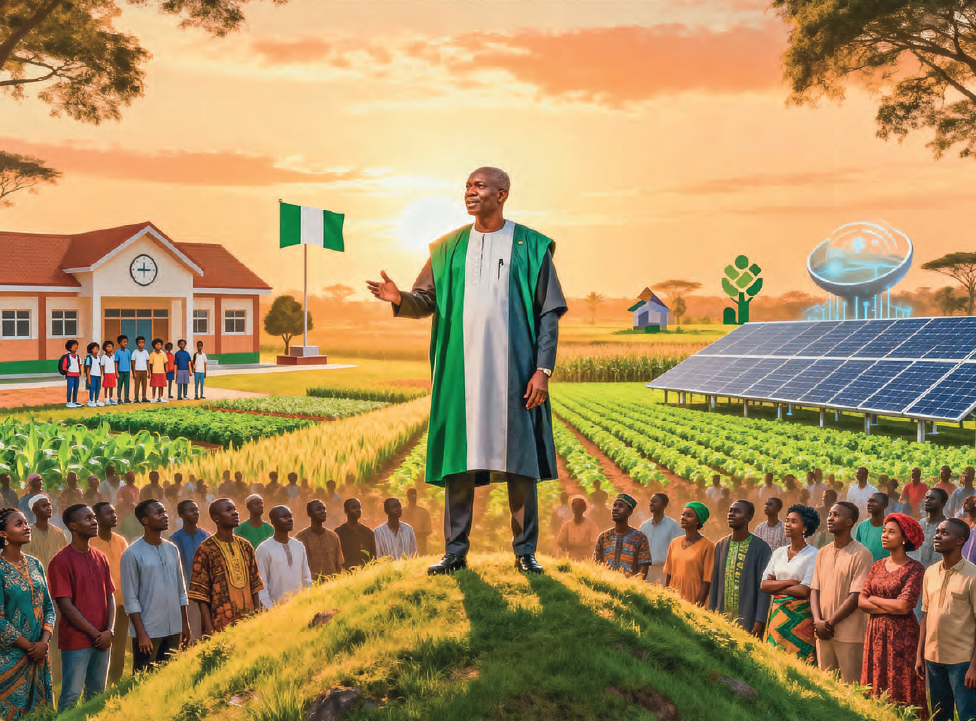
John Schaar once observed that “the future is not some place we are going to, but one we are creating. The paths are not to be found but made, and the activity of making them changes both the maker and the destination.” This reflection captures the leadership dilemma facing Nigeria over the last few decades. The country’s challenge has never been a lack of ideas or potential, but a failure of leadership to translate promise into progress.
Every nation’s destiny is shaped not merely by its natural resources or geography, but by the quality of minds and character steering its affairs. The kind of future Nigeria eventually builds depends entirely on the kind of leaders it produces and the values they embody.
Building a Nigeria of excellence remains possible. If hope is rekindled, a future of genuine progress becomes attainable. The belief endures that Nigeria can yet emerge as a land of limitless promise – a beacon of stability in a fractured world and a source of pride to Black people everywhere. But such a future will not be realised through wishful thinking. Nigeria must harness its greatest resource – the Nigerian mind – and creatively deploy its intellectual capital to reimagine systems, strengthen institutions, and rebuild the nation’s foundations.
A nation is not built merely by its wealth but by its people – most especially by those who lead it. The critical question, therefore, arises: what kind of leadership does Nigeria truly require? Should the country continue to elevate ethnic champions driven by political convenience, religious zealots motivated by sectarian sentiment, or individuals of questionable character propelled by populist agitation? Certainly not. What Nigeria needs are nationalists – individuals of integrity and depth, respected across regions, whose track records speak louder than manifestos.

To overcome the burdens that weigh the nation down, purposeful leadership is indispensable. Wise leaders share in the people’s struggles, partake in their shame and joy, and embody the hopes they long for. Through their lives, they inspire; through their character, they uplift; through sacrifice, they teach. When citizens are called to bear burdens, true leaders are the first to carry them. When people are hungry, their own tables are not spared.
Too often, Nigeria has produced rulers, not leaders. They preach integrity while hoarding wealth; they denounce corruption while indulging in it. Yet, every era calls forth its own leader – one who understands the times, knows what must be done, and has the courage to do it. What Nigeria needs now are men and women of character whose virtue cannot be bought or faked. Reputation is built on perception, but character is forged in the fire of trial and time.
The leaders Nigeria needs must be wise without being crafty and sound in judgement without manipulation. They must possess knowledge and skill without exploitation or deceit. They must listen with patience and humility, yet not be tossed about by every opinion or pressure. Compassion must mark their leadership, not condescension; their respect grounded in dignity, not subservience. They must be strong yet gentle, learnt yet humble. Their firmness must not turn into rigidity, nor their passion into fanaticism. They should lead with conviction but remain open to correction, inspiring confidence without arrogance.
Courage must define their decisions – not reckless bravado, but moral strength; not domination, but responsibility. It is not in loud speeches or empty defiance that courage is found, but in restraint, in the refusal to abuse power, and in the readiness to stand for the voiceless even at personal cost. Leadership is not coercion. A true leader does not compel through fear but inspires through vision.
Nigeria needs leaders who prioritise justice over convenience, fairness over expediency, and the nation’s future over fleeting political gain. They must be loyal not to friends, tribe, or party, but to the constitution and the rule of law. Experience counts – but not merely the number of years spent in office. True experience is measured by competence, character, and the capacity to deliver results.

Now more than ever, Nigeria needs bridge-builders – leaders who transcend region, religion, generation, and class; who build consensus and facilitate dialogue; who listen as much as they speak, and communicate with empathy and clarity. Development, at its core, is about people. Policies must serve human needs, and laws must have a human face.
One of Nigeria’s greatest mistakes has been the blind importation of foreign models without consideration for local relevance. Transformation has too often been reduced to slogans and wishful thinking, mistaken for genuine change. Real progress begins with leaders who live close enough to the people to understand their pain. Poverty will not recede until leadership narrows the gap between its own lifestyle and the suffering of the average citizen or lifts citizens closer to a dignified standard of living.
At the foundation of all leadership lies integrity. Without it, every other virtue collapses. In an age where corruption and deceit have soaked our national soil, Nigeria needs leaders who are promise-keepers and whose lives can withstand scrutiny. Not recycled power brokers, but beacons of honesty; not opportunists, but mentors who embody decency, discipline, and principle. If order must be restored, it must begin with those entrusted with the nation’s future.