|
Getting your Trinity Audio player ready...
|
…Assures that Nigeria will defeat terrorism
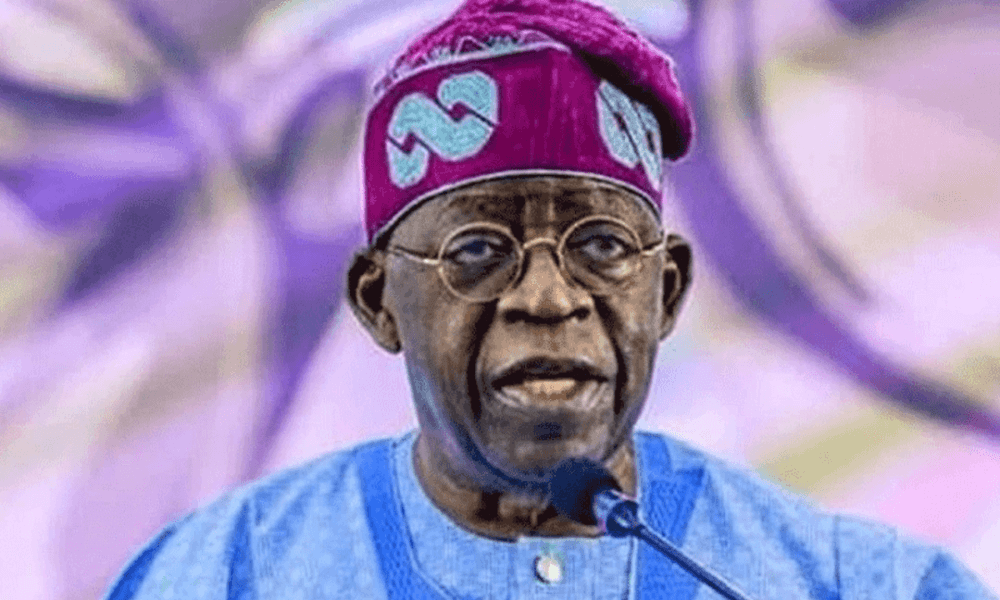
President Bola Tinubu, on Thursday, lauded the oversubscribed Eurobond, assuring Nigerians that his administration will continue to engage the world diplomatically, despite the political headwinds.
The President stated this while speaking at the opening session of the meeting of the Federal Executive Council, FEC, but on Thursday, at the Council Chambers of the Presidential Villa, Abuja.
Tinubu stated this in reaction to positive economic reports earlier released by Wale Edun, the minister of finance and coordinating minister of the economy.

President Tinubu assured that “despite the political headwind and the fear of our people, we will continue to engage with our partners,” adding that “the success of the 2.3 billion oversubscribed bond is the most at this stage.”
He, however, declared that the task ahead is immense, adding that “We are engaging the world diplomatically, and we assure all of you that we will defeat terrorism in the country.”
“The task ahead is immense, but we are resolved to move forward with unity and purpose, guided by a renewed hope agenda to build a prosperous, inclusive and resilient Nigeria. Thank you very much.
Wale Edun, in his opening remarks earlier, commended his colleagues at the cabinet for the “tremendous support, encouragement, indeed, prayers and kind wishes during my recent illness”.
He noted that the reforms that have been taken under the renewed hope agenda had been too bold and sometimes unpopular.

He, however, stated that the reforms “are rooted in a clear objective to build a competitive economy that attracts
and creates jobs and lifts millions out of poverty.
In his overview of the economic performance, he noted that in Q2 2025, Nigeria’s GDP grew by 4.23%, the highest in a decade outside the COVID-19 rebound.
He also revealed that 13 sectors recorded growth above 7%, up from 9 in the previous quarter, showing broad-based resilience.
“The industrial sector nearly doubled its growth from 3.72% to 7.45%, reflecting rising productivity and investor confidence. Inflation eased to 18% in December, while, as we know, foreign exchange reserves topped 43 billion, and our trade surplus topped 7.4 trillion. Clear examples of macroeconomic stability.
Read also: Tinubu presides over FEC meeting, swears in two new ministers
“As the consumer spending basket published earlier this year shows, our citizens now spend maybe about half of their income on basic needs, food, shelter and clothing – and as compared with almost 90% previously, this signals a country moving from subsistence towards productivity and indeed affluence.”
He also noted Nigeria’s removal from the Financial Action Task Force (FATF) grey list, and he said, “This marks a major milestone in strengthening our financial integrity and confidence.”
“At the recent World Bank IMF annual meetings, global leaders commended our reforms, our progress, the revised IMF growth forecast up to nearly 4% and the improved credit ratings.
He stated that a key takeaway is the urgency to mobilise domestic resources and provide investment to finance infrastructure and, most importantly, job-rich growth.
“Yesterday’s hugely successful 2.35 billion Eurobond issuance, in which the order book peaked at over $13 billion, is a testament to continued investor confidence in our country and our reform agenda and Mr President’s leadership despite the political headwinds which we are all aware of.
He stated that “the market shrugged off those political considerations and focused on the economic fundamentals of Nigeria.”
“We remain committed to your vision of a 1 trillion Naira economy by 2030, but to achieve this, we must accelerate output to 7% per annum growth by 2027, not just as an economic target, but as a moral imperative to end poverty.
He also called on all the stakeholders to work harder by developing investment-ready projects that are attractive to investors.
“Critical to attaining this growth trajectory will be attracting the necessary investment into our economy. With public investment at only 5% of GDP, we must urgently develop investment-ready projects across so many sectors that will crowd in large-scale, domestic and external capital and direct investment in the economy by Nigerians as well as by foreigners.
“Ministers overseeing key sectors, for example, infrastructure, mining, education, health, agriculture, the blue economy, digital innovation, arts and culture, must work with the subnational governments, the states, to identify and package projects that meet investor expectations.
Read also: Nigeria’s Eurobond sale draws record $13bn orders as investors pile in
“It is likely under the policy coordination mandate; I’m sure that maybe the volume and the quality of private investment mobilised will become a key metric of the leadership, particularly in those areas.
“Every Naira must be optimised to sustain momentum amid global liquidity constraints, where there is less coming from multilateral institutions; we have to depend on our own resources.
“The next phase of reforms will remove barriers holding back investors. We will review tariffs and import restrictions to stimulate productivity and investment. A detailed review of the Federation and federal balance sheets is underway to optimise asset management for inclusive growth.
“We are improving fiscal reporting and budget realism, tightening expenditure frameworks and ensuring reforms gains are made available to all Nigerians.”
George Akume, Secretary to the Government of the Federation SGF, officially informed the council members of the death of Solomon Ewuga, a former member of the Federal Executive Council.
He described the late Solomon Ewuga as an accomplished leader, administrator and patriotic statesman whose public service spanned several decades.
His career was characterised by his commitment to governance, institutional strengthening, and the social and economic development of Nigeria. Which means he was elected Deputy Governor of Nasarawa State in 1999
“He was later appointed Minister of State, Federal Capital Territory, in the same year, which means he wasn’t sworn in as deputy governor under the administration of President Olusegun Obasanjo.
“He contributed significantly to administrative reforms, urban development and policy coordination in the nation’s capital. Senator Ewuga went on to represent Nasarawa North senatorial district in the seventh National Assembly, where he distinguished himself as a seasoned legislator and advocate for national development.
The late Ewuga had passed away on September 23, at the age of 70, in Egypt.
He also informed the Council of the death of Mohammed Abdullahi, the former Chief of Staff to President Olusegun Obasanjo.
He also served as the military governor of Benue Plateau State, and he became the first director general of the Nigerian security organisation.