|
Getting your Trinity Audio player ready...
|
…Brain drain, insecurity and infrastructural deficit as key drivers
Nigeria’s health sector stands at a critical crossroads, as no state achieved up to a 30 percent rating for health preparedness in terms of health emergency response and service delivery, according to the 2025 SBM Health Preparedness Index (HPI) released in November 2025.
These findings place the country in a highly vulnerable position in the face of future epidemics or pandemics, with persistent brain drain further undermining progress.
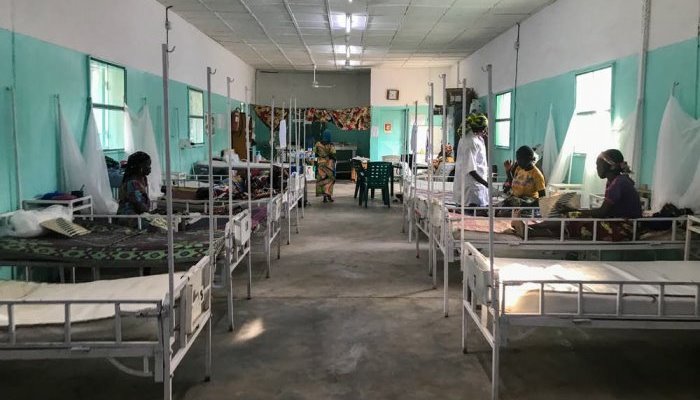
The report, which evaluated the capacity of Nigeria’s 36 states to respond effectively to health emergencies and deliver quality healthcare, revealed deep-seated challenges, including systemic weaknesses, infrastructural decay, and chronic underfunding.

The highest score recorded across all states was just 26.85 percent, underscoring Nigeria’s severe deficit in providing basic healthcare services and managing health crises.
The report attributes much of this gap to the ongoing exodus of health professionals, a phenomenon widely known as the Japa Syndrome, driven by poor remuneration, insecurity, inadequate working conditions, and weak government interventions.
Regional disparities in HPI rankings
The 2025 Health Preparedness Index (HPI) revealed a disturbing trend in Nigeria’s health sector, revealing deep regional disparities and systemic weaknesses.
Northern states remain the most vulnerable, with Kebbi (13.31) and Katsina (12.54) ranking lowest on the index, while Ebonyi (12.85) emerges as the weakest southern performer due to low health spending and a high doctor-to-patient ratio of 1:21,202.

In contrast, Abia leads the national ranking for the first time with a score of 26.85, driven by its high per capita health spending (N22,926) and strong Human Development Index (HDI). Ogun (23.52) and Lagos (23.08) follow closely, rounding out the top three.
Read also: On life expectancy: Why women outlive men
Lagos records the largest nominal health expenditure (over N221 billion), whereas Kaduna (16.1 percent), Kano (15.2 percent), and Bauchi (15.1 percent) dedicate the highest proportion of their budgets to healthcare.
Meanwhile, Imo (3.5 percent) and Bayelsa (4.1 percent) allocate the least, reflecting a persistent imbalance in health prioritization across states.
These disparities underscore the urgent need for equitable and sustained investment to strengthen Nigeria’s health systems and safeguard citizens.
The 2025 HPI was developed using a weighted model assessing six key indicators. These include doctor-to-population ratio (30 percent), infant and child mortality rate (25 percent), Human Development Index (20 percent), health budget per capita (10 percent), health budget share of total expenditure (10 percent), and average household size (5 percent).
Doctor-to-patient ratio gap widens
The report further reveals the state of Nigeria’s collapsing healthcare workforce, showing an average doctor-to-patient ratio of 1:15,361 nationwide, far below the World Health Organization (WHO) standard of 1:1000.
The situation is particularly dire in northern states such as Bauchi, where a single doctor caters to about 54,249 people, and in Zamfara and Kebbi, where one doctor serves over 43,000 patients.
“This critically low ratio translates directly into overwhelmed hospitals, longer waiting times, misdiagnoses, and tragically, preventable deaths,” the report stated.
In contrast, southern states such as Enugu, Edo, and Lagos recorded more favorable ratios, each serving fewer than 3,200 patients per doctor.
Experts also highlight that the shortage extends beyond physicians. “The situation is even more alarming for laboratory scientists, because for every ailment diagnosed, there are at least four tests conducted by different lab scientists per time,” one health expert observed.
The report warns that without urgent reforms, such as implementing globally competitive salaries, improving working conditions, and investing heavily in health infrastructure, the mass migration of medical professionals could intensify, threatening the collapse of secondary and tertiary healthcare systems across many regions and leaving millions of Nigerians without access to essential care.