|
Getting your Trinity Audio player ready...
|
…Pushes for data-driven impact investment growth
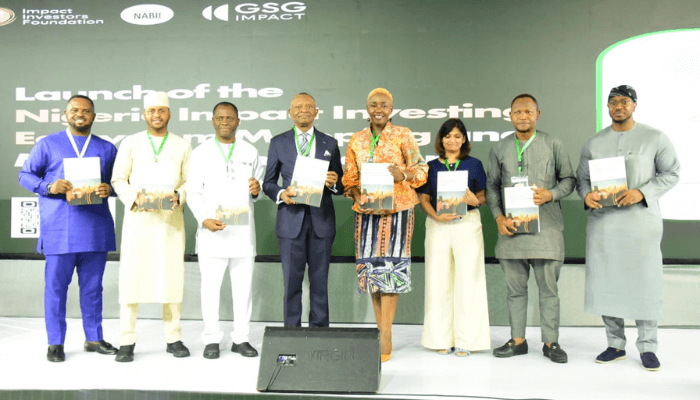
Nigeria’s Impact Investors Foundation (IIF) has unveiled the 2025 Nigeria Impact Investing Ecosystem Mapping and Market Sizing Report, calling for a more data-driven approach to mobilize capital and scale inclusive, sustainable growth across the country’s impact economy.
The report’s launch formed the centerpiece of the 8th Annual Convening on Impact Investing (ACII), a two-day summit held in Lagos. This year’s convening, themed “Strengthening and Scaling the Nigeria Impact Economy,” brought together policymakers, development finance institutions, global and local investors, and entrepreneurs committed to aligning profit with purpose.
The report, which builds on the 2019 baseline, provides a comprehensive mapping and market sizing of the impact investing ecosystem. It offers an evidence-based picture of the market’s structure, trends, and opportunities.

“The launch of the 2025 Nigeria Impact Investing Ecosystem Mapping and Market Sizing Report is a critical piece of the work that provides evidence-based data and critical market information for policymakers, DFIs, and investors. This data will assist in guiding capital to where it is needed most, translating availability into impact-aligned growth and a more resilient investment ecosystem,” said Etemore Glover, CEO of the Impact Investors Foundation.
The convening’s objective was to galvanise a diverse ecosystem of policymakers, global and local investors, development institutions, and entrepreneurs to accelerate Nigeria’s impact-ready economy. For seven years, the event has fostered dialogue, shared experiences, and charted pathways for inclusive growth.
Read also: Rack Centre, EdgeNext partner to launch cloud hosting services in Nigeria
The 8th ACII was a major catalyst for action, delivering concrete outcomes across three crucial areas: capital mobilisation, regulatory reform, and pipeline strengthening. The dialogue yielded concrete recommendations for innovative finance structures and blended finance mechanisms. These tools are seen as essential for mobilising the patient, catalytic capital needed at scale within Nigeria. Dedicated deal rooms at the event directly facilitated deal-matchmaking. This connected investment-ready small-to-medium enterprises (SMEs) with investors, underscoring the vital role of Enterprise Support Organisations (ESOs) in preparing businesses for impact investments. There were also focused panel sessions that explored how to structure innovative finance models to scale Nigeria’s Impact economy and how to unlock Nigeria’s Impact capital through policy reforms and data-driven strategies.
A significant portion of the discussions during the events was dedicated to advancing action across specific high-potential sectors; Climate and Sustainability and Creative Economy. The convening highlighted the critical need to build a robust impact economy to sustain Nigeria’s recent economic momentum. Speakers underscored that sustainability requires linking commercial gains with measurable social and environmental impact—essential for unlocking a share of the approximated $98 trillion in global assets under management, increasingly dedicated to impact investing.

The event culminated with the Annual Dinner and Awards Ceremony to recognise impactful businesses and investors whose work has created measurable social and environmental value. This included the Innocent Chukwuma Award for Social Impact for philanthropic non-profit and civil society organisations.
“The 8th Annual Convening on Impact Investing (ACII) is much more than a conference; it is the vital engine powering Nigeria’s inclusive growth and sustainable development. We are resolute towards strengthening and scaling the Nigerian Impact Economy. For Nigeria, this acceleration means a more resilient investment ecosystem that delivers measurable social and environmental value alongside financial returns, ultimately building a better future for all Nigerians,” Glover stated.
The 8th ACII concluded with a renewed and strengthened commitment from policymakers and ecosystem players to embed impact investing principles into national development strategies. The IIF reiterated its call to transform Nigeria’s economic narrative, ensuring that growth is measured not just in GDP, but in tangible benefits for every citizen, including job creation, improved productivity, food and nutrition security, and equitable access to healthcare and education.