|
Getting your Trinity Audio player ready...
|
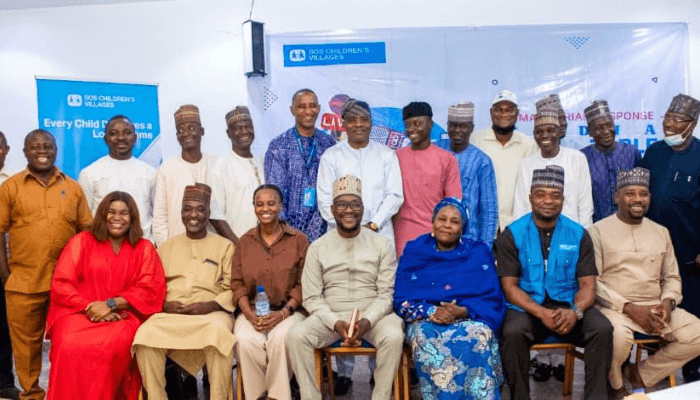
A non-governmental organization (NGO), the SOS Children’s Village, has empowered hundreds of women with climate-smart agricultural skills following a devastating flood that ravaged livelihoods in Maiduguri and its environs September last year in Borno State.
The NGO noted that the initiative to assist many families that were displaced and are struggling to rebuild their lives.
The flood not only took away people’s means of livelihood but also left the women and their children without shelter or food, forcing them to depend on neighbours for survival. But hope seems to have returned with the SOS Children’s Village initiative.
NGO extends humanitarian assistance to 18,000 Borno residents Speaking shortly after a media tour of the organisation’s projects across Maiduguri and Jere Council areas of the state, the Humanitarian Action Manager for SOS Children’s Villages, Fredson Ogbeson said it has provided a total of 18,000 residents, including children and affected families in Borno State, with life-saving humanitarian assistance and start-up kits.

Fredson disclosed that the assistance included conditional and unconditional cash transfers, provision of agricultural inputs, protection services and hygiene awareness among others.
He said, “Through its integrated humanitarian response, SOS has reached out to over 18,000 individuals in Jere and Maiduguri Metropolitan Councils.”
Providing the breakdown, he said: “We provided conditional cash transfer to 799 flood-affected households within Jere and MMC. We also provided unconditional cash transfer to 3,089 vulnerable persons in Jere and MMC.
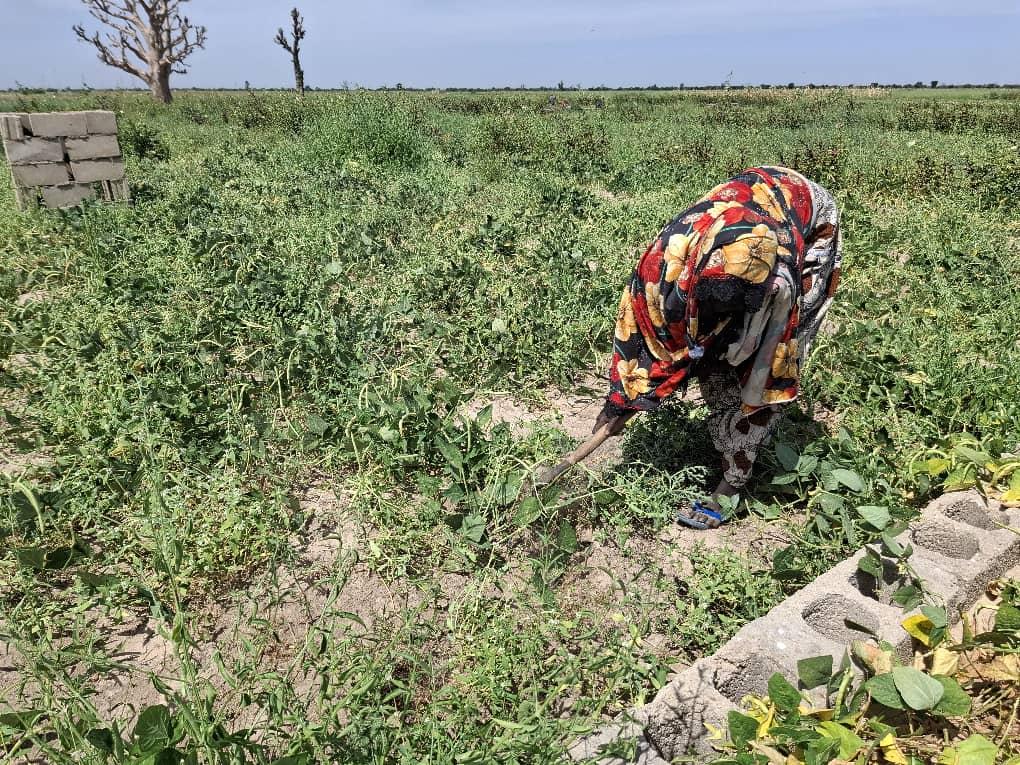
“We have supported 100 floods affected victims with agricultural inputs. We also intervened in the awareness and sensitisation on hygiene practices campaign for 11,449 flood affected persons.”

Fredson further stated that the organisation constructed three motorised-solar boreholes that are under construction and already at 90 percent completion stage.
He also pointed out that “we also constructed five blocks of gender-responsive toilets with four units each, and under construction and also at 90 percent completion stage.
“We distributed 802 menstrual hygiene material kits to young vulnerable females, and facilitated GBV awareness/sensitisation and reporting among 800 flood affected persons, just as we equally facilitated MPHSS for 368 flood affected families.”
According to him, the SOS Children’s Villages supported Case Management for 333 Gender Based Violence survivors and unaccompanied and separated children.
“We facilitated an awareness/sensitisation session for 800 parents and children while promoting safe spaces for children and young people for incident reporting,” he highlighted.
However, the Humanitarian Action Manager noted that the impact assessment of the project shows that there are still gaps to fill, particularly in terms of reach.
“We just conducted an impact assessment and outcome of these projects two weeks ago, and findings showed that there is still a need for us to improve. There are some gaps, particularly in terms of reach.
“But you know, with the funding constraints and the exit of some humanitarian actors, we need to compliment some services
“We are already discussing with some actors to see how we can fill these gaps. We hope that as we plan with other actors and government agencies, we will scale up our reach and expand our humanitarian efforts to people in need in other locations,” he remarked
Ogbeson, meanwhile, commended the Borno State government for providing the enabling environment for the NGO, saying, “as an organisation, we sincerely want to thank the Borno State government for providing the enabling environment through its agency for Sustainable Development and Humanitarian Response.
“Their support has helped SOS Children Villages Nigeria to support children and vulnerable households affected by the 2024 September flooding to recover and have alternative means to build their lives.”
Hope restored after double tragedy
One of the project participants and beneficiary, Amina Musa, commended the SOS Children’s Villages for assisting her family and children throughout their difficult times.
“SOS has relieved me. When they came for registration. I registered, and they requested my bank details and the number of children I gave birth to. After a while, while I was seated one day like that, an alert came in.
“I was surprised because I was not expecting money from anywhere. In the alert, I saw SOS as the sender. They sent me N400,000. My family and I are grateful,” she concluded.
Among those affected was Fatima Musa, a single mother whose home and small business were completely destroyed by the flood.
The flood not only took away her means of livelihood but also left her and her young son without shelter or food, forcing them to depend on neighbours for survival.
She proudly caters for her son’s education and daily needs, standing as a symbol of resilience and the power of humanitarian intervention in rebuilding shattered lives.
Aisha Ali, a project participant, said she lives with her six children including three (3) dependents who were the relatives of her husband after who died as Boko Haram insurgents attacked and killed him on his farmland in Malari Village near Maiduguri.
According to Aisha, after she lost her husband, she relied on fire wood and other items she could get from the bush for their livelihood, but the September 2024 flood disaster worsened her plight which she described as double tragedy.
“I am happy now; I can send my children to school and we live in a rented house from proceeds that I got from farming. I ventured into farming based on the tools and equipment I received from SOS Children Village last year after the flood,” she said.
She continued: “With the interventions and supports from SOS Children Village, I could now realise something to rent a safe house and continue with a decent livelihood from climate smart agriculture in my compound and around the house.”