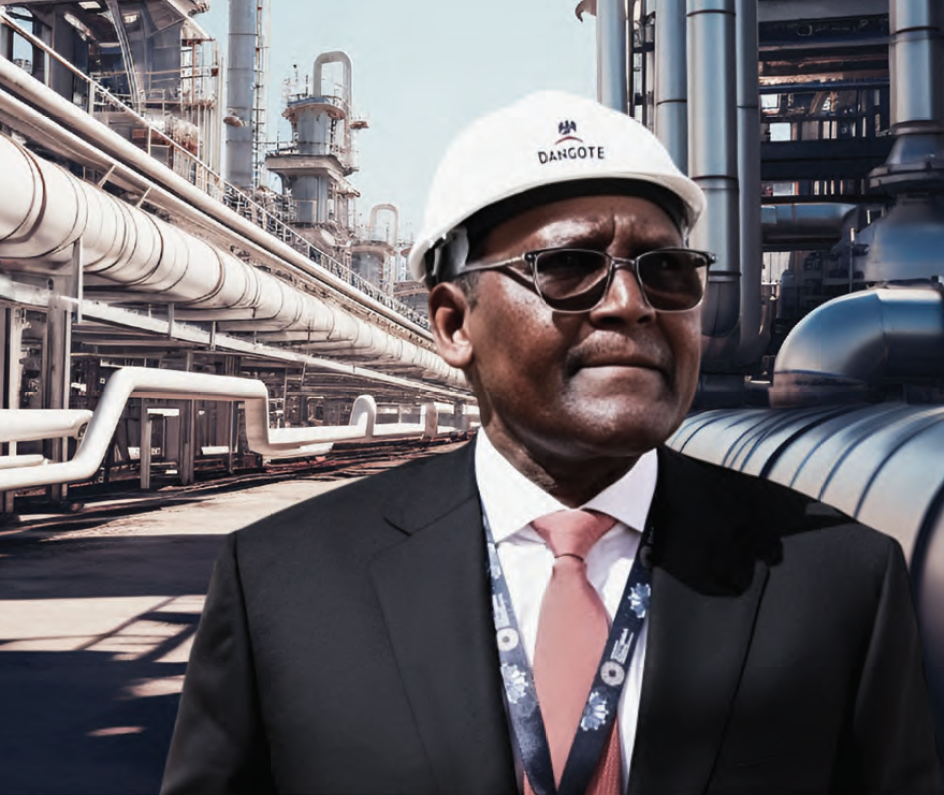
Aliko Dangote, Africa’s richest man, recently announced his plan to list the Dangote Refinery on the Nigerian Exchange. As Africa’s largest refinery moves towards a public listing, investors and analysts are watching with interest. In Nigeria’s ever-turbulent economic landscape, could this be the long-awaited boost the Nigerian capital market needs? Dangote promises a repeat performance of, or perhaps even greater than, what he achieved fourteen years ago when Dangote Cement debuted on the Exchange.
On 26th October 2011, Dangote Cement Plc – Africa’s biggest producer of building raw materials – was listed on the Nigerian Stock Exchange, now known as the Nigerian Exchange (NGX). On that day, 15.5 billion shares were listed at ₦135 each, giving the company a market value of ₦2.09 trillion, about $13.8 billion at the time. That single act raised the equity market’s capitalisation by 37 percent, moving from $37.2 billion to $51 billion, and making Dangote Cement the biggest company on the Nigerian bourse. For a brief period, optimism returned to the capital market. The then-Exchange Chief, Oscar Onyema, even set an “aspirational” $1 trillion market capitalisation target for 2016, a dream that never came to pass.
Nearly a decade and a half later, Dangote is back on the same stage, this time with a refinery that has already altered Nigeria’s industrial landscape. He plans to list 10 percent of the refinery, describing it as a way to democratise ownership and allow Nigerians to “share in the value creation.” Dangote also stated that the listing will be done primarily in Nigeria, to “give Nigerians value.”
Investors will not just be buying into a refinery that currently produces 650,000 barrels per day; they will be buying into the promise of a 1.4 million bpd refinery – one that projects annual revenues of $55 billion after expansion. The refinery is expected to serve a growing demand for cleaner fuels across Africa, exploiting regional trade opportunities under the African Continental Free Trade Area (AfCFTA).

This listing plan holds deeper meaning for Nigeria. It rekindles the hope of seeing the country’s prime corporates return to the local stock market and revives the long-held dream of achieving a $1 trillion market capitalisation, a target once described as “aspirational.” But beyond the numbers, it also stands as further proof of the triumph of private enterprise over public lethargy.
Fourteen years after Dangote Cement’s listing changed the face of the Exchange, government-led enterprises have failed to follow suit. The Petroleum Industry Bill, passed in 2021, promised a new era in which the National Oil Company would be listed on the Exchange within three months, bringing transparency and national participation into the energy sector. That never happened. What emerged instead was the Nigerian National Petroleum Company Limited, incorporated in July 2022, which remains unlisted and largely unaccountable to the investing public. The same disappointment met earlier hopes that the government’s joint ventures with international oil companies would be listed on the stock market, allowing ordinary Nigerians to own a share of the nation’s oil wealth.
This consistent pattern of government failure only highlights what Dangote has been able to achieve. When policymakers were still drafting frameworks and holding committee meetings, Dangote was building. The refinery, which he now calls a “national asset”, is the result of persistence and private initiative, qualities that public institutions, despite far greater resources, have failed to demonstrate. The case of Ajaokuta Steel remains a reminder of what happens when vision is lost. A project once meant to drive Africa’s industrial rise, now a monument to waste.
One might say that the entrepreneurial spirit explains this divergence. Dangote’s story, however, also points to the importance of government partnership, which provided him access to policy support, credit, and infrastructure that remain out of reach for most entrepreneurs. This imbalance has turned what should be a level ground for innovation into a corridor of privilege. If such partnerships were democratised rather than monopolised, Nigeria could witness a surge of refineries, factories, and industries built by private vision.
Still, this refinery’s listing carries significant promise for the market itself. The Nigerian Exchange currently stands at ₦98.7 trillion in market capitalisation, or about $63.9 billion at ₦1,452.79 to the dollar. With the rebased GDP of ₦372.8 trillion ($145.3 billion), this gives a market cap-to-GDP ratio of about 26.5 percent – far below the levels in more vibrant economies where markets often exceed GDP. The refinery’s entry could lift this figure and restore confidence in Nigerian equities.

But the true significance of this moment goes beyond ratios and revenue projections. It lies in what it symbolises – the chance to reawaken the spirit of national productivity and rebuild public confidence in enterprise. The refinery’s listing can remind Nigeria that its greatness was never only in its population or territory, but in its capacity to produce, refine, and build.
With Nigeria learning from this moment – by widening the space for credible public–private partnerships, supporting innovation through sound policies and infrastructure, and freeing enterprise from corruption and patronage – the listing of the Dangote Refinery could become more than a market event. It could signal the start of a new economic awakening, one that restores the nation’s standing as Africa’s true giant, not only in population, but in productivity and prosperity.