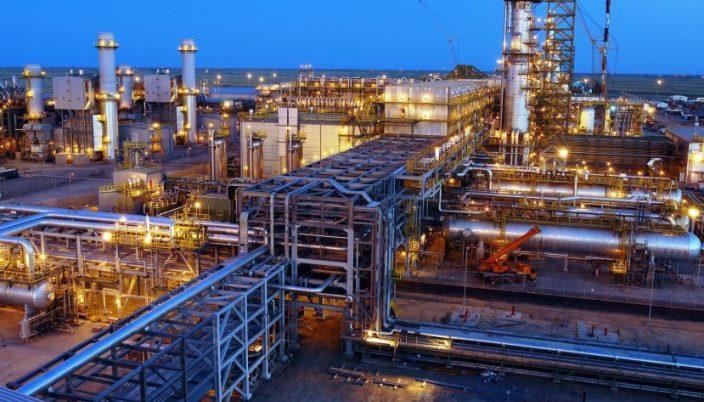
Nigeria has signed a landmark agreement with Siemens Energy to deliver the first phase of the Presidential Power Initiative (PPI), a $2.3 billion infrastructure project expected to add 7,000 megawatts of operational capacity to the national grid, according to Power Minister Bayo Adelabu.
Speaking at the Nigeria Energy Forum 2025 in Lagos, Adelabu said the deal marks a ‘major leap’ in the federal government’s efforts to overhaul the country’s ailing power sector, boost generation, and modernise transmission infrastructure.
“Under the Presidential Power Initiative Phase One, contracts have been signed with Siemens Energy, CMEC, ElSewedy Electric, and Power China,” Adelabu said. “Financing arrangements are underway to support implementation. Phase One is planned to add 7,000 megawatts operational capacity to the grid.”
The partnership builds on the initial ‘Phase Zero’ of the PPI, which focused on stabilising the grid and expanding transmission capacity by about 700 megawatts. The government said Phase One will significantly scale up that effort, enabling Nigeria to deliver more reliable electricity to homes and industries.

Read also: Fintech, energy, health top investors’ preference in H1 as Africa’s tech funding surges
Boosting generation, market confidence
The Siemens-led expansion forms part of a broader multi-pronged reform strategy under President Bola Tinubu’s administration, which aims to reposition the power sector for sustainability and growth.
Adelabu disclosed that ongoing interventions have already helped to increase average generation capacity to 5,300 megawatts in 2024 – up from 4,200 megawatts a year earlier- aided by the integration of the 700MW Zungeru hydropower plant and the rehabilitation of National Integrated Power Projects (NIPP) plants adding another 345MW.
The government has also approved a N4 trillion bond to settle verified debts owed to generation companies and gas suppliers, a move expected to stabilise liquidity in the power market.

Meanwhile, tariff reforms have raised industry revenues by 70 percent to N1.7 trillion in 2024, with projections surpassing N2 trillion in 2025. “We are deepening commercialisation to strengthen revenue, liquidity, and investor confidence,” Adelabu said.
The federal government is also restructuring the Transmission Company of Nigeria (TCN) into two entities — the Nigerian Independent System Operator (NISO) and the Transmission Service Provider (TSP) — to improve efficiency and attract private investment.
Adelabu emphasised that the government’s long-term vision mirrors global best practices. “We are inspired by South Africa’s $25 billion transmission grid expansion initiative,” he said. “Nigeria’s Presidential Power Initiative, valued at $2.3 billion, is a key step in that direction.”
In a push to close Nigeria’s metering gap, the government has secured N700 billion from the Federation Account Allocation Committee (FAAC) to deploy 1.1 million meters by the end of 2025 and an additional two million meters annually over the next five years. This is complemented by 3.2 million meters funded under the World Bank’s DISREP programme.
Read also: How sustainable investments, reforms can propel Africa’s energy independence – Olatunji
Renewable energy, local manufacturing push
Adelabu also highlighted growing investment in renewable energy and local manufacturing, with agreements now in place to establish four gigawatts per annum of solar panel production capacity — nearly 80 percent of Nigeria’s current national generation. Some of these locally produced panels are already being exported to Ghana.
Over $2 billion in development finance has been mobilised to support off-grid and renewable energy projects, including a $750 million World Bank programme, a $500 million NSIA renewable platform, and a $190 million JICA facility.
New era for Nigeria’s power sector
Adelabu said Nigeria is “open and ready for business more than ever before,” calling on investors and development partners to take advantage of improving market fundamentals and a clearer regulatory framework following the Electricity Act of 2023.
The Act devolves regulatory powers to the states, encourages competition, and supports private participation across the power value chain. Fifteen states have already received regulatory autonomy to set up subnational electricity markets, with one fully operational.
“In Nigeria today, we have over 10 gigawatts of stranded generation capacity — energy that could power industries, create jobs, and even support exports,” the minister said. “Our goal is to unlock that potential through strategic partnerships.”
With the Siemens Phase-One deal now in motion, Nigeria aims to lay the foundation for sustainable power sector transformation — one that could finally bridge its decades-long energy deficit and ignite new industrial growth