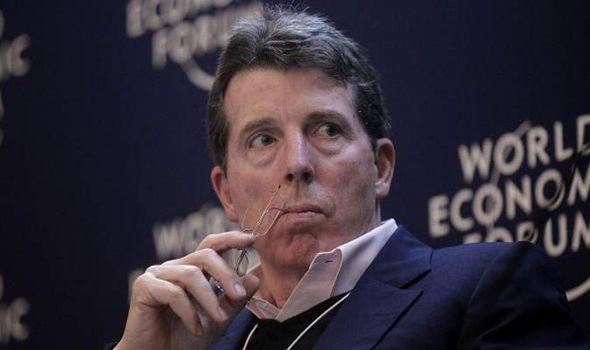
A loss of investor interest in Africa, the knock-on impact of lower commodity prices on African economies, lack of liquidity in the shares or doubts over an early-stage company may all help to explain why shares in Atlas Mara , the African banking vehicle co-founded by former Barclays chief executive Bob Diamond, have almost halved since its listing in 2013.
The last two, company-specific, reasons look more persuasive.
Shares in Ecobank, another pan-African banking play, have risen by 28 per cent in the same period.
To turn things round, Diamond may have to finish the job he started, say analysts.

That means first building Atlas Mara’s presence in sub-Saharan Africa.
It has stakes in three banks that operate in seven countries.
It plans to operate in 10-15 countries.
A deal to bulk up in Rwanda through the acquisition of a stake in Banque Populaire du Rwanda is likely to be concluded soon.
But Atlas Mara also needs to address its position in Nigeria, where it has only a 30 per cent stake in Union Bank, not enough to give it control.

Operationally, there is also work to do.
Atlas Mara’s first-half results on Thursday showed that it is making the right moves — pushing funding costs down, growing the loan book and improving the recovery of non-performing loans. But its cost base is a problem — a cost-to-income ratio of 95 per cent (or 80 per cent before one-offs) is far too high. So Atlas Mara needs to increase income or cut high central costs hard.
And it will have to do so against a backdrop of falling commodity prices and a strengthening of the US dollar against African currencies. That has hurt the group’s profits, which are reported in US dollars. But, ever the investment banker, Diamond has spotted an opportunity to help clients deal with currency volatility. Non-interest income — from areas such as currency trading — rose 9 per cent in the first half.
FT