On a good day, an average Lagosian, especially those within government circles, will tell you Lagos is a smart city in league with Zurich, Oslo, and Singapore—the world-acclaimed smart cities.
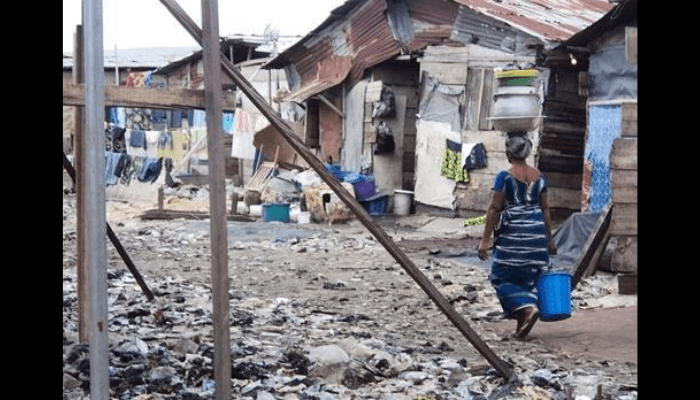
However, the common people on the street would quickly dismiss that view, insisting that Lagos is just another city where life is a struggle for many of its residents, particularly those living in slum areas like Makoko, Ajegunle, Ilaje, Amukoko, etc.
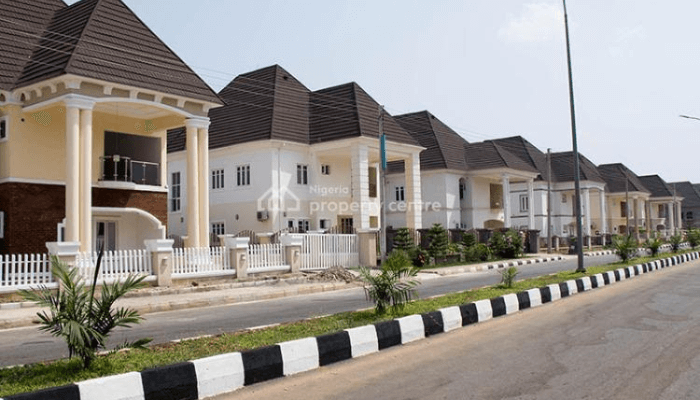
Ikoyi mansions, Banana Island castles, Eko Atlantic skyscrapers, and many upcoming island communities, including Gracefield Island, Orange Island, among others, which underpin Lagos’s New Urbanism, actually give the impression that the city has ‘arrived.’
But concerns remain. There’s so much that could and should still be done. One is urban regeneration. Another is opening up the hinterland to decongest the city centre, which is already bursting at its seams.

What is currently happening in bits and starts across the city, largely at the individual level, is gentrification, not regeneration, which is an urgent necessity. The focus of regeneration should be Ajegunle, arguably the largest slum area in Lagos, with a very high density of the city’s expanding population.
To do this, the city authorities need to invest time and resources to understudy and learn from what is happening at Paddington in Central London. This part of London, like Ajegunle in Lagos, is significant in several ways.
Read also: We are building a legacy to shape the future, Ksircomfort assures
“Historically, Paddington was best known as a transport hub where Queen Victoria’s first train journey departed from in 1842, and the Heathrow Express cemented its reputation in 1998,” Ugo Arinzeh, Onyx Property Team lead, explains.
Arinze, a Nigerian realtor based in London, notes that despite its prime Zone 1 location, property prices in Paddington lag behind its neighbours such as Marylebone and Notting Hill, adding, “That is changing fast; analysts are now predicting strong growth as the new lifestyle and business infrastructure takes shape.”

Today, according to her, Paddington is undergoing one of the most exciting regeneration projects in central London, pointing out that with over £825 million invested in new developments, the area is being completely reimagined.
“This is more than a facelift; it’s a full transformation into a vibrant residential, commercial, and cultural hub. The regeneration has already delivered over two million square feet of commercial space and more than 1,300 new homes,” she reveals.
This is a huge lesson for Lagos with respect to Agengule. Like Paddington, Ajegunle is steeped in history and is located in Lagos city centre. It represents the undying spirit of Lagos. Ajegunle typifies the rough and rugged Lagos neighbourhood where one might be tempted to ask, as in biblical parlance, “Can anything good come out of Nazareth?’
Despite its prime location in the city centre and also being close to the busiest seaports in Nigeria—Tin Can and Apapa Ports—Ajegunle still lags behind Apapa, which is its immediate neighbour, in terms of property values due largely to its lack of proper planning, as reflected in congestion and overcrowding.
Curiously, as Nazareth paradoxically produced the Saviour, Jesus Christ, Ajegunle has also produced some of Nigeria’s famous and iconic sporting and entertainment stars. These include Ras Kimono, Majek Fashek, Daddy Showkey, Samson Siasia, and Taribo West. It is a breeding ground for sporting and entertainment entrepreneurs in the country.
A walk through this neighbourhood, described as one of Nigeria’s most notable urban slums, reveals a frenzy of urban renewal which is gradual, almost silent, yet so conspicuous it cannot be glossed over.
“But that is not regeneration,” Funso Abayomi, who has lived in that neighbourhood for more than 20 years, told this reporter. “What is going on here is not regeneration but gentrification, which occurs mostly in residential areas and involves the rehabilitation of dilapidated buildings into condominiums,” Abayomi explained, adding, “it is one block at a time, and these dot this area in a scattered, unorganised fashion.”
Gentrification is not what Ajegunle needs. Instead, it requires a substantial investment by the government, leading to a holistic, large-scale developments that yield numerous commercial spaces and residential units, that can be built vertically to maximize land use.