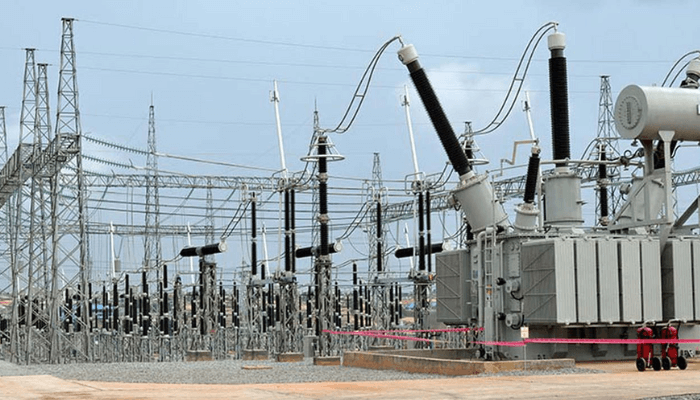
Nigeria’s electricity supply industry has, for decades, been characterised by low utilisation of installed generation capacity, frequent grid collapses, and a lack of operational clarity. That scenario is now shifting. With the formal launch of the Nigerian Independent System Operator (NISO), the country may be stepping into a fresh phase of grid management, market discipline, and investor confidence.
On April 8, 2025, the nation witnessed the official inauguration of NISO’s Board by Vice President Kashim Shettima at the Presidential Villa in Abuja. The establishment of the operator stems from the Electricity Act 2023, which mandates the unbundling of the Transmission Company of Nigeria (TCN) into two distinct entities, one responsible for transmission infrastructure (the Transmission Service Provider) and the other, NISO, for system and market operations as well as planning. The reform ends years of debate over the inherent conflict of interest in TCN’s dual role.
At NISO’s Senior Leadership Retreat held in Abuja on July 16, 2025, Ayodeji Gbeleyi, Director-General of the Bureau of Public Enterprises (BPE), said the creation of the independent operator was a significant step toward transparency in the power sector. “The evolution of NISO into a neutral system operator reflects the government’s collective commitment to the principles that underpin any well-functioning electricity sector,” he noted. The unbundling aligns Nigeria’s power industry with global best practices, mirroring structures in advanced energy markets across Europe and North America.
Speaking at the same event, Abdu Mohammed Bello, Managing Director and Chief Executive Officer of NISO, announced that the organisation is targeting 8,500 megawatts of coordinated generation within 18 months — up from the current 5,500 MW. “It’s a target that can be achieved if we put our house in order, focus on strategy, attract investment, and align actions,” Bello said. “We have the resources in Nigeria. If harnessed properly, we can do better. At the end of the day, we expect real-time grid operations, grid modernisation, and improved resilience in grid stability.”

Bello reaffirmed that NISO’s mandate extends beyond operational coordination to catalysing private sector investment. He said the organisation was “committed to managing the country’s electricity grid with reliability, transparency, and efficiency, aiming to build a sustainable and competitive power sector that drives economic growth.”
The call for private sector collaboration reflects the government’s recognition that public financing alone cannot close Nigeria’s infrastructure and energy gaps. Gbeleyi, at the same retreat, revealed that Nigeria currently utilises around 5,500 MWh of power daily, far below the installed generation capacity of over 14,000 MWh. He projected a minimum 50% increase in available capacity within 12 to 18 months, contingent on grid upgrades and expanded distribution networks. He also referenced the government’s $500 million World Bank facility for improving distribution infrastructure and the planned deployment of 7 million meters nationwide under the Presidential Metering Initiative and World Bank programs.
“The electricity sector’s credibility hinges on the performance of the System Operator. The expectations are high, and the time is short to make a meaningful impact,” he added.
Adesegun Akin-Olugbade, NISO Board Chairman, stressed that the organisation’s independence must translate into operational excellence and trust. “We are in a defining moment for Nigeria’s electricity sector. NISO is not just a new institution; it’s a new idea, a neutral market coordinator, a strategic planner, and an independent system operator,” he said, adding that the board is “building governance frameworks to support neutrality and investing in our engineers and planners to ensure they are world-class.”
As part of its modernisation agenda, NISO is rolling out nationwide Supervisory Control and Data Acquisition (SCADA) and Energy Management Systems (EMS) to ensure real-time grid monitoring and data-driven decision-making. Bello confirmed during the retreat that the new SCADA contract has been awarded and is progressing, particularly across the northern zones. “Contractors are working tirelessly, and we are making daily progress,” he assured.

In a press release issued on September 28, 2025, NISO demonstrated this proactive capability when it responded to major gas supply disruptions caused by industrial action from the Petroleum and Natural Gas Senior Staff Association of Nigeria (PENGASSAN). The disruptions had reduced available generation from over 4,300 MW to about 3,200 MW at the lowest point. NISO’s swift interventions, including hydropower optimisation, load balancing, voltage and frequency support, and selective load shedding, prevented a nationwide blackout.
“These timely actions enabled the NISO National Control Centre to minimise the impact of the labour-induced gas shortages, sustain operational security, and maintain supply to critical loads,” the management stated.
The operator reaffirmed its commitment to “proactive grid management, operational excellence, and best-in-class practices to guarantee a secure and reliable electricity supply for the nation.”
The incident shows the value of a professionally managed, autonomous system operator. It also illustrated NISO’s capacity to balance market dynamics and technical operations under pressure an attribute long missing in Nigeria’s electricity ecosystem.
Industry experts view NISO’s establishment as a turning point for market confidence. For the first time, generation and distribution companies will interact with a neutral operator, improving transparency in dispatch, billing, and settlement processes. Analysts at KPMG Nigeria, in their May 2025 report on “Opportunities in Nigeria’s Transforming Power Sector,” observed that an independent operator could reduce market liquidity shortfalls and enhance investor confidence across the value chain.
Still, challenges persist. The transition from TCN to NISO involves complex asset transfers, contractual realignments, and personnel restructuring. Maintaining true neutrality, free from political interference, will be crucial. Sustained investments in infrastructure, digital systems, and workforce training will also determine success.
Despite the hurdles, the creation of NISO represents a new philosophy of grid governance, one rooted in data, transparency, and collaboration. As Bello noted at the brand unveiling on July 1, 2025, “Becoming ‘world class’ is not a slogan. It’s a commitment. It’s hard work. But I am confident we will get there.”
If NISO delivers on its targets completing SCADA upgrades, achieving 8,500 MW coordination, and securing investor confidence, the nation’s long-troubled power grid could indeed be entering a new era.